


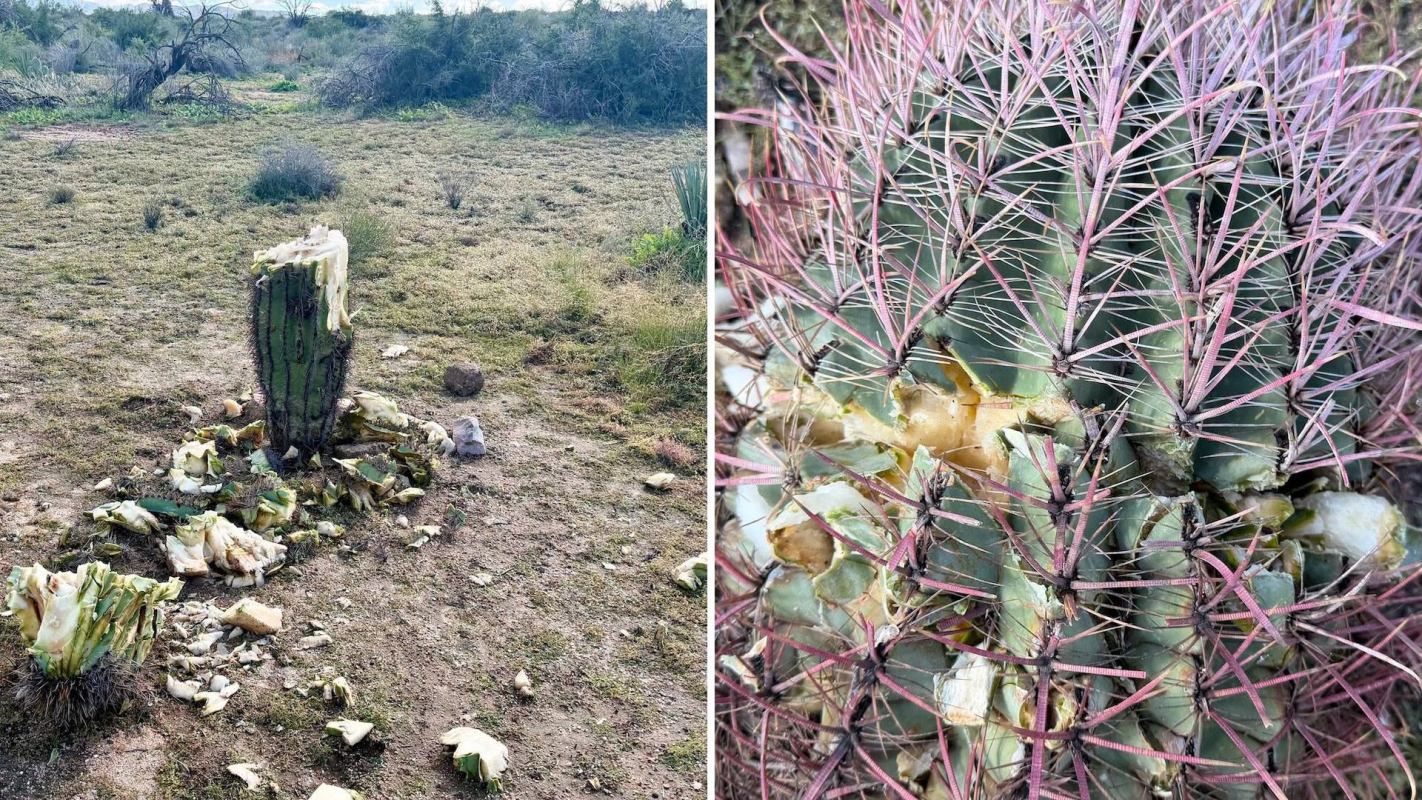
Cutting and shooting replanted saguaros has damaged years of volunteer restoration work in an Arizona wildfire recovery area. The cacti had taken root there after being salvaged from construction sites.
Here's what to know
Natural Restorations reported damage to 12 saguaros and other native cacti in the Tonto National Forest area around Four Peaks, northeast of Phoenix, between Oct. 31 and Nov. 1, according to AccuWeather.
Some of the plants were thought to be 30 to 60 years old, while the youngest were about 10, according to Natural Restorations. Volunteers planted the rescued saguaros in 2020 and 2024 in an area devastated by the Bush Fire.
"They were established and thriving in the 2020 Bush Fire burn scar," Natural Restorations wrote on Facebook.
Someone also moved a 4-foot saguaro to a nearby space used for parking and gatherings before chopping it apart, the nonprofit said. Some of the cacti had two to three feet cut from their tops.
More background
The fire killed an estimated 80,000 saguaros — plants that provide food and shelter for desert wildlife — according to the National Forest Foundation. The Bush Fire started northeast of Phoenix on June 13, 2020, and consumed more than 193,000 acres, AccuWeather reported.
TCD Picks » Quince Spotlight
💡These best-sellers from Quince deliver affordable, sustainable luxury for all




Wind and rain can erode soil left exposed by fire. Restoring native vegetation helps keep that soil in place while also supporting wildlife.
Six barrel cacti that had been salvaged and replanted were also damaged, as were four hedgehog cacti and prickly pear and cholla that had regrown on their own after the fire, Natural Restorations said.
What's being done?
Homebuilders, construction companies, and private landowners work with Natural Restorations to arrange access to cacti threatened by development. Those arrangements are part of the nonprofit's cactus salvage and replanting program.
A shaded nursery serves as an interim stop for rescued cacti before crews bring them to the fire-damaged site for replanting, according to AccuWeather. Before transporting the plants to the nursery, crews carefully remove them with hand tools.
Permission is necessary throughout the rescue process: collecting, transporting, and replanting the cacti all require authorization. Saguaro cacti fall under Arizona's native plant protections, and federal rules prohibit damaging natural features on national forest land.
People who observed target shooting in the area during the Oct. 31-Nov. 1 period were among those Natural Restorations asked to come forward. Anyone with information, photographs, or video was urged to contact law enforcement personnel at Tonto National Forest's Mesa Ranger Station.
"A lot of work went into salvaging and saving these saguaros from construction destruction and it's heartbreaking to see someone hack them up," the group wrote in their post.
Where can I learn more?
Efforts to protect Arizona's plants and landscapes have also led to clashes over development.
• Arizona's Tohono O'odham marched as border wall crews prepared to remove sacred saguaros.
• In Arizona, border wall crews cut down a 200-year-old tree after activists occupied it.
• The Quechan Tribe opposed an Arizona-California power line threatening lands it considers sacred.

Get TCD's free newsletters for easy tips, smart advice, and a chance to earn $5,000 toward home upgrades. To see more stories like this one, change your Google preferences here.







