


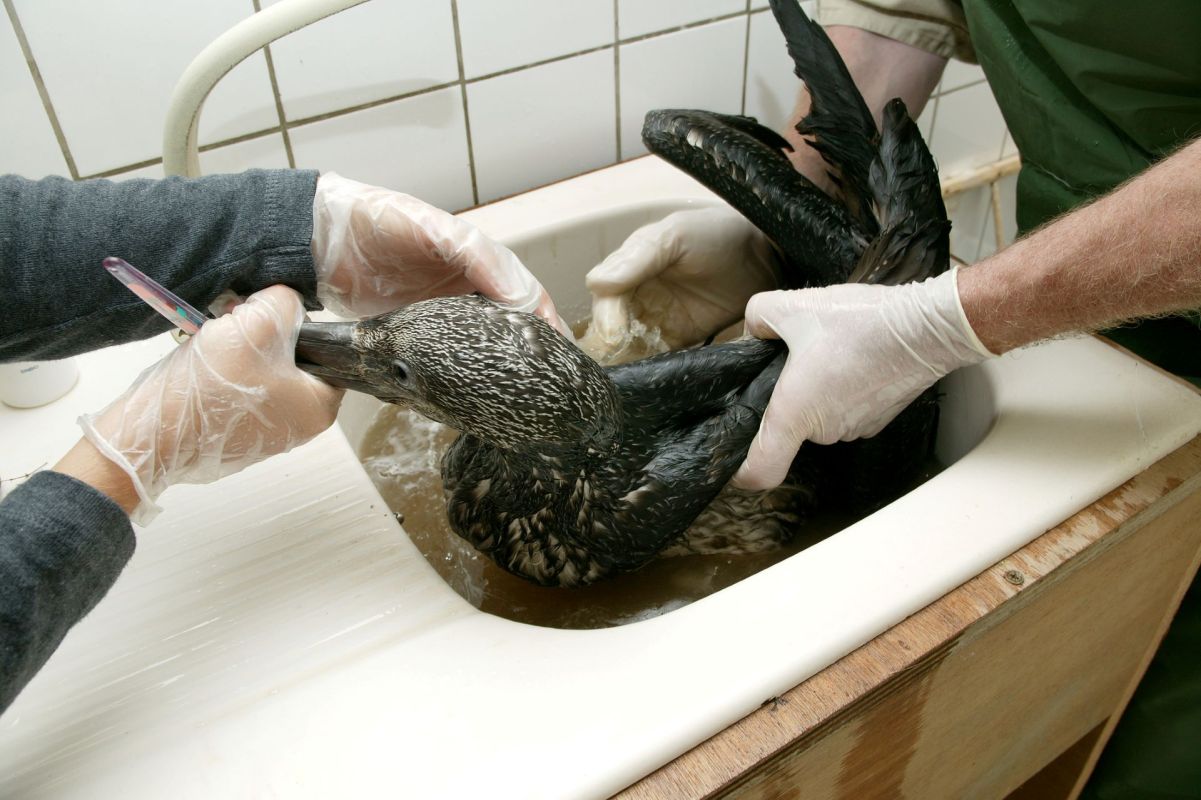
More than 1,000 birds belonging to endangered species died after two oil tankers wrecked off Russia's coast, according to environmental lawyer Natalya Lisitsyna's account of court records.
The birds were among 13,500 killed in the disaster, which sent fuel oil onto beaches and into wildlife habitat.
Here's what to know
The Volgoneft-212 and Volgoneft-239 wrecked during a storm in the Kerch Strait on Dec. 15, 2024. Approximately 2,646 tons (2,400 metric tons) of fuel oil entered the sea, according to Russian Transportation Ministry figures reported by The Insider.
About 10,300 of the birds killed were great crested grebes, making them the species with the heaviest losses and accounting for more than 75% of recorded deaths. Lisitsyna drew the figures from records of the Krasnodar Territory Commercial Court.
Nine endangered species were represented among the dead, accounting for another 1,022 birds.
Volgatransneft, Kamatransoil, and Kama Shipping face a combined payment of roughly 34.25 billion Russian rubles ($423 million) for environmental damage and losses to the regional budget. The Insider reported that the order followed the court's Oct. 15 decision to uphold a lawsuit filed by the regional Ministry of Natural Resources.
TCD Picks » Quince Spotlight
💡These best-sellers from Quince deliver affordable, sustainable luxury for all




More background
Damage to habitat for species protected at the regional level accounted for approximately 34.12 billion rubles ($421 million) of the environmental award.
Game resources and soils in the Solyonoye Lake nature reserve were also covered by the ruling, according to The Insider's account.
The disaster brought petroleum onto beaches in Krasnodar Territory and Russian-annexed Crimea. Thousands of volunteers helped rescue birds and clean up the shoreline.
A separate court assessment of losses to Krasnodar Territory's budget totaled 30.7 million rubles ($379,000).
An investigation by The Insider found that both tankers had exceeded their authorized operating lifespans and that one vessel's documents had been suspended.
The investigation also established that Rosneft owned the fuel oil and served as its shipper and consignee. However, the company was not among the defendants in the main environmental compensation lawsuits.
What's being done?
Rulings awarded 84.94 billion rubles ($1.05 billion) for damage to the Black Sea's aquatic environment. Across three court cases, the damage awards total 119.2 billion rubles ($1.47 billion), according to The Insider.
As the owner of Volgoneft-239, Volgatransneft was ordered to pay 35.48 billion rubles ($438 million) of those awards. Kamatransoil and Kama Shipping jointly owed another 49.46 billion rubles ($611 million), both linked to Volgoneft-212.
The regional method for calculating damages survived a legal challenge from Volgatransneft. The Krasnodar Territory Court ruled the methodology lawful in March and dismissed the company's challenge.
The responsible companies had minimal assets. Two entered bankruptcy proceedings, while bailiffs repeatedly closed enforcement cases because the debtors possessed no property.
In September 2026, satellite images still showed oil slicks near the sunken tanker sections, The Insider found, despite Russian authorities' claims that the entire fuel oil cargo had been pumped out.
Where can I learn more?
These stories cover other oil disasters and their effects.
• In Poole Harbour, an oil spill brought £6M in compensation, including £400,000 for wildlife.
• California crews finished fuel cleanup, but a grounded vessel retained 50 tons of dead squid.
• In Bristol, a woman's photos of dead wildlife helped reopen an Avon pollution investigation.

Get TCD's free newsletters for easy tips, smart advice, and a chance to earn $5,000 toward home upgrades. To see more stories like this one, change your Google preferences here.







