


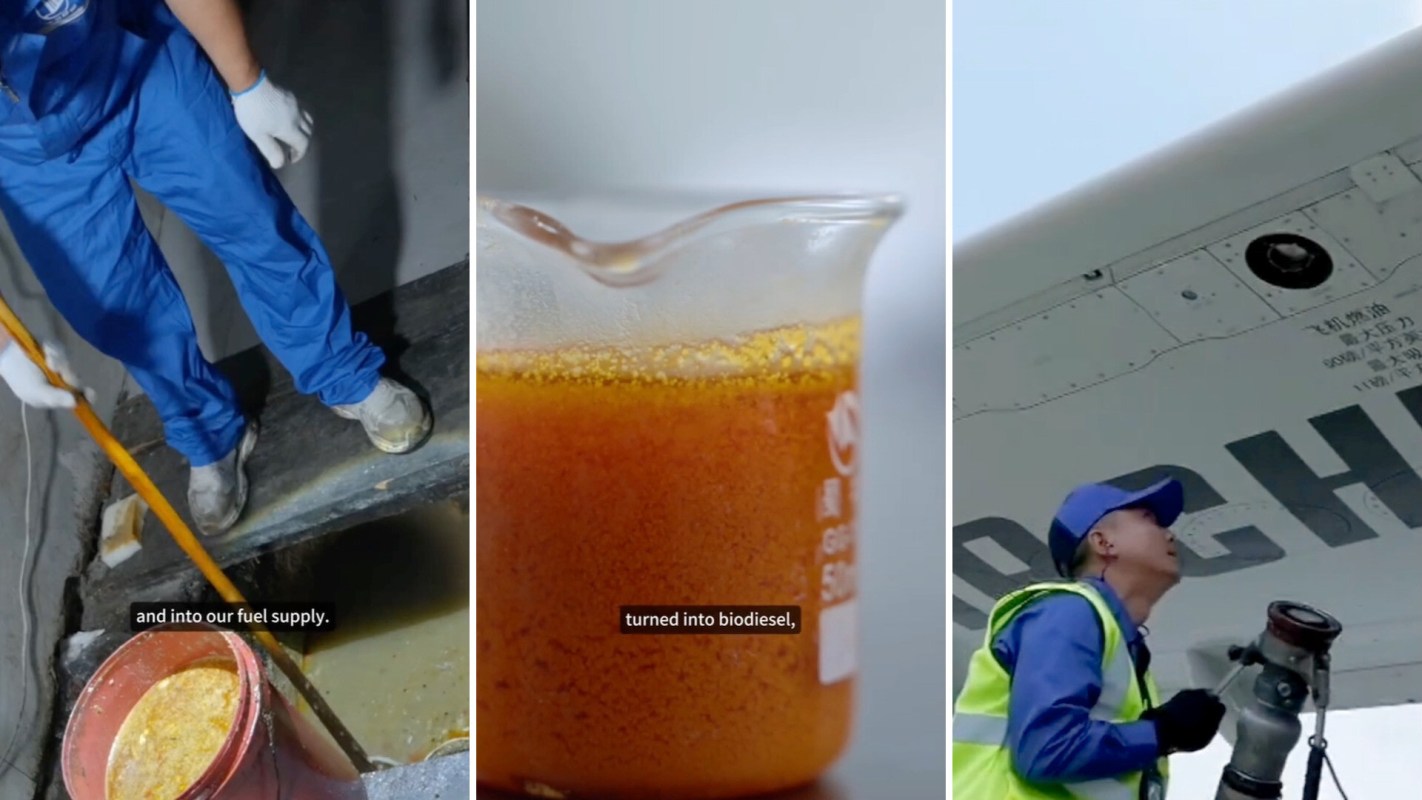
Discarded kitchen oil — including the greasy waste retrieved from manholes behind restaurants in China — could be an ingredient in aviation fuel.
To document the collection stage, The Nature Reporter (@the_nature_reporter) spent an overnight shift following two workers on their rounds.
Here's what to know
In a TikTok, the creator documented a two-person team that can collect up to 800 kilograms (1,764 pounds) of "gutter oil" each night. A local pretreatment facility receives the waste by morning for separation and cleaning.
@the_nature_reporter Would you believe the journey to jet fuel could start down this manhole? ✈️ I tagged along with two workers collecting greasy kitchen waste behind restaurants in China. My attempt at scooping it was an immediate fail. It's messy, smelly work that most of us never see. But it's the first step in a surprising transformation: waste oil that can eventually become fuel for planes. Growing up, I knew "gutter oil" as a food-safety scandal. Following these workers, I got to see where a different story begins. Would you have guessed this could be an aviation fuel ingredient? #SustainableAviationFuel #ChinaEnergyTransition
♬ original sound - the_nature_reporter
According to the creator, China converts millions of tonnes of discarded oils and fats into biofuels annually.
After she joined in the work, one of the employees advised her she had collected too much water in the scoop.
"It's messy, smelly work that most of us never see. But it's the first step in a surprising transformation: waste oil that can eventually become fuel for planes," she wrote in the caption.
TCD Picks » Quince Spotlight
💡These best-sellers from Quince deliver affordable, sustainable luxury for all




More background
For the creator, childhood memories of gutter oil are tied to food-safety scandals, when oil recovered from waste was returned to the food supply.
Under the more regulated recycling system detailed in the video, this material is destined for fuel production rather than reuse.
The creator said the recovered material is increasingly being processed into airplane fuel. Its more established use has been biodiesel, "a renewable substitute for fossil diesel," she said.
First, though, the workers have to recover oil from the collection tanks behind restaurants every night. "It smells bad. And there are still a lot of misunderstandings about what we do. So, we try to do this work when most people are resting," one of the men said.
After the substance is taken to the pretreatment facility, it is left to settle, with water and solids sinking to the bottom.
The oil is separated, and a centrifuge removes additional impurities, producing "industrial-grade mixed oil" as the final product.
Where can I learn more?
Used cooking oil can find a second life both in the kitchen and as fuel.
• A refinery upgrade will turn waste plastic into jet fuel feedstock at industrial scale.
• Home cooks can strain, store, and reuse frying oil rather than discard it after one use.
• Chinese researchers have unveiled an oil-refining method that could slash energy use by 91%.
• Oak Ridge researchers turned shopping-bag plastic into gasoline at temperatures used to cook chicken nuggets.
• In Bolivia, a farmer cuts costs using fuel from plastic bags, tires, and oil.

Get TCD's free newsletters for easy tips, smart advice, and a chance to earn $5,000 toward home upgrades. To see more stories like this one, change your Google preferences here.






