


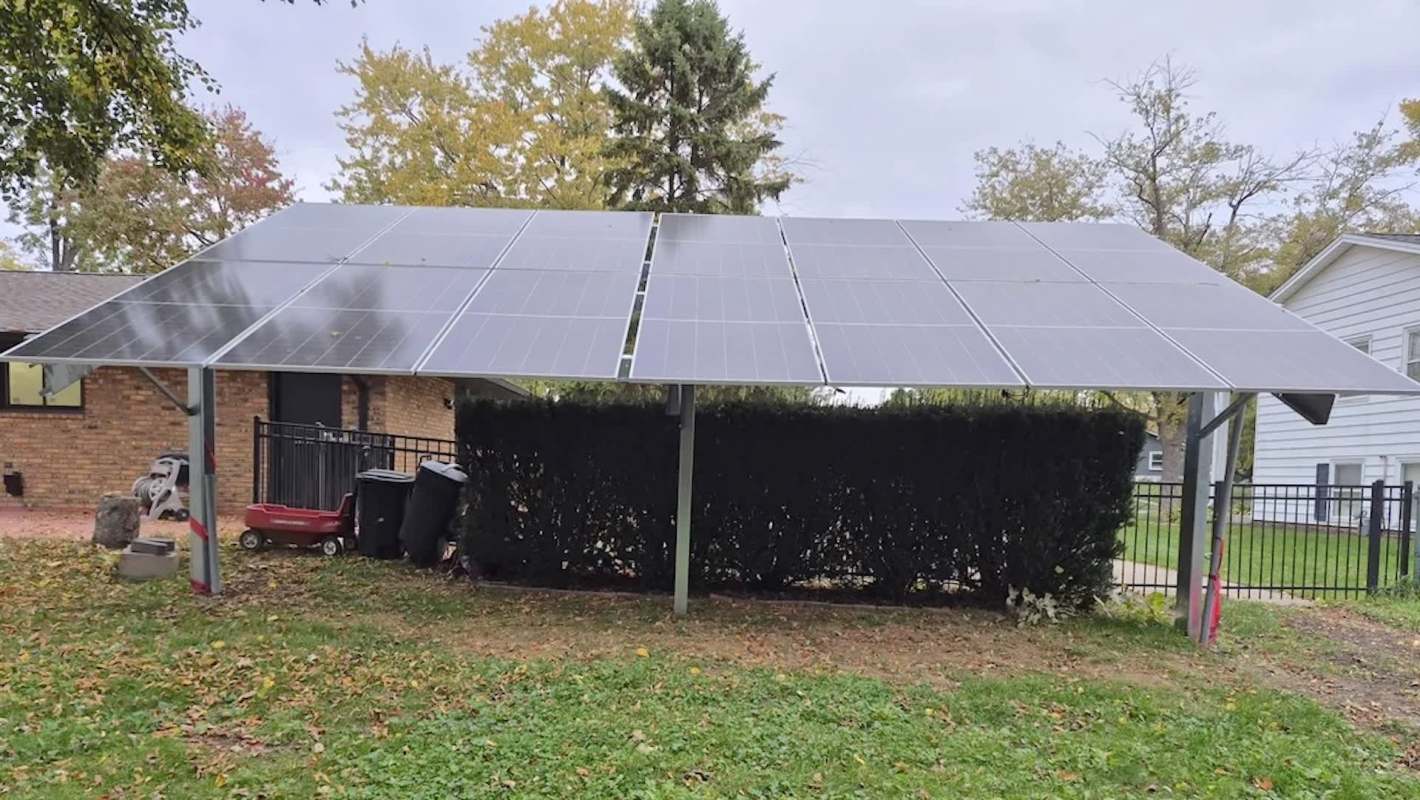
An Illinois homeowner is turning to an unexpected workaround to salvage a nearly finished solar installation.
After running into a city height restriction, the homeowner proposed painting the panel supports and adding garden beds with shade-loving vines to keep the project moving as a decorative garden trellis.
Here's what to know
Only about a week's work remained, the homeowner explained in their Reddit post in r/solar. With the ground-mounted installation classified as an unpermitted structure following a permitting breakdown, work on the homeowner's solar array and battery stack had stalled for a month.
After objections from neighbors, the homeowner was denied a variance. Under the city's rules, accessory buildings can stand up to 14 feet tall, while residential ground-mounted solar arrays are limited to four feet.
Going solar is one of the best ways to save money on home energy, and solar leases in particular can deliver hundreds of dollars in monthly savings without upfront costs. Homeowners can use EasyHome's free explorer tool to see potential savings from vetted installers in their area.
More background
Responsibility for the connection and permits had gone to a paid local electrical firm that said everything was in order, according to the original poster. The solar contractor had hired the firm while taking on their first ground-mounted installation in the city.
When a commenter suggested withholding payment from the solar contractor, the original poster clarified which company the dispute involved.
"He hired a local electrical company he paid specifically to handle local permitting and they said everything was in order," the original poster explained. "So there is a dispute but its not with my solar contractor."
Crushed by your bills? See instant solar savings from vetted installers in just a few clicks With energy prices through the roof, there's never been a better time to go solar — and EasyHome can help you find the best prices from the best installers in your area. EasyHome takes the guesswork and headaches out of energy upgrades by showing you estimated savings from a network of vetted local partners. To get started, just enter your ZIP and share a few details about your home — seeing your estimate is really that easy. |

Several commenters suggested turning the installation into other things.
One wrote, "Build a shed, put the array on it. Build a carport, roof it with panels. Build a fence, use PV panels as the pickets."
A possible requirement to keep panels three inches from a roof's edge was one obstacle to the shed proposal, the homeowner explained. Another was the loss of reflective generation if the space beneath the array were enclosed.
What's being done?
New permitting was already underway, the homeowner confirmed in a reply. The post described preparations for the decorative trellis proposal, including gathering quotes for painting the supports and adding garden beds.
An appeal to the full city council could, the homeowner hopes, get a solar zoning update started and open a path to an official waiver without the expense of hiring lawyers. Meanwhile, the contractor and city planners are discussing possible solutions.
"I am committed to updating the zoning code too so I am just going to keep at it," the OP concluded.
For homeowners evaluating their own installation, EasyHome can help compare solar options from vetted local installers and also explore options for backup battery storage. Pairing solar with a battery allows homeowners to maximize savings and power their home with solar when the grid goes down, making storage worth considering alongside the panels.
Where can I learn more?
Other homeowners have also seen solar projects stall over local zoning and permit requirements.
• An Illinois homeowner encountered a four-foot solar limit that left the zoning board without answers.
• A Florida homeowner bought ground-mounted solar, then learned engineer-sealed plans were required by county officials.
• A Florida DIY solar builder revised plans three times as officials kept adding requirements.
• A Virginia homeowner said a solar permit application remained stuck for five months.
• In Texas, a DIY solar owner had to prove roof wind load for permitting.

Get TCD's free newsletters for easy tips, smart advice, and a chance to earn $5,000 toward home upgrades. To see more stories like this one, change your Google preferences here.






