


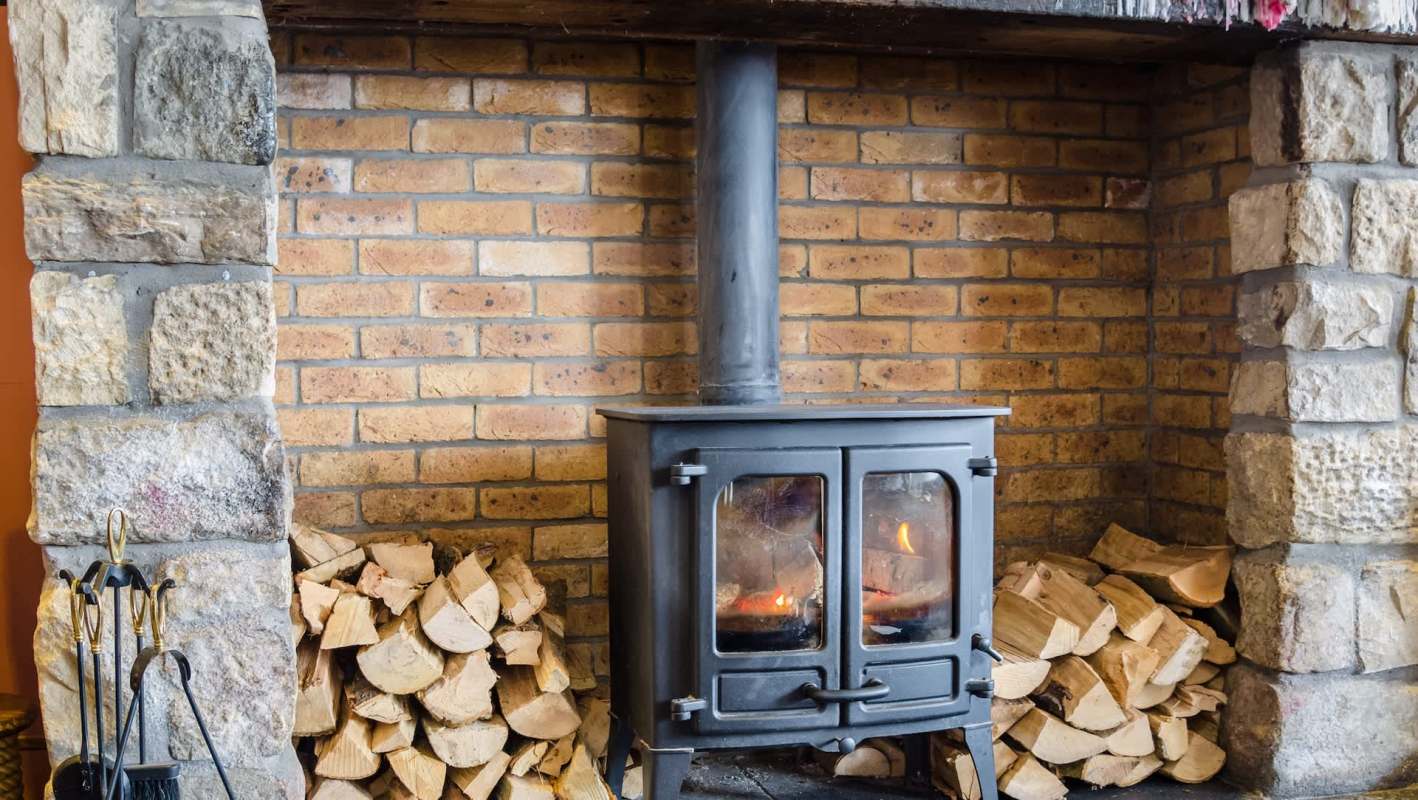
A Pennsylvania homeowner looking to install a heat pump water heater turned to fellow homeowners for advice on an unusual pairing. They wanted to place the appliance in a basement heated by a wood stove.
The combination drew encouraging responses, with commenters explaining how the stove's warmth could help the water heater operate efficiently.
Here's what to know
In a post on Reddit's r/heatpumps community, the homeowner said they use a wood stove for supplemental winter heat in a roughly 500-square-foot basement in North Central Pennsylvania.
"I was wondering if the dry, hot air in the basement will work well with a heat pump water heater," the original poster wrote. "On average, with the wood stove burning, the basement is around 80 degrees with a max of around 90 degrees. Does anyone have any experience they can share and what to expect in the winter months with a wood stove in the same room?"
Rather than generating heat directly, a heat pump water heater transfers warmth from the surrounding air into its water. That distinction helped explain why several commenters viewed the warm basement as a promising location.
"That's actually ideal for a heat pump," one explained. "They move heat from air instead of generating heat, which means the higher the room temperature, the more efficient it is."
The appliance could also help lower energy bills, with the OP's efficient setup boosting those savings. One commenter who had installed one reported no problems and a $20 to $30 reduction in their monthly electricity bill.
More background
A cooler basement would be one consequence of transferring the wood stove's heat into the water, according to a detailed response. Without the stove running in spring and fall, that cooling could be easier to notice.
Crushed by your bills? See instant solar savings from vetted installers in just a few clicks With energy prices through the roof, there's never been a better time to go solar — and EasyHome can help you find the best prices from the best installers in your area. EasyHome takes the guesswork and headaches out of energy upgrades by showing you estimated savings from a network of vetted local partners. To get started, just enter your ZIP and share a few details about your home — seeing your estimate is really that easy. |

Low winter humidity would mean less condensation to collect, not an inability to operate, the same poster added. Several commenters also pointed to summer dehumidification as another effect of the appliance.
Commenters differed, however, on whether the basement was large enough. While one considered the 500-square-foot space ample, another warned against installing an 80-gallon model.
What can be done?
The wood stove's clearance zone and the path of its hottest direct airflow were both areas to avoid when choosing a spot for the water heater, one commenter advised. That commenter also recommended verifying the manufacturer's maximum ambient operating temperature before buying.
Ash and dust near the stove could mean more frequent air-filter cleaning, the same response cautioned. It also recommended providing a drain line or condensate pump despite the dry winter air.
One commenter offered a brief endorsement based on firsthand experience pairing a wood stove with a heat pump water heater.
"I have that exact set-up, it works great!" they wrote.
For homeowners comparing upgrade options, Cala makes smart heat pump water heaters. Cala's customizable smart heat pump water heaters can help homeowners lower their energy bills by heating water exactly when needed. Along with the placement and maintenance considerations raised in the Pennsylvania discussion, homeowners can consider whether Cala's smart controls fit their water-heating needs.
Where can I learn more?
Other homeowners have also sought advice on preparing to use a wood stove or switching to a heat pump water heater.
• In Pennsylvania, a wood-stove beginner learned that green wood poses risks when preparing for winter.
• A homeowner considered replacing oil-fired water heating to keep the boiler off all summer.
• A Massachusetts homeowner credited a heat pump water heater with cutting electricity use.
• A Texas homeowner weighed heat pump water heating for a garage reaching 100 degrees.

Get TCD's free newsletters for easy tips, smart advice, and a chance to earn $5,000 toward home upgrades. To see more stories like this one, change your Google preferences here.






