


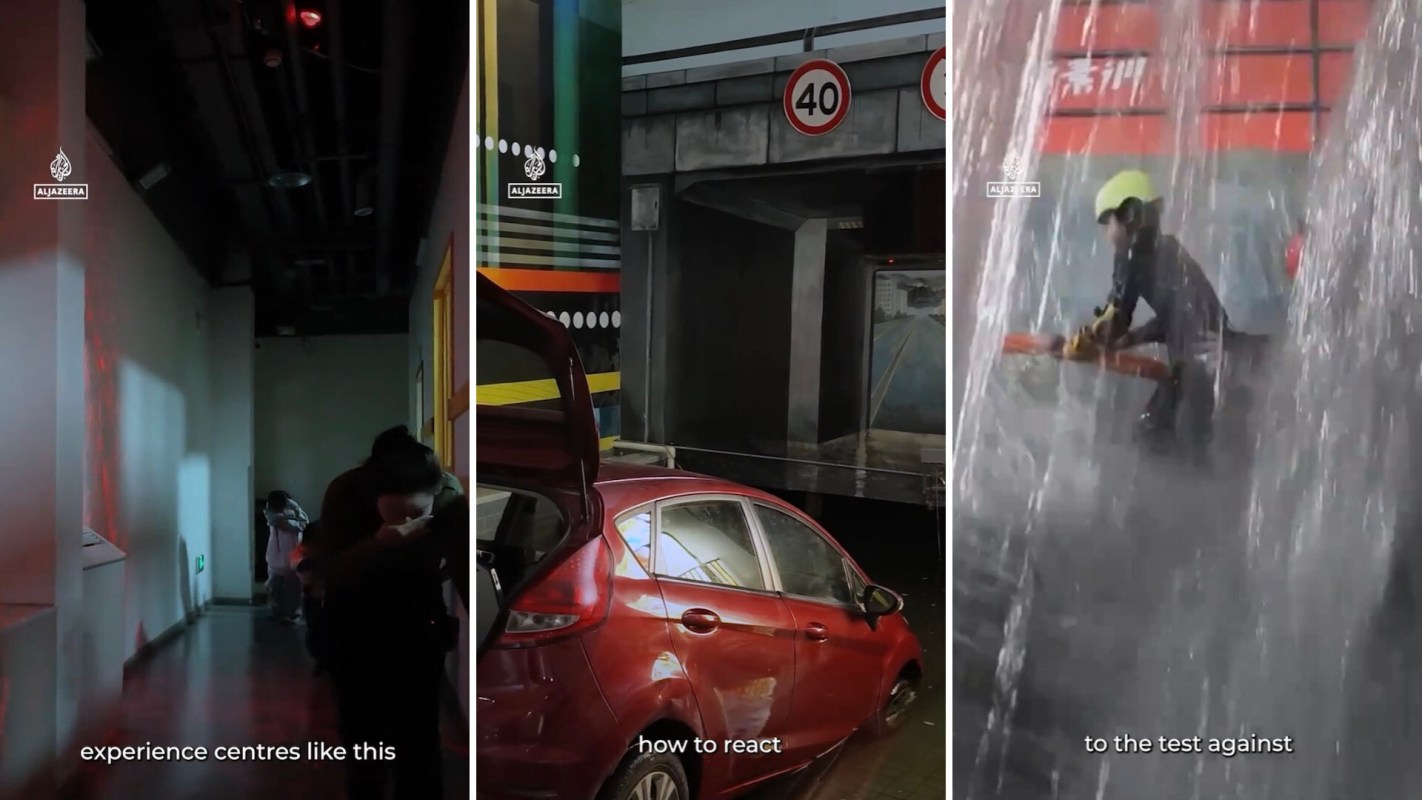
Facing 900 tons of water may sound like a nightmare, but visitors to a typhoon experience center in eastern China are paying to experience it.
Part safety lesson and part entertainment, disaster simulations are drawing growing interest as a way to teach people how to survive emergencies.
Here's what to know
Children and adults can rehearse emergency response at immersive centers, an approach Chinese authorities are encouraging for public safety training, according to Al Jazeera.
@aljazeeraenglish After years of earthquakes, floods and typhoons, #China is seeing growing interest in 'dark #tourism', where visitors flock to attractions that recreate natural disasters. . Al Jazeera's Katrina Yu reports on how the line between survival training and entertainment is blurring. #News ♬ original sound - Al Jazeera English
A Beijing excursion aimed to prepare for a real disaster, and Al Jazeera watched children take part in an earthquake simulation.
A car door can be difficult to open in deep, rushing water, Al Jazeera reporter Katrina Yu explained while taking part in a flash-flood simulation. Cold water rose around her inside the vehicle.
Yu said: "I'll definitely think twice about driving on a flooded road."
TCD Picks » Quince Spotlight
💡These best-sellers from Quince deliver affordable, sustainable luxury for all




More background
China faces several landfalling typhoons and tropical storms each year, alongside other hazards such as earthquakes and floods. According to Al Jazeera, over 67 million people experienced the effects of natural disasters in China in a single year.
Travel to places associated with destruction and loss of life is known as "dark tourism." Al Jazeera connected that practice with growing interest in these attractions, observing that "the line between survival training and entertainment is blurring."
For people who have lived through disasters, treating those events as entertainment could trivialize their suffering — a concern the report raised.
What's being done?
The Beijing public safety center uses hands-on exercises to help visitors understand what they could face during an emergency.
Rather than relying on explanations alone, the center aims to prepare participants for real disasters through practical experiences. The flood simulation shows how rising water can make it hard to escape a vehicle, while children also experience shaking ground.
Lifesaving instruction drives the center's work, according to the people behind it who spoke to Al Jazeera.
One user on Al Jazeera's TikTok post recalled a similar school outing.
"In the UK, our school took us to 'Hazard Alley' for exactly this type of danger awareness training," they said.
Another user emphasized that these simulations can replace panic with understanding.
"It's not bad," they remarked. "The more people/kids understand how things like these work, the less they might panic."
Where can I learn more?
Like disaster simulations, hurricane testing can help people prepare for dangerous storms.
• Florida's Wall of Wind received $15 million to expand 200 mph hurricane testing.
• Japan ordered nearly two million people to evacuate as Typhoon Dujuan battered Tokyo.
• Over the Philippine Sea, Typhoon Champi returned to Category 5 with 160 mph winds.
• In Hawaiʻi, Hurricane Lowell blasted dirt and debris into a hotel on Kauai.

Get TCD's free newsletters for easy tips, smart advice, and a chance to earn $5,000 toward home upgrades. To see more stories like this one, change your Google preferences here.






