


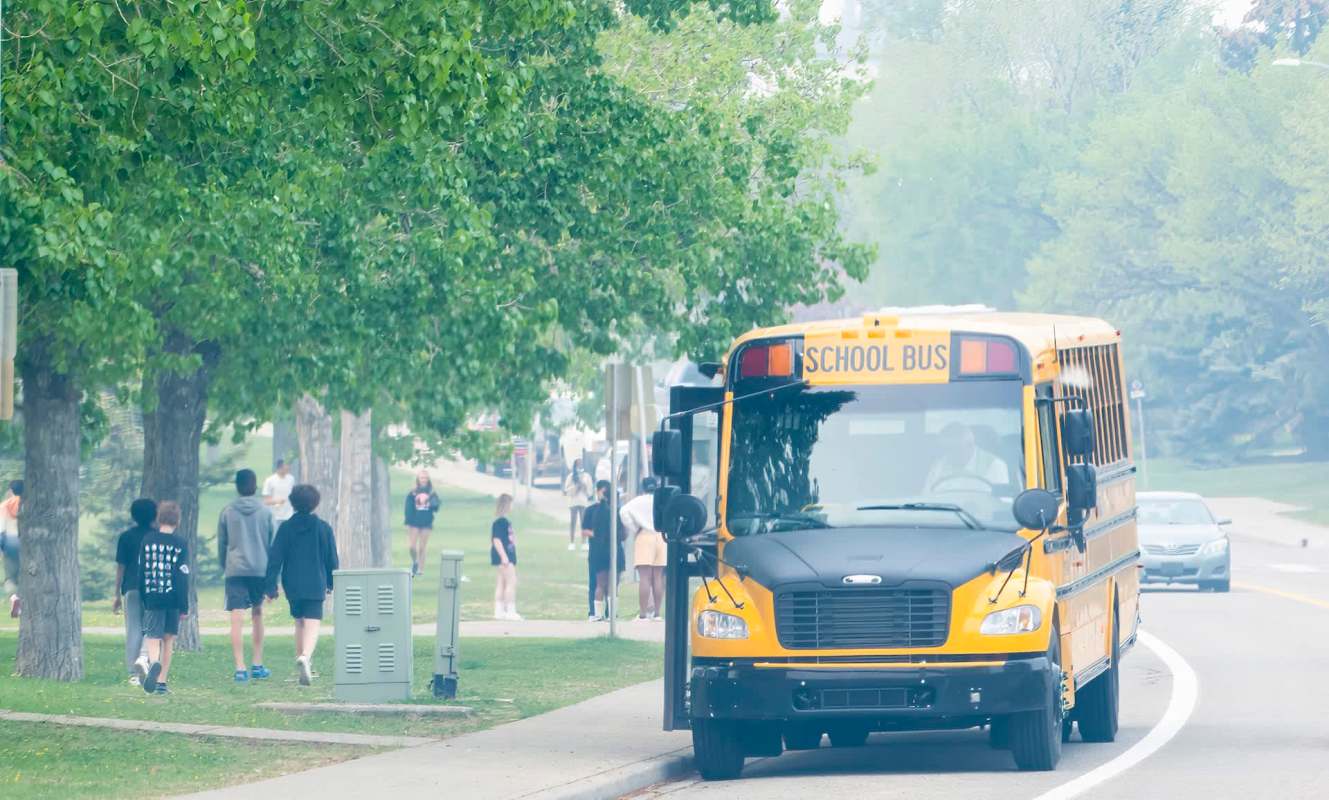
Heading indoors may not offer children enough protection from wildfire smoke, as an Oregon State University study found that some schools had higher levels of fine-particle pollution inside than were measured outdoors nearby.
Here's what to know
Researchers in Oregon State University's College of Health analyzed nationwide air quality records from 2006 through 2023, focusing on public schools and childcare centers.
Their study, published in Environmental Research, found a substantial increase in smoky days at both types of facilities, according to the Kiowa County Press.
Public schools averaged 54.4 smoke days annually by the end of that period, up from 6.8 at the start. Childcare centers saw an even larger increase, from an average of 9.4 days to 112.2 days annually.
"Our children are collectively experiencing billions of days of smoky air each year," said Molly Kile, a lead researcher and environmental epidemiologist at Oregon State.
More background
While the number of U.S. wildfires has held roughly steady at about 70,000 per year, their intensity is increasing, the Kiowa County Press reported.
TCD Picks » Quince Spotlight
💡These best-sellers from Quince deliver affordable, sustainable luxury for all




Distance from the fires does not spare communities from smoke pollution, even though Western states experience more smoke.
"Fine particulate matter travels hundreds and thousands of miles, and the prevailing wind blows from west to east, so it all goes downwind," Kile emphasized.
Wildfire smoke exposes children to particles such as PM2.5, which can enter the bloodstream and penetrate deep into the lungs.
Both the development and worsening of respiratory illnesses have been linked to PM2.5, which also causes cardiovascular disease, according to the Kiowa County Press. Wildfires account for almost half of this pollution nationwide.
What can be done?
"Some schools had higher indoor PM2.5 concentrations than nearby outdoor measurements during smoke days," Kile said. "This is a particularly actionable finding and emphasizes the need for investment in improving indoor air quality in schools through HVAC upgrades, which can be expensive, or portable HEPA filters, which can be a more affordable approach."
Buildings differ in their ability to keep outdoor pollution out, so the level of protection they offer indoors varies.
"Educational facilities are places where coordinated preparedness plans, air filtration, indoor air quality monitoring and changes to activities during smoke events could reduce exposure," said Stephanie Foster, program manager in Samaritan Health Services' Research Development Office.
Where can I learn more?
Protecting children from wildfire smoke means improving air filtration and keeping polluted outdoor air out. These stories cover classroom filters, wildfire smoke precautions, office air quality, school HVAC problems, and nationwide smoke exposure.
• DIY classroom air filters cut particles by 61% while costing a fraction of purifiers.
• In Oregon's Willamette Valley, officials urged residents to keep windows shut and run purifiers.
• Wildfire smoke prompted New York office landlords to promote cleaner indoor air.
• In Maryland, teachers raised concerns as broken school HVAC systems left classrooms above 80 degrees.
• Following record U.S. heat, wildfire smoke exposed 120 million people to hazardous air quality.

Get TCD's free newsletters for easy tips, smart advice, and a chance to earn $5,000 toward home upgrades. To see more stories like this one, change your Google preferences here.






