


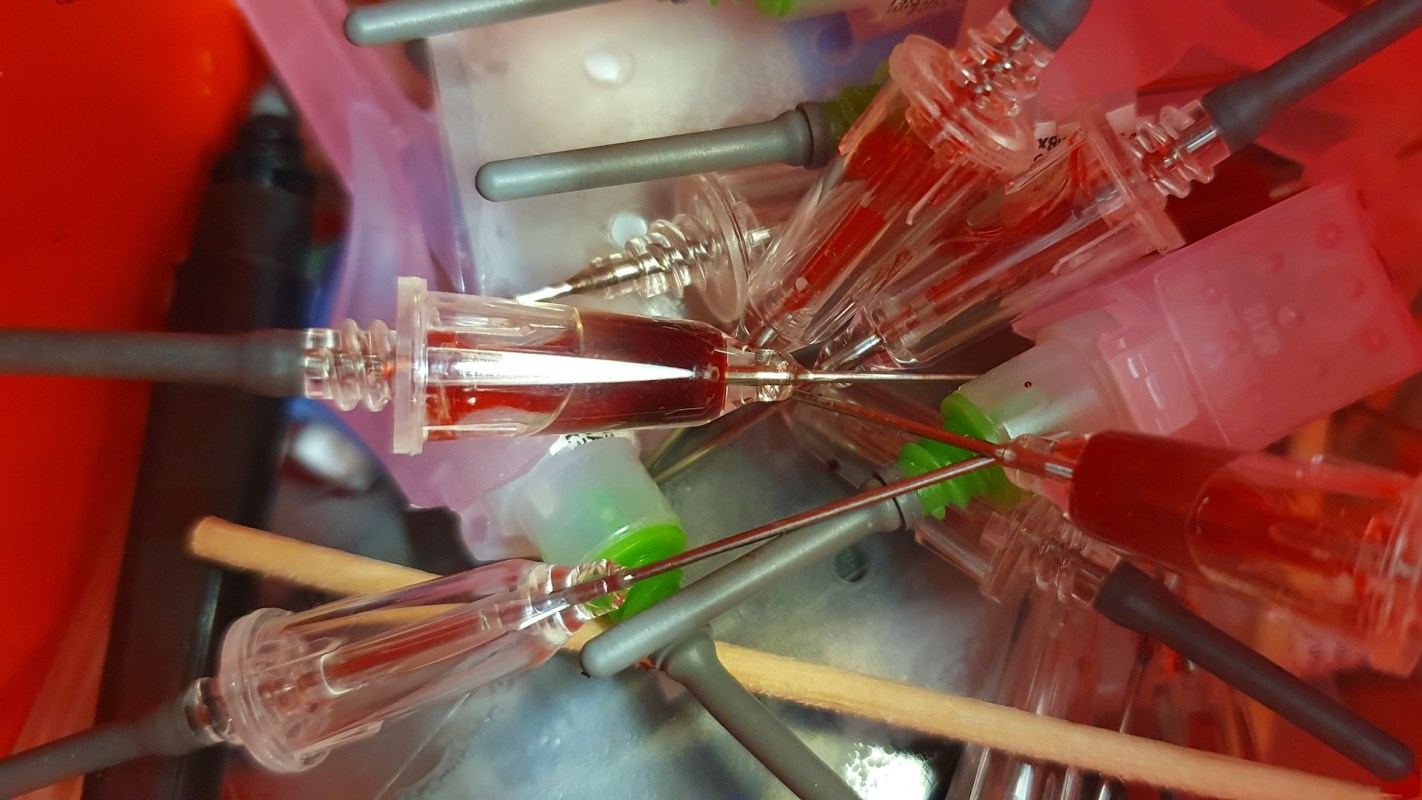
A crushed sharps container found on a recycling conveyor in Coventry, England, has exposed a dangerous problem for workers: used medical needles mixed into household waste.
Here's what to know
Sherborne Recycling, which processes material collected by multiple councils covering roughly 1.5 million people, is finding needles and sharps containers among household recycling, according to the BBC. The report cited privately prescribed medicines, including popular weight loss medications like Mounjaro and Wegovy, as an increasing challenge.
The BBC's visit highlighted the problem when a crushed, open sharps container appeared on the Coventry sorting belt. Supervisor Paul Pagett also showed the broadcaster yellow sharps containers collected from recycling in 2026 and stored in a cupboard.
"It's a worrying time," said Richard Dobbs, managing director of Sherborne Recycling. "You have to be tested and wait for results. It can take months. Most of the time they're clear but on occasion there will be times when people have picked up serious infections and illnesses and that's obviously devastating for them."
More background
Items the machinery cannot process still need to be removed by workers at Sherborne, who also inspect incoming waste, the BBC reported. Those tasks create opportunities for contact with discarded sharps despite the plant's high level of automation.
Only a handful of Sherborne employees handle waste directly. At other facilities, however, dozens of workers could be exposed.
TCD Picks » Quince Spotlight
💡These best-sellers from Quince deliver affordable, sustainable luxury for all




The BBC noted that sharps bins and disposal advice are often supplied to people who use insulin. Its reporting also covered injectable treatments for diabetes and multiple sclerosis.
Private buyers of weight-loss injections may not receive a sharps container or instructions for safely disposing of used needles.
Without that guidance, the consequences can reach workers who have no role in prescribing or supplying the medicines.
What can be done?
Household recycling is not a disposal route for used needles; they need a separate clinical-waste service. For help obtaining a sharps container and arranging safe disposal, the report recommended speaking to a doctor or pharmacist.
A recycling vehicle can crush a sharps container before it reaches the sorting facility, leaving needles free to spill onto the conveyor. The container therefore needs the same dedicated disposal route as its contents.
"There are safe disposal routes for needles but the worst place to put them is in your recycling," Dobbs said, according to the BBC. "It ends up in facilities like ours where it will be touched by people, and that's inherently unsafe."
Where can I learn more?
Used needles are just one type of waste that can put workers and communities at risk.
• In England, discarded vapes and batteries ignited a bin lorry, sending up thick smoke.
• In New Zealand, a vape battery sparked a fire that closed a recycling center.
• An old thermostat containing mercury could contaminate a lake if discarded with household trash.

Get TCD's free newsletters for easy tips, smart advice, and a chance to earn $5,000 toward home upgrades. To see more stories like this one, change your Google preferences here.






