


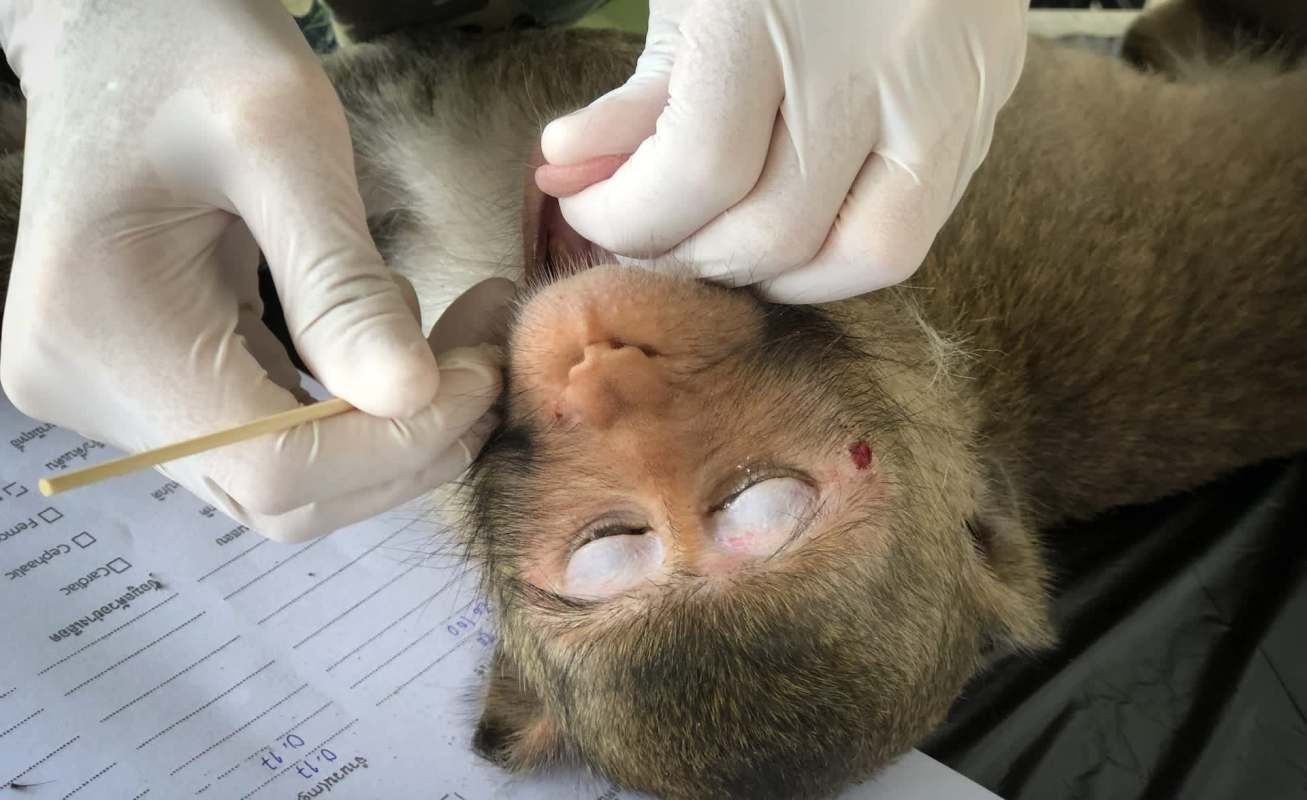
A startup aiming to produce roughly 30,000 research monkeys has received a $20 million investment from Palantir co-founder Joe Lonsdale's firm, 8VC, even as the venture faces community opposition, lawsuits, and a federal push to reduce animal testing.
Here's what to know
Safer Human Medicine has raised $28 million overall, according to CEOWorld Magazine. But its proposed breeding center in Bainbridge, Ga., remains stalled. The company has not acquired the site, and operations have not begun there.
In December 2023, local officials authorized incentives that included revenue bonds for a total of as much as $300 million, as well as roughly 200 acres and a decade of property tax relief. In return, the company pledged to invest $270 million and create roughly 263 jobs.
Residents raised concerns about disease, odors, noise, and the possibility of monkeys escaping from the center. PETA also organized opposition to the facility.
The county development authority pulled out of the deal in February 2024. Although courts upheld the bond validation, other legal disputes have continued over compliance with open meetings rules, nuisance allegations from residents, and the company's federal action seeking enforcement of its agreement.
More background
The facility is proposed amid a shortage of monkeys used in biomedical research.
TCD Picks » Quince Spotlight
💡These best-sellers from Quince deliver affordable, sustainable luxury for all




According to CEOWorld, China previously accounted for roughly 60% of U.S. biomedical research monkey supplies before ending exports in 2020. Prices in Cambodia subsequently climbed to a high of $20,000 per monkey, up from roughly $3,000.
Allegations that wild-caught monkeys were being passed off as captive-bred animals led to federal charges against members of the suspected smuggling ring that had been exporting them in late 2022. This resulted in more intense scrutiny of the supply chain.
For drugs such as monoclonal antibodies, effects in rodents can differ from those in humans; macaques are used in assessing these drugs. Supply disruptions have made drug development more expensive and held up studies.
Founder and CEO Jim Harkness previously served as Envigo's chief operating officer; that company's Virginia beagle-breeding site shut down in 2022 after animal welfare violations. Its parent company, Inotiv, subsequently entered a guilty plea and paid fines and settlements totaling $35 million. Harkness was never charged.
What's being done?
In December 2022, Congress ended the federal mandate to test drugs on animals before human trials, allowing options such as computer models, laboratory-grown tissues, and organ-on-a-chip technology, according to CEOWorld.
The Food and Drug Administration followed with a plan to reduce animal testing in April 2025, initially focusing on monoclonal antibodies. Draft guidance issued in December 2025 outlined circumstances in which toxicity testing using primates over six months could be shortened or dropped for some antibody programs. According to the agency, roughly nine in ten drugs successful in animal tests nonetheless fail in people.
In April 2026, the FDA said it had achieved its goals for the first year, including wider use of alternative methods.
Meanwhile, Safer Human Medicine acquired a site in LaBelle, Florida, in 2025 to hold and quarantine monkeys, with buyers already secured.
Despite progress on alternatives, these methods still cannot replace animal testing for many complex drugs. Kenneth Ramos, who teaches medical sciences at Texas A&M University, emphasized how important it is to maintain safety standards.
"Cutting corners on safety and efficacy assessments is never going to be a good thing to do for society," Ramos cautioned, according to CEOWorld.
Where can I learn more?
These stories explore other concerns with Palantir and other animal testing.
• At UW-Madison, eight lab monkeys missed required pain medication after experiments, according to a Wisconsin audit.
• Palantir reaches one in five U.S. hospital beds, as nurses warn AI worsens staffing shortages.
• Utah State opened a veterinary building a year after a complaint over animal deaths.

Get TCD's free newsletters for easy tips, smart advice, and a chance to earn $5,000 toward home upgrades. To see more stories like this one, change your Google preferences here.






