


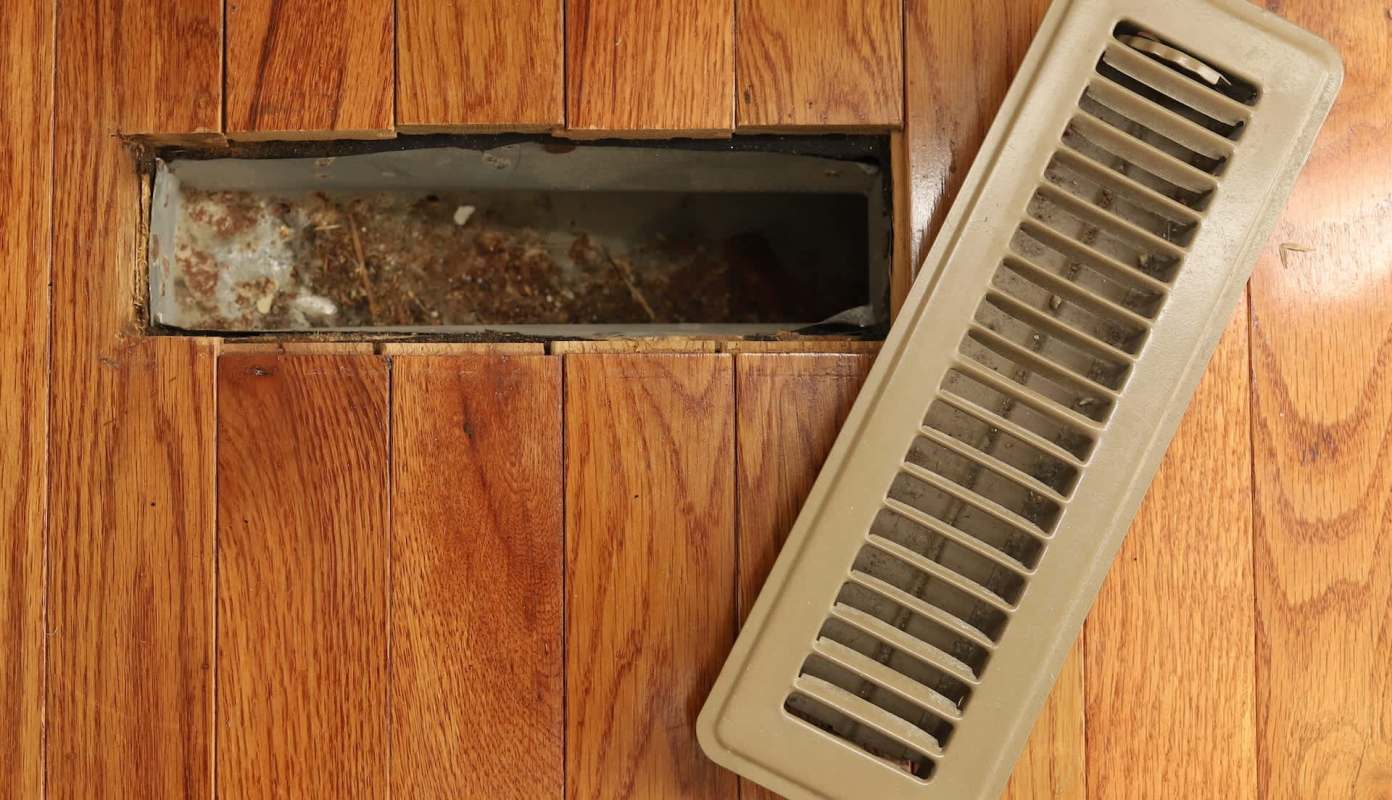
After years without a working HVAC system, one household turned to fellow Reddit users for advice on keeping cold drafts coming from unused vents.
Here's what to know
Electric space heaters were warming a few rooms in the household described in a post on Reddit's r/Frugal community. The poster said a replacement HVAC system was beyond their budget, while the existing equipment was too old to justify the repair costs.
Could cardboard taped over unused floor vents help keep the house warm? That was the additional measure the poster was considering, having already hung plastic over the windows during winter.
Outdoor cold reached the space beneath the older manufactured home, which did not sit on a permanent foundation. That exposure made the question of blocking drafts particularly pressing for the household.
The bathroom vents appeared to be a major source of drafts. When asked if the ducts are drafty, the OP responded, "The bathroom ones particularly are. We'll feel cold air coming under the door," the poster explained.
More background
The ductwork's connection to outdoor air was the key distinction for one commenter. An indoor-only loop, they explained, would leave little for vent covers to accomplish. One commenter identified cold crawl spaces and attics as potential trouble spots, particularly where ducts leaked or lacked adequate insulation.
TCD Picks » Quince Spotlight
💡These best-sellers from Quince deliver affordable, sustainable luxury for all




Better insulation for those spaces was the more effective option, the commenter said after learning about the home's crawl space. Closing off the duct openings could still offer some relief from drafts.
The thread did not provide measured temperature improvements, electricity-use data, or projected savings on energy bills.
One commenter said they had purchased large polystyrene insulation sheets for $15 and planned to make homemade vent covers with magnetic backing. The project was still a proposal, however, rather than a tested solution.
What can be done?
Rooms with gas appliances still need combustion air, cautioned another commenter, so all airflow into them should not be blocked. The commenter had used cut-to-fit foam board and reported an immediately noticeable improvement.
Restarting the HVAC system would require taking off any vent coverings first, a separate commenter warned.
The advice extended beyond the vents: area rugs for cold hard floors, heavy curtains closed at night, and rolled-up towels placed at exterior doors to address drafts elsewhere in the home.
For this household, the suggestions offered temporary ways to address drafts rather than a replacement for a working heating system. "Hoping this is our last winter here before we can buy or build a house," the OP wrote.
Where can I learn more?
When the HVAC system is running, covering vents comes with a different set of concerns. These stories explore vent safety, airflow, duct repairs, and expectations for air-conditioning performance.
• A homeowner questioned seemingly backward vent dampers, then learned they were fire dampers serving a safety purpose.
• HVAC professionals warn that closing vents to save on cooling bills can make problems worse.
• A homeowner considering a $10,000 attic duct replacement learned buried R4 ducts might not need replacing.
• A homeowner feared repairs across eight rooms after duct cleaning may have torn flexible ducts.
• A maintenance worker said the AC's 20-degree rule applies at vents, not to outdoor temperatures.

Get TCD's free newsletters for easy tips, smart advice, and a chance to earn $5,000 toward home upgrades. To see more stories like this one, change your Google preferences here.






