


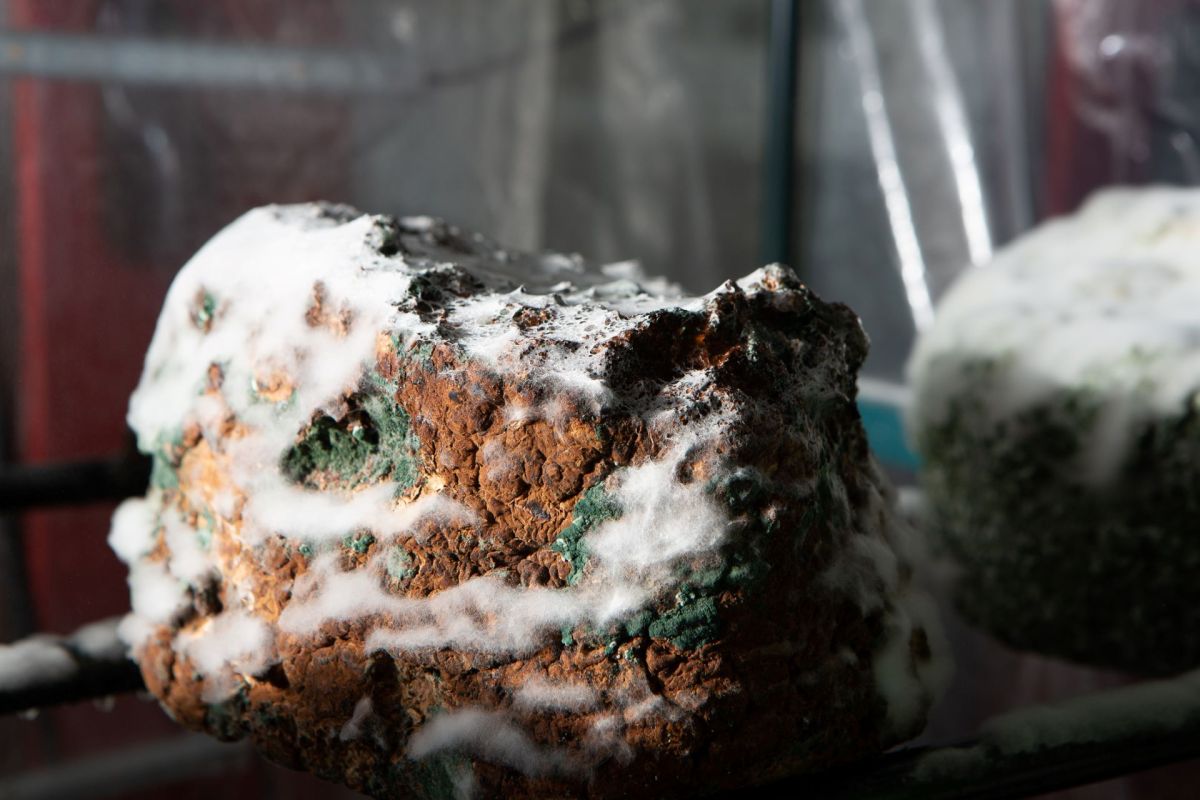
Researchers tracing a cheese-quality problem in the northeastern U.S. say some artisan cheeses are developing black rot, and at least one of the molds involved can produce toxins that could make the food unsafe.
Here's what to know
Instead of aiding ripening, a fungus not previously known to colonize cheese has been turning up at aging facilities in Massachusetts, Connecticut, and Vermont.
After studying spoiled rinds from several producers, Tufts University microbiologist Benjamin Wolfe identified Aspergillus westerdijkiae and Aspergillus ostianus, according to Popular Mechanics.
The contamination has appeared in different ways on different cheeses, including black flecks on goat cheese, fuzzy white growth with dark gray marks, and dusty black patches on cheddar. All of the affected cheeses were aging in cave environments intended to support helpful rind microbes.
The study explained, "Over the past decade, disruptive contamination events of Aspergillus spoilage molds have occurred at cheese production facilities in Massachusetts, Connecticut, and Vermont in the United States, causing aesthetic, flavor, and potential safety issues."
This contrasts these molds with familiar cheese-making fungi such as Penicillium roqueforti and Penicillium camemberti, which are deliberately used to shape flavor and texture.
TCD Picks » Quince Spotlight
💡These best-sellers from Quince deliver affordable, sustainable luxury for all




More background
To learn more about how the molds may spread, researchers isolated strains from contaminated rinds and compared their genomes. The study concluded that A. westerdijkiae had the genetic capacity to produce more types of mycotoxins than A. ostianus.
The main risk comes from the substances these molds can produce. Aspergillus species in the Circumdati group can produce ochratoxins and other harmful mycotoxins, and ochratoxins are linked to kidney damage. A. westerdijkiae also releases penicillic acid, an antimicrobial compound that can keep the usual cheese-rind microbes from becoming established.
The team's results suggested that A. westerdijkiae was not the only mold involved. Genome comparisons showed multiple distinct strains of both A. westerdijkiae and A. ostianus on cheeses aged in different places, and one sample contained A. westerdijkiae alongside two A. ostianus strains.
When researchers grew A. westerdijkiae on cheese, they found that more than 1,000 genes became more active, suggesting the mold may have specialized mechanisms that help it gain a foothold on rinds.
If several facilities use the same ingredients, including salt, one contamination source can affect multiple products.
What's being done?
Wolfe said the mold's origin remains uncertain. A search of the GlobalFungi database found no record of A. westerdijkiae in the northeastern United States, leaving two leading possibilities: It may have arrived from elsewhere, or it may have already been present without being identified. The one shared element across the affected facilities was salt.
A practical step may be to keep cave temperatures at 50 degrees Fahrenheit or below. Wolfe said the fungus slows dramatically at that point, and producers who lowered their caves to that temperature reported that the rot stopped.
Wolfe said salt remains one of the strongest leads. "We are unaware of studies demonstrating the presence of A. westerdijkiae in sea salts, but this may be a fruitful area of future research for understanding how these spoilage molds may spread around the world and into food production environments."
Where can I learn more?
These stories show how contamination, recalls, and other pressures are playing out across the food system, not just in artisan cheese:
• ShopRite and Fairway pulled organic applesauce over mold toxin concerns affecting multiple retailers.
• In Italy, cheese banks are feeling climate pressure as Parmigiano loans face heat.
• In New York, deli producers recalled salads and cream cheese over possible Listeria contamination.
• Across the U.S., lettuce, jalapeños, and eggs kept landing on recall lists.
• The FDA is still tracking 12 U.S. foodborne outbreaks with several sources unknown.

Get TCD's free newsletters for easy tips, smart advice, and a chance to earn $5,000 toward home upgrades. To see more stories like this one, change your Google preferences here.







