


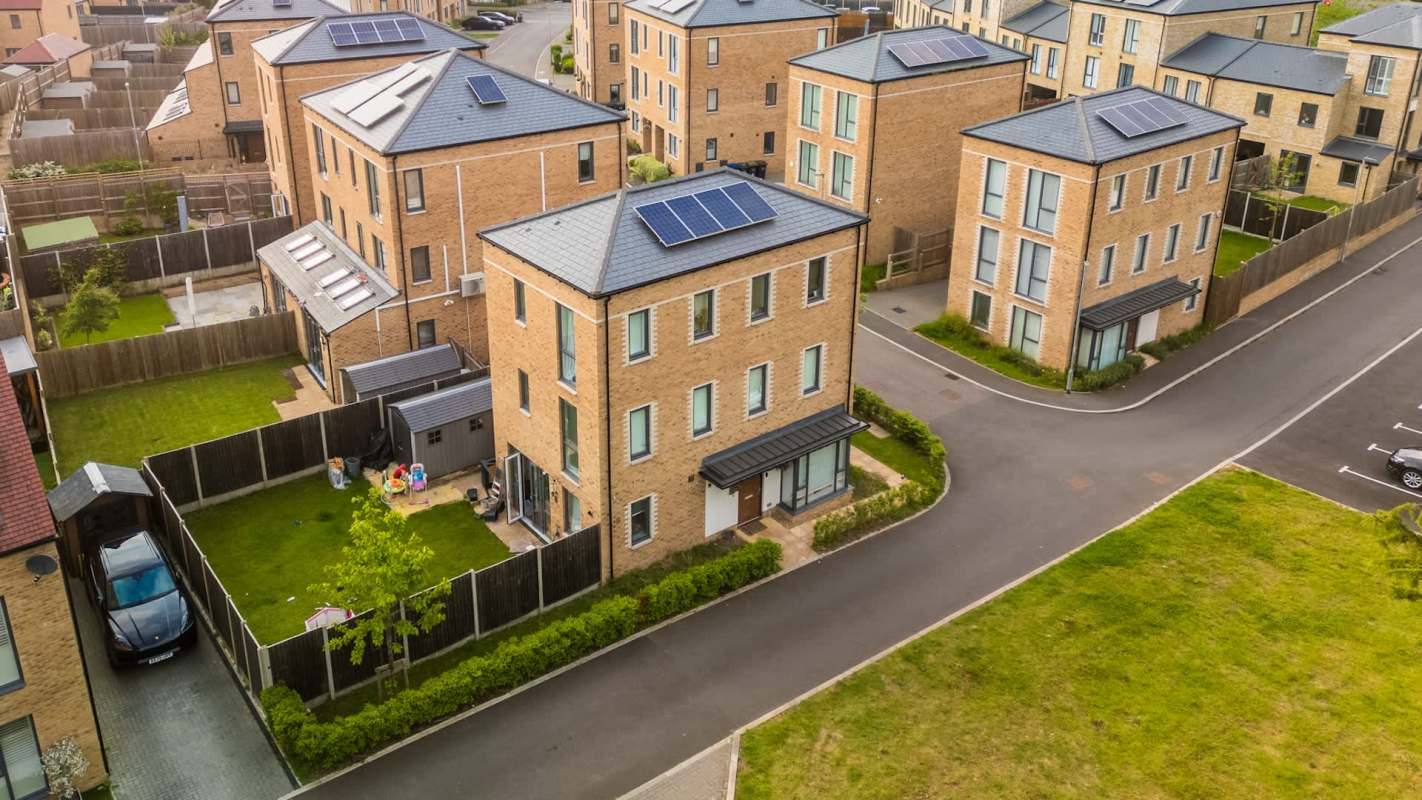
U.K. tenants in apartment blocks could see lower electricity bills and receive up to £160 ($214) a year through a shared solar-and-battery scheme, without installing equipment in their homes or changing energy suppliers.
Here's what to know
The FlatSave scheme brings together solar technology company Allume Energy, energy supplier E.ON Next, and the housing association Peabody, Inside Housing reported.
A communal battery supports Britain's grid during peak demand by storing electricity when prices are low. The battery and a single rooftop solar installation serve multiple flats, giving households access to shared solar power.
FlatSave claims the arrangement can save tenants up to 60% on bills, leaving them hundreds of pounds better off annually, according to Inside Housing. Residents also receive a guaranteed annual grid payment of up to £160 ($214).
For homeowners exploring individual battery options rather than a communal scheme, EnergySage offers information and competitive installation estimates. EnergySage has teamed up with electrification brand Qmerit to help homeowners get the best price on home battery storage solutions.
More background
Social landlord Trivallis has fitted two systems at sheltered housing sites, its decarbonization manager, Clifford Heaven, told Inside Housing.
"The bill savings were immediate; it's reduced bills by up to 50% in a lot of cases," Heaven said.
Many residents are living in inefficient, aging homes — a problem highlighted by Lewisham Council's net-zero carbon manager, Tania Jennings.
Crushed by your bills? See instant solar savings from vetted installers in just a few clicks With energy prices through the roof, there's never been a better time to go solar — and EasyHome can help you find the best prices from the best installers in your area. EasyHome takes the guesswork and headaches out of energy upgrades by showing you estimated savings from a network of vetted local partners. To get started, just enter your ZIP and share a few details about your home — seeing your estimate is really that easy. |

Landlords are still considering building improvements, but residents can tackle energy costs in the meantime with solar power and battery storage.
Beyond shared arrangements such as FlatSave, adding appropriately configured battery storage is one of the best ways to protect your home during outages. It can also help save money on energy and provide greater energy independence.
What's being done?
Other social landlords have shown interest in the scheme, Inside Housing reported. For Peabody, planned projects nationwide would build on its first FlatSave installation at Harper Court in Stevenage.
Residents can keep their current electricity supplier when joining; they don't need an E.ON Next account.
Peabody's senior retrofit manager, Rashida Kutubu, said the scheme "distributes energy across every flat based on what each household needs. We're not just reducing bills, we're putting money back in residents' pockets too."
Separate from FlatSave, Pila is another company offering strong battery backup options. Pila's plug-and-play batteries cost a fraction of a whole-home backup system.
Where can I learn more?
With shared solar, a key question is who gets the power — and the savings. These stories explore U.K. tenants' solar arrangements, rooftop savings, and income from home batteries.
• A U.K. resident considers shared solar on council roofs, questioning who would receive the power.
• A U.K. council tenant inherits an old solar setup and learns who receives power and payments.
• In England, free rooftop solar brought summer bills below £3 and earned one couple £197.
• U.K. home battery owners say virtual power plants added more than £150 in export income.
• In the U.K., home solar and batteries cut bills by 62%, with further savings possible.

Get TCD's free newsletters for easy tips, smart advice, and a chance to earn $5,000 toward home upgrades. To see more stories like this one, change your Google preferences here.






