


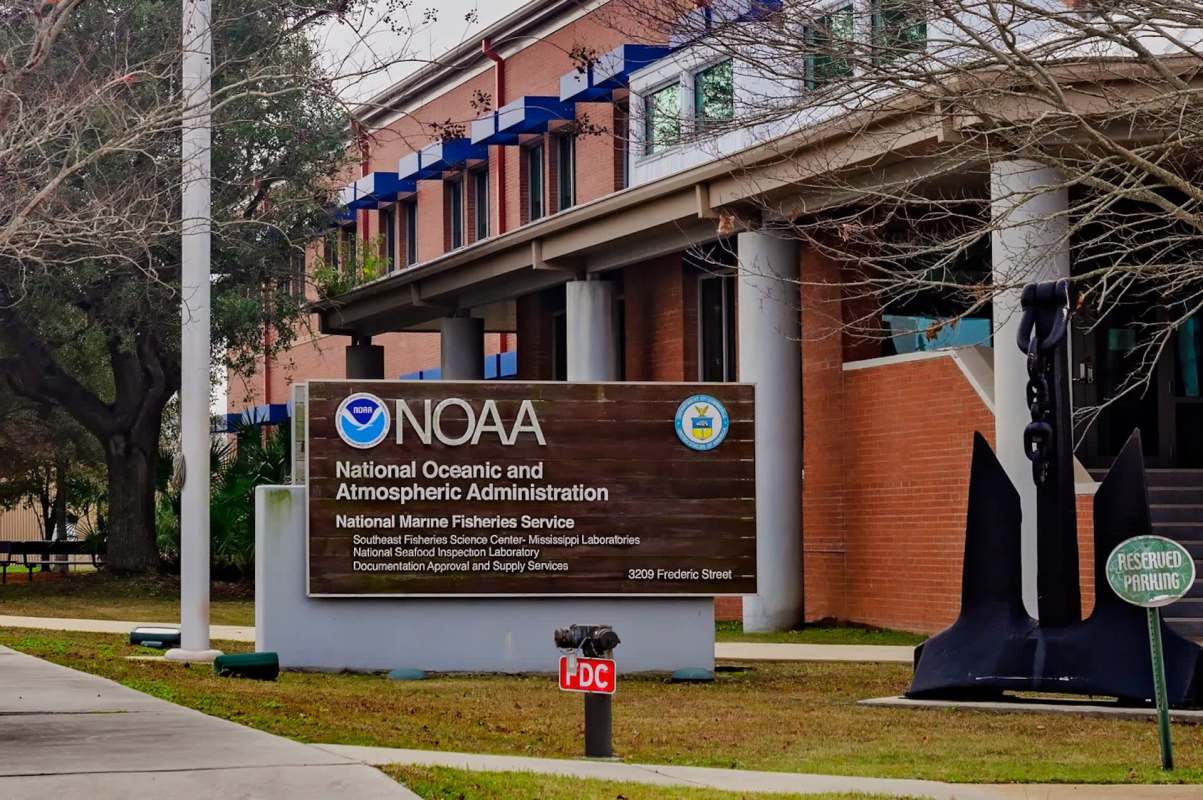
The National Oceanic and Atmospheric Administration has seen its workforce shrink by approximately one-fifth since January 2025.
That has exacerbated concerns about its ability to forecast dangerous weather as a potentially historic El Niño threatens communities with storms, flash floods, and landslides.
Here's what to know
President Donald Trump's administration has closed research laboratories and databases, canceled grants and contracts, and drastically reduced staffing, according to The Guardian (via Yahoo News).
U.S. Office of Personnel Management data show that more than 3,000 NOAA employees have been cut since January 2025, with 525 hires only partially offsetting those losses.
Reduced operating hours and delays in data collection have affected some stations.
NOAA's National Weather Service still has hundreds of vacancies across its 122 forecast offices, The Guardian reported. The service processes about 6.3 billion observations daily and issues up to 50,000 warnings annually.
TCD Picks » Quince Spotlight
💡These best-sellers from Quince deliver affordable, sustainable luxury for all




Those staffing gaps could be particularly concerning during El Niño, a weather pattern involving unusually warm equatorial ocean waters.
The event could intensify storms across parts of the American West and raise California sea levels by up to a foot, increasing hazards for coastal communities.
More background
NOAA's public affairs team, which helps convey important information, lost about half its staff, according to U.S. Office of Personnel Management data cited by The Guardian.
Meanwhile, its information technology management workforce, which supports the infrastructure used for forecasts and data, shrank by about 27%.
Staffing shortages have already delayed or curtailed weather balloon launches, reducing tornado preparedness in parts of the Great Plains. Rural Alaska communities also faced limited warnings during flooding that displaced more than 1,500 people.
Separately, the Government Accountability Office found that staffing and funding cuts undermined multilingual weather alerts, putting 26 million United States residents at greater risk.
Roughly $6 billion was removed from a weather satellite investment, and a GAO analysis warned that reduced funding could create a coverage gap and severely disrupt data.
What's being done?
Following objections from scientists, the fishing industry, and civil servants, the administration restored ocean monitoring systems it had begun removing.
These systems provide important information during El Niño.
NOAA maintained that updated modeling tools and uncrewed systems are improving its capabilities.
"NOAA has never been more equipped to study, prepare for and respond to an ENSO event [El Niño Southern Oscillation event]," an agency spokesperson said in an email to The Guardian.
"These advanced capabilities have allowed NOAA to streamline resources and study this year's El Niño more effectively than ever before."
However, NPR reported in September that only "a handful of unmanned watercraft" would be deployed into the Pacific. During the previous strong El Niño, monitoring efforts included a research ship and unmanned aircraft, along with planes and weather balloons.
Former NOAA administrator Rick Spinrad acknowledged the technological improvements but questioned whether the administration would sustain them, per The Guardian.
Monica Medina, NOAA's principal deputy administrator under President Barack Obama, expressed concern about reduced weather-monitoring capabilities.
"I worry about loss of life and about our inability to be protected at a time when we need our government the most," she admitted, according to The Guardian.
Where can I learn more?
Cuts to NOAA's workforce have raised concerns about forecasting the storms and flooding El Niño could bring. These stories explore winter uncertainty, California emergency declarations, and threats to food supplies worldwide.
• A Massachusetts meteorologist warns a record-strong El Niño could push winter into uncharted weather territory.
• A powerful El Niño intensified by fossil fuels could push millions into hunger.
• California has declared a statewide emergency as El Niño threatens floods, high surf, and erosion.

Get TCD's free newsletters for easy tips, smart advice, and a chance to earn $5,000 toward home upgrades. To see more stories like this one, change your Google preferences here.






