


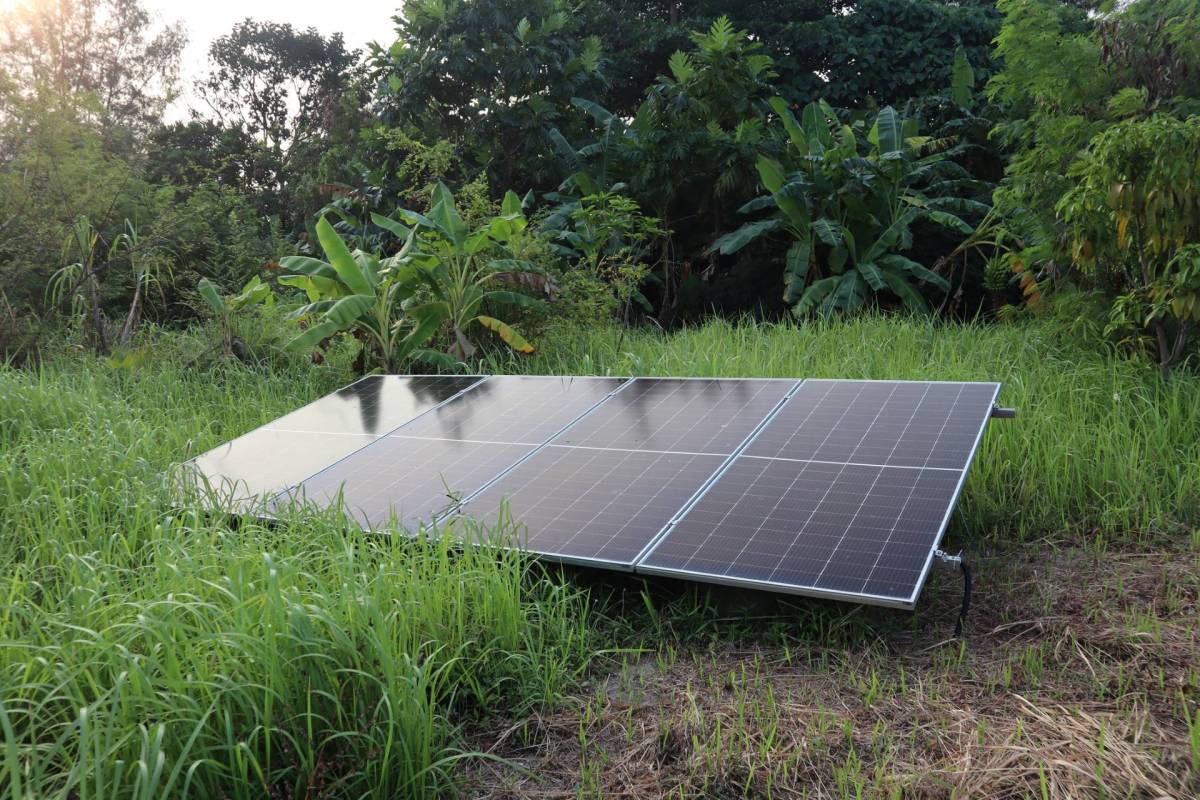
Keeping two camper air conditioners running through a Texas summer takes plenty of electricity. For one ranch owner, that challenge is the starting point for an off-grid solar system that could eventually power a house.
Here's what to know
In a post on Reddit's r/SolarDIY community, the owner outlined plans for two 16-kilowatt-hour batteries and two 6-kilowatt inverters to power a fifth-wheel trailer during construction.
Panel sizing remained an open question, with summer cooling expected to account for the largest share of electricity use.
The property will not have a utility connection.
"All solar no power pole. Off grid completely. Have a generator I can run to recharge on bad days. It's at my ranch so ground mount will be installed space isn't an issue," the OP explained.
One user estimated what it would take to replenish the 32-kilowatt-hour battery bank: An 8-kilowatt array could theoretically do that with four good hours of sunlight each day.
TCD Picks » Quince Spotlight
💡These best-sellers from Quince deliver affordable, sustainable luxury for all




But that calculation accounts only for charging the batteries. Another user questioned whether the panels could also power heating and cooling while replenishing storage.
More background
The proposed inverters sparked a debate about reliability and future expansion.
Saving space now and adding capacity for the house later were the advantages one user saw in choosing a single 12-kilowatt split-phase inverter over two smaller units. The owner added that additional inverters could be connected in parallel when the house was built.
A failed inverter could leave the owner without a working alternative until a replacement arrived, the owner noted. Other users likewise questioned whether the suggested benefits of one unit justified giving up a backup.
The owner also clarified that the equipment would not need to move once the house was ready. The batteries and inverters would remain in a dedicated room or shed, with a main service line connecting them to the future home.
What can be done?
Several users suggested reducing cooling demand before committing to the full battery-and-panel purchase.
One user argued that less battery storage and solar capacity might be needed with more-efficient cooling. They suggested replacing the rooftop air conditioners with mini-split heat pumps.
Another suggestion aimed to ease the load on the inverters: add a soft-start device to each existing air conditioner.
One of two details a separate user requested to determine the system's size was how long the batteries would need to supply electricity. The other was its maximum continuous power demand.
Fairly sunny conditions were enough to keep one Texas user's step van powered indefinitely, they reported. Its setup used 15 kilowatt-hours of batteries, a 3,500-watt inverter, and 2 kilowatts of solar to power a mini-split and a refrigerator-freezer.
For the ranch owner, limiting generator use during cloudy weather was another reason to weigh panel capacity carefully.
"Plan on more panels than you think you need. The more overkill, the less you will have to run the generator on a string of cloudy days," one user advised.
Where can I learn more?
Other owners have wrestled with the same questions about running air conditioning on solar and sizing their battery banks.
• A box-truck owner tested off-grid air conditioning in 100-degree desert heat with 1,950 watts of solar.
• A homeowner asked whether two cheap solar panels could power a window air conditioner.
• A homeowner asked whether mini-splits could run solely on solar panels and batteries.
• A Texas owner's $35,000 DIY solar setup keeps a home off-grid 90% of the time.

Get TCD's free newsletters for easy tips, smart advice, and a chance to earn $5,000 toward home upgrades. To see more stories like this one, change your Google preferences here.






