


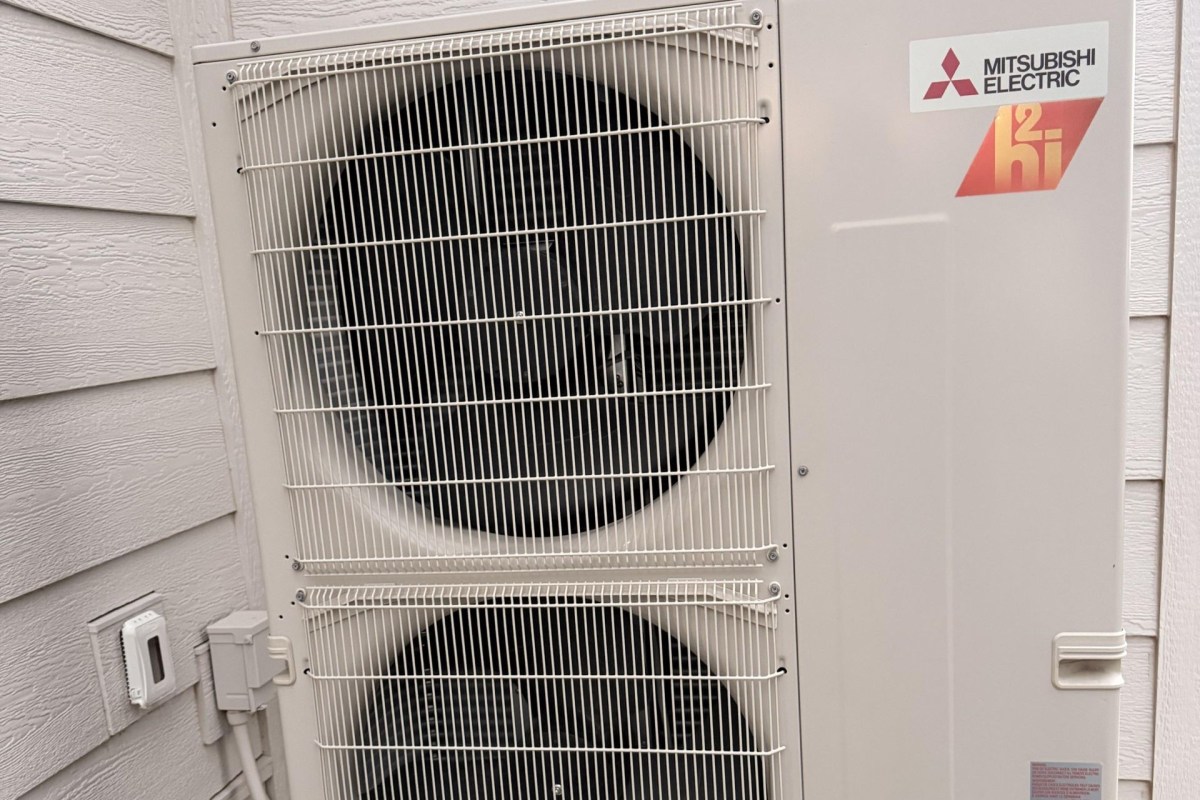
A Reddit user in southeast Idaho says that after two years in a new home, their all-electric heat pump setup still has not needed backup heat strips, and their utility's equal-pay program has kept the bill at $207 a month.
Here's what to know
According to the Reddit thread, the 2024-built, three-level house uses a Mitsubishi Hyper Heat 3.5-ton outdoor heat pump unit, a Mitsubishi air handler, an 8-kilowatt heat strip, and a Broan AI 210 CFM ERV.
Located in southeast Idaho's IECC zone 6B, the home has about 36,400 cubic feet of conditioned space and a winter outdoor design temperature of minus 1 degree Fahrenheit.
The poster said the thermostat settings stay at 69 degrees indoors in winter and 74 in summer, and the air-handler fan runs nonstop. For homeowners considering a similar switch, efficient heating and cooling can be one of the clearest ways to cut utility costs and protect against rising energy prices. Palmetto can help homeowners understand their HVAC options and lower energy bills with newer, more efficient HVAC systems and heat pumps, and its Comfort Plan network can connect them with vetted installers.
The original poster wrote, "The heat strips have never kicked on yet, however we have had fairly mild winters for our zone since living in the home."
One commenter summed up their view of the brand, saying, "Mitsubishi makes one of the best."
More background
Details shared in the thread included a 2.0 ACH50 blower door result, and insulation included R-21 in the walls, R-70 in the ceiling, and R-32 closed-cell foam in the crawl space.
On comfort inside the house, the poster said humidity stays around "42-48% all year," except when daily lows fall below freezing, when it moves into the upper 30% range. The original poster said the full system came to "About $29k. Not a retro, all new install, ducting and all."
Crushed by your bills? See instant solar savings from vetted installers in just a few clicks With energy prices through the roof, there's never been a better time to go solar — and EasyHome can help you find the best prices from the best installers in your area. EasyHome takes the guesswork and headaches out of energy upgrades by showing you estimated savings from a network of vetted local partners. To get started, just enter your ZIP and share a few details about your home — seeing your estimate is really that easy. |

Although the homeowner said a gas furnace "would make more sense if money was the concern" in their area, they chose an all-electric setup partly because they want to add solar with batteries.
What can be done?
If the upfront cost feels out of reach, Palmetto's Comfort Plan offers $0-down options that can cut heating and cooling costs by up to 50% and include 12 years of free maintenance.
The poster also described a "set and forget" approach to heating and cooling, said they track electricity use with an Emporia Vue system, and noted the home was prepared ahead of time so future solar wiring "won't be a hassle."
They also said they monitor the heat strips separately, so they can see actual power use if those strips ever switch on during a colder winter.
The homeowner added that Idaho's solar-policy changes mean an installation does not make financial sense for them, though the house is already ready for panels.
Pairing solar panels with electric appliances, including efficient HVACs, can drive utility costs even lower. EasyHome makes it simple to compare solar options and find the best solar system and installer for a home and budget, helping homeowners save thousands on solar installations.
Where can I learn more?
Homeowners across North America have shared what happened when they put cold-climate heat pumps through winter in their own homes.
• In eastern Ontario, homeowners say backup rarely runs when a cold-climate heat pump replaces a furnace.
• In Maine, some cold-climate mini-splits handle sub-zero winters solo without any extra heat.
• Homeowners replacing a 50-year-old electric furnace say a heat pump still wins even in deep cold.
• In Connecticut, one homeowner said power use barely budged after four winters on mini-splits.

Get TCD's free newsletters for easy tips, smart advice, and a chance to earn $5,000 toward home upgrades. To see more stories like this one, change your Google preferences here.






