


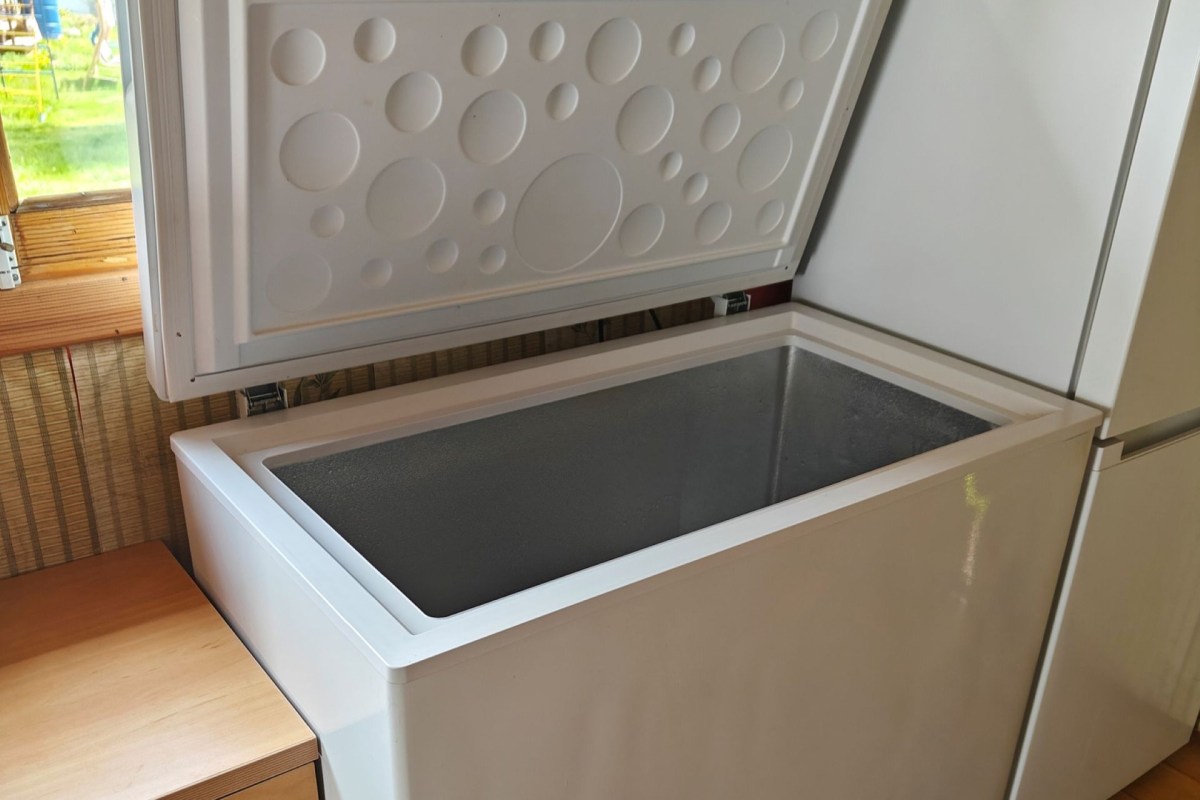
After a winter ice storm left a northern Vermont homeowner without power for four days, they went to Reddit looking for backup options, saying, "Looking for a home battery that will outlast my dad's 1988 chest freezer."
They said the freezer has already outlasted two fridges and a furnace; they want a battery that can do the same and want to keep the installed solution near $8,000.
Here's what to know
The original poster said their backup setup would need to keep a chest freezer, sump pump, fridge, router, and a few lights running in a 120/240V home, which they estimated at roughly a 1-kilowatt continuous load. They said the search started after they spent a blackout hauling in ice to keep 150 pounds of meat from spoiling in the chest freezer. They added that they don't have solar now, but might want to add it later.
The three systems they said they were comparing were the Powerwall 3, Enphase IQ Battery 5P, and EcoFlow TITAN. From their research, the Powerwall carried a 10-year warranty, the Enphase option appeared to offer 15 years, and the TITAN seemed attractive on price but too unproven because it had not started shipping and lacked real-world results.
For a household trying to keep essentials such as a freezer and sump pump running through outages, battery storage can be one of the best ways to protect a home during blackouts, save money on energy, and gain more energy independence.
Even without solar, a properly sized battery can reduce the disruption of a multi-day outage. Homeowners comparing systems can explore EnergySage to learn about home battery storage options and receive competitive installation estimates. EnergySage has teamed up with electrification brand Qmerit to help homeowners get the best price on home battery storage solutions.
More background
Because they expect to use backup power only three or four times a year, the OP said cycle counts were not their main concern. What worried them more was electronics aging out or the possibility that a manufacturer might not still be around by 2040.
One commenter wrote, "Unfortunately, battery walls are not going to be Bifl," (Bifl meaning – Buy It For Life) before adding, "All batteries will eventually fail," then suggested combining a smaller battery with a generator for longer winter outages.
Crushed by your bills? See instant solar savings from vetted installers in just a few clicks With energy prices through the roof, there's never been a better time to go solar — and EasyHome can help you find the best prices from the best installers in your area. EasyHome takes the guesswork and headaches out of energy upgrades by showing you estimated savings from a network of vetted local partners. To get started, just enter your ZIP and share a few details about your home — seeing your estimate is really that easy. |

Several commenters said a four-day blackout shifts the focus away from surge capacity alone. In their view, a no-solar setup has to be judged mainly by total stored energy, especially if the sump pump may need to run through the night.
A few also pointed out that their main concern may be easier to remedy when they narrow their constraints: During an ice storm, a freezer full of venison may be easier to protect than an entire house.
What can be done?
The thread centered on combining technologies instead of expecting one wall-mounted battery to handle everything indefinitely.
Multiple commenters suggested pairing a modest battery system with a generator so refrigeration, lights, internet, and pump loads could stay covered without paying for a much larger battery bank sized for four full days.
One commenter suggested installing a transfer panel that could switch 10 breakers from the grid to a 240V backup source, then choosing whether that source should be a battery, a generator, or both.
Another proposed adding a temperature sensor and alert hub to the freezer so the homeowner would know right away if the food supply was at risk.
For readers who do not need a full-house battery backup system, Pila offers another strong option. Pila's plug-and-play batteries are priced at a fraction of what a whole-home system would cost, which may make more sense for people only trying to keep a few things running during an outage.
"I did not lose it, but I'm not doing that again," the OP wrote, speaking about the four-day ice-dumping escapade.
Where can I learn more?
These articles dig into the same tradeoffs homeowners face when outages put food, pumps, and other essentials at risk.
• In California and Texas, adding a third battery pushed some backup quotes past $16,000.
• One homeowner used a giant UPS to keep four circuits alive through storms.
• For two seniors, batteries would not be enough during longer outages, so a generator stayed in play.
• In Pennsylvania, a homeowner with 30 kWh eyed a $1,000 generator for rare outages.
• After a four-day blackout, one homesteader found many still turn to generators for longer coverage.

Get TCD's free newsletters for easy tips, smart advice, and a chance to earn $5,000 toward home upgrades. To see more stories like this one, change your Google preferences here.






