


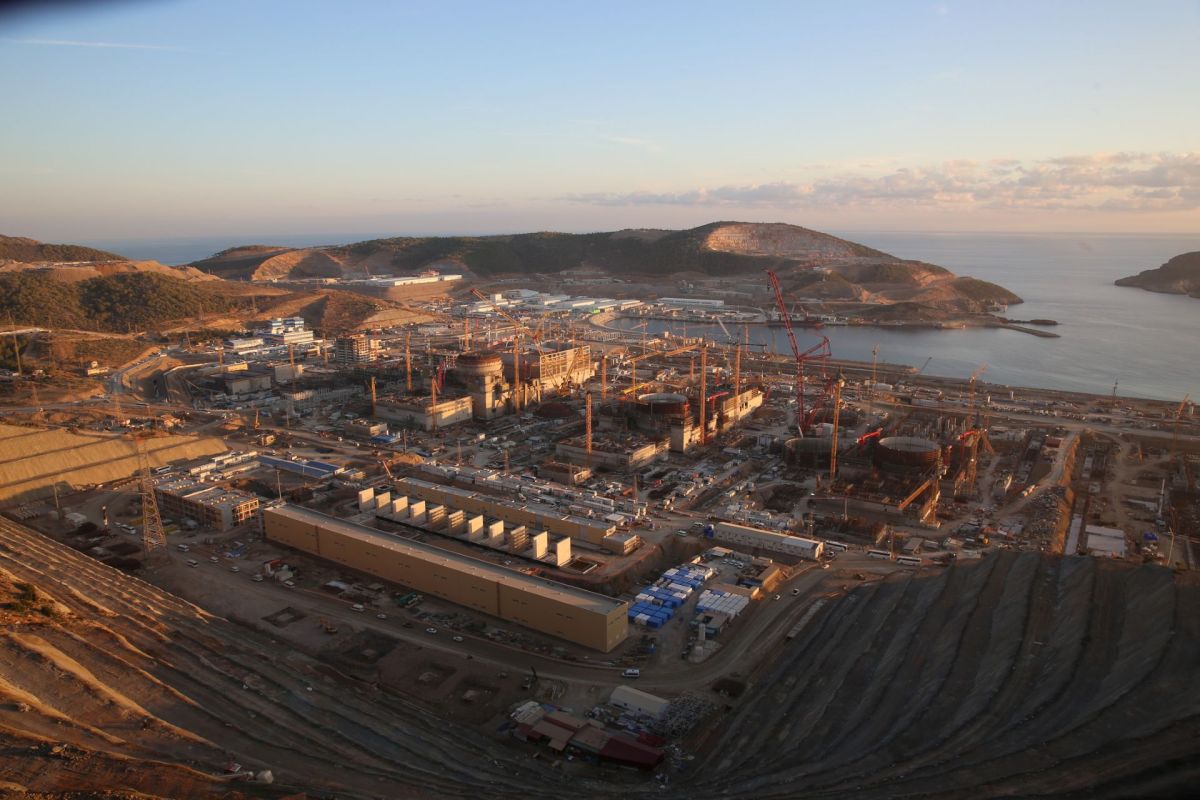
Turkey is set to get its first nuclear power plant through a roughly $25 billion project meant to cover about a tenth of the country's electricity needs. The unusual part is that Russia's state-owned nuclear company, Rosatom, is heavily involved from construction to operation.
Here's what to know
As The B1M (@TheB1M) detailed in a YouTube video, Akkuyu is rising on Turkey's Mediterranean shoreline in Mersin Province, about 311 miles south of Ankara.
The complex is planned around four reactors, and once all are complete, the plant is expected to have 4.8 gigawatts of capacity and produce about 35 billion kilowatt-hours per year. The first reactor is slated to begin operating in late 2026, as the video's host Fred Mills noted.
Turkey's power demand has been climbing quickly. Citing the International Energy Agency, Mills said Turkey has the fastest-growing electricity demand among its 32 member countries. At the same time, the country still imports nearly three-quarters of its energy and gets more than a third of it from coal.
The project stands out for its financial and operational structure, as Mills described. Under the "build-own-operate" model, Rosatom does more than design and construct the plant. It is financing the project, supplying the fuel, managing the waste, and keeping a majority ownership stake.
More background
The long timeline helps explain why Akkuyu attracts so much attention, Mills suggested. Turkey had been trying since the early 1970s to develop a nuclear plant at the site, but its deal with Russia was not signed until 2010. Construction began in 2018, and the original completion target was 2023.
TCD Picks » Quince Spotlight
💡These best-sellers from Quince deliver affordable, sustainable luxury for all




Much of the project's engineering is centered on containment and emergency response. All four 1.2-gigawatt reactors have inner and outer containment structures that combine reinforced concrete with steel lining to help keep radioactive material sealed. The plant also includes a passive core flooding system that automatically sends boric acid solution into the reactor if pressure drops too low.
Its location in an earthquake-prone region has required extra protection against natural hazards, the video noted. Developers built a breakwater to protect cooling-water systems from flooding, storm surges, and tsunamis, and they placed each reactor building on a slab designed to withstand earthquakes.
The politics around Akkuyu are very consequential. Turkey is a NATO member, yet Russia could control one of its major future energy assets for an operating lifespan of 60 years.
What's being done?
Work has continued across the individual units. By mid-2026, crews were lifting one of the site's 16 steam generators into place as the final major piece of reactor-hall equipment. Each generator is 46 feet (14 meters) long and weighs 340 tons.
Another major part of the project has been preparing the people who will eventually run it. Turkey and Rosatom have sent hundreds of Turkish engineers through training programs at Russian universities, building a domestic workforce able to operate and maintain it.
Turkey is already considering what comes after Akkuyu. A second nuclear plant on the Black Sea coast remains under discussion. Officials have also floated a third site northwest of Istanbul, along with small modular reactors.
Mills summed up Akkuyu's arrangement: "The deal that underpins this project is unlike anything we've seen before."
Where can I learn more?
Similar tensions around nuclear power, grid reliability, and geopolitics are emerging elsewhere in the world.
• Japan, South Korea, and the US formed a nuclear alliance as energy security concerns deepened.
• In France and Switzerland, reactors go offline during heat waves, making AC more necessary.
• In Ontario, the world's largest nuclear plant faces opposition in Port Hope amid waste cleanup.

Get TCD's free newsletters for easy tips, smart advice, and a chance to earn $5,000 toward home upgrades. To see more stories like this one, change your Google preferences here.






