


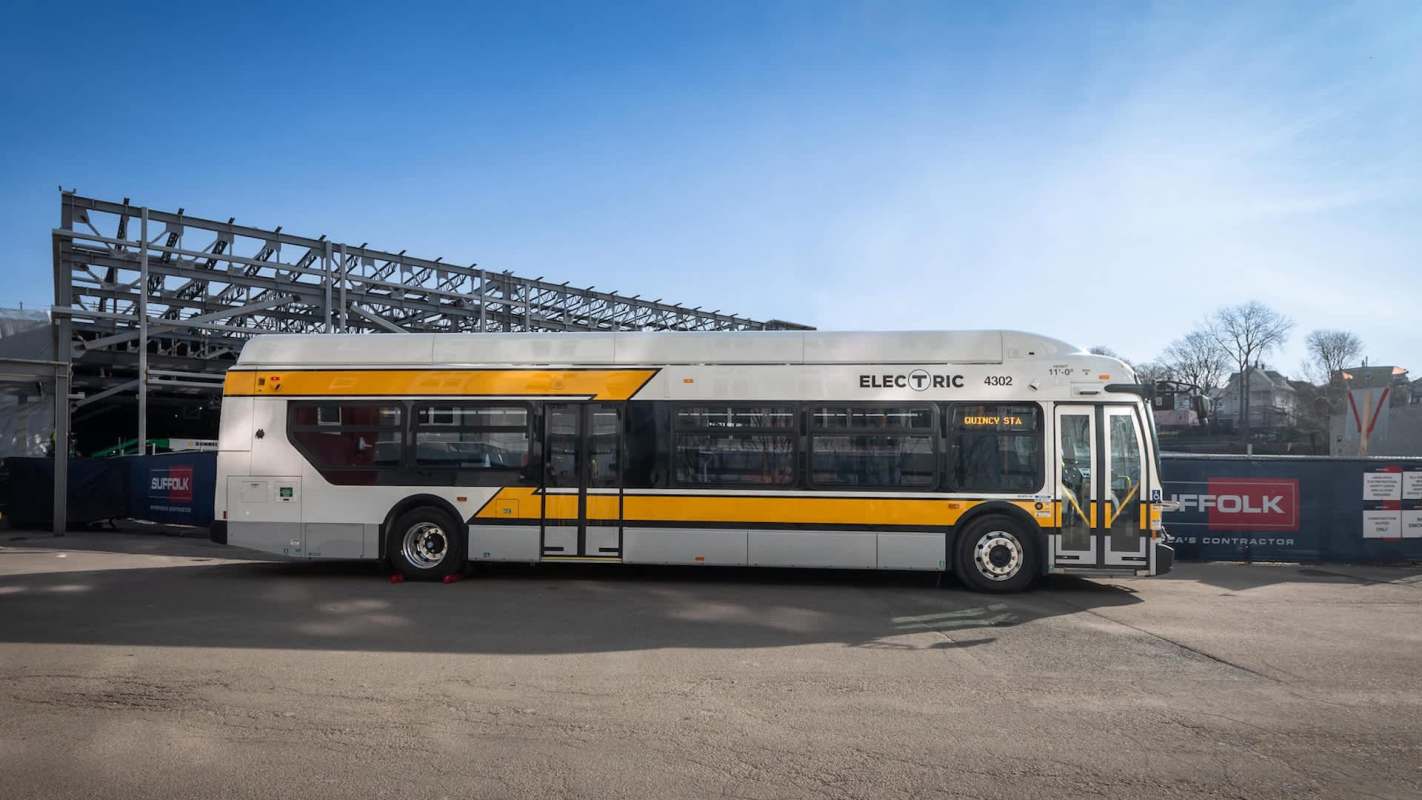
With only about 10% of its bus fleet fully electric, the Massachusetts Bay Transportation Authority has approved an $83 million order for 65 new hybrid buses, a move that departs from the agency's own roadmap.
Here's what to know
The order, awarded to New Flyer Industries, covers 65 diesel-electric hybrid buses that the MBTA expects to receive in 2028. William Wolfgang, the T's director of vehicle engineering, told board members Oct. 22 that they are meant to replace older buses that have been on Massachusetts roads since at least 2008, according to The Boston Globe.
Wolfgang said the T now operates about 1,000 buses, including more than 700 hybrids, 175 compressed-natural-gas vehicles, and just 125 zero-emission electric buses. Those numbers show how far the agency remains from the targets it set in 2022.
Because hybrids aren't counted as fully electric vehicles, the newly approved buses will not help the MBTA reach its 2028 goal of having nearly 30% of the fleet fully electric. The agency has said hybrids still cut pollution and improve air quality without the added expense of building out electric chargers.
Phil Eng, the MBTA's general manager and interim secretary of transportation, said the purchase reflects what's realistically possible now. He also said a $78 million Federal Transit Administration grant will cover most of the bus order.
More background
The agency had laid out a far more aggressive timeline. In 2022, the MBTA said it would buy only electric buses after 2030, retire buses that run on non-renewable energy sources, and modernize all nine bus facilities with high-capacity charging infrastructure by the end of 2024, the Globe reported.
TCD Picks » Quince Spotlight
💡These best-sellers from Quince deliver affordable, sustainable luxury for all




Those deadlines have slipped. The MBTA has cited supply-chain problems and rising costs as reasons garage rebuilds and retrofits needed for large-scale electric bus charging have moved more slowly, though updated bus garages in North Cambridge and Quincy are now under construction.
The board also approved a separate $310 million purchase of 10 diesel locomotives and 10 battery-electric commuter rail locomotives. Those trains will replace some of the system's oldest locomotives, which have been running for more than 50 years.
Wolfgang said the battery-electric locomotives will be quieter and emit 80% less than the current trains. They are expected to operate on the Providence line, which already has overhead power through Amtrak service.
Chris Friend, interim executive director of transportation advocacy group TransitMatters, also criticized the T for not sharing information about Providence line service upgrades tied to the procurement of new electric trains.
What's being done?
The MBTA is still adding some all-electric equipment, even as it continues relying on hybrids and mixed fleets in the meantime. The agency purchased 40 all-electric buses from New Flyer Industries, the same manufacturer building the newly approved hybrid buses.
That contract also gives the MBTA the option to buy another 235 buses if additional funding becomes available. Eng said the agency is also developing a systemwide decarbonization plan while trying to keep current service reliable.
On the rail side, the new battery-electric locomotives are part of the MBTA's effort to replace older, more polluting equipment before the agency electrifies the entire network.
Not everyone is convinced by that strategy.
"Why are you procuring and buying diesel trains locomotives at this point, and not leasing them, when the future is in the electrification of the transportation and the rail system?" Mela Bush-Miles, coordinator of transit equity at Action for Equity, asked the MBTA about its continued purchase of polluting vehicles, according to the Globe.
Eng described the agency's challenge this way: "How do we keep today's system running safe and reliable, as we're building the future modernized, decarbonized T? It's like riding the bicycle while you're changing the tire at the same time."
Where can I learn more?
These stories look at the fleet, budget, and service decisions shaping the MBTA's push toward cleaner transit.
• A decade after a "historic" vote, Boston's MBTA nears a $750 million battery train test.
• Boston's slowest MBTA buses are getting slower, even as bus bunching finally starts to ease.
• In Massachusetts, MBTA rail costs hit $5.2 billion, with the next contract topping $10 billion.

Get TCD's free newsletters for easy tips, smart advice, and a chance to earn $5,000 toward home upgrades. To see more stories like this one, change your Google preferences here.






