


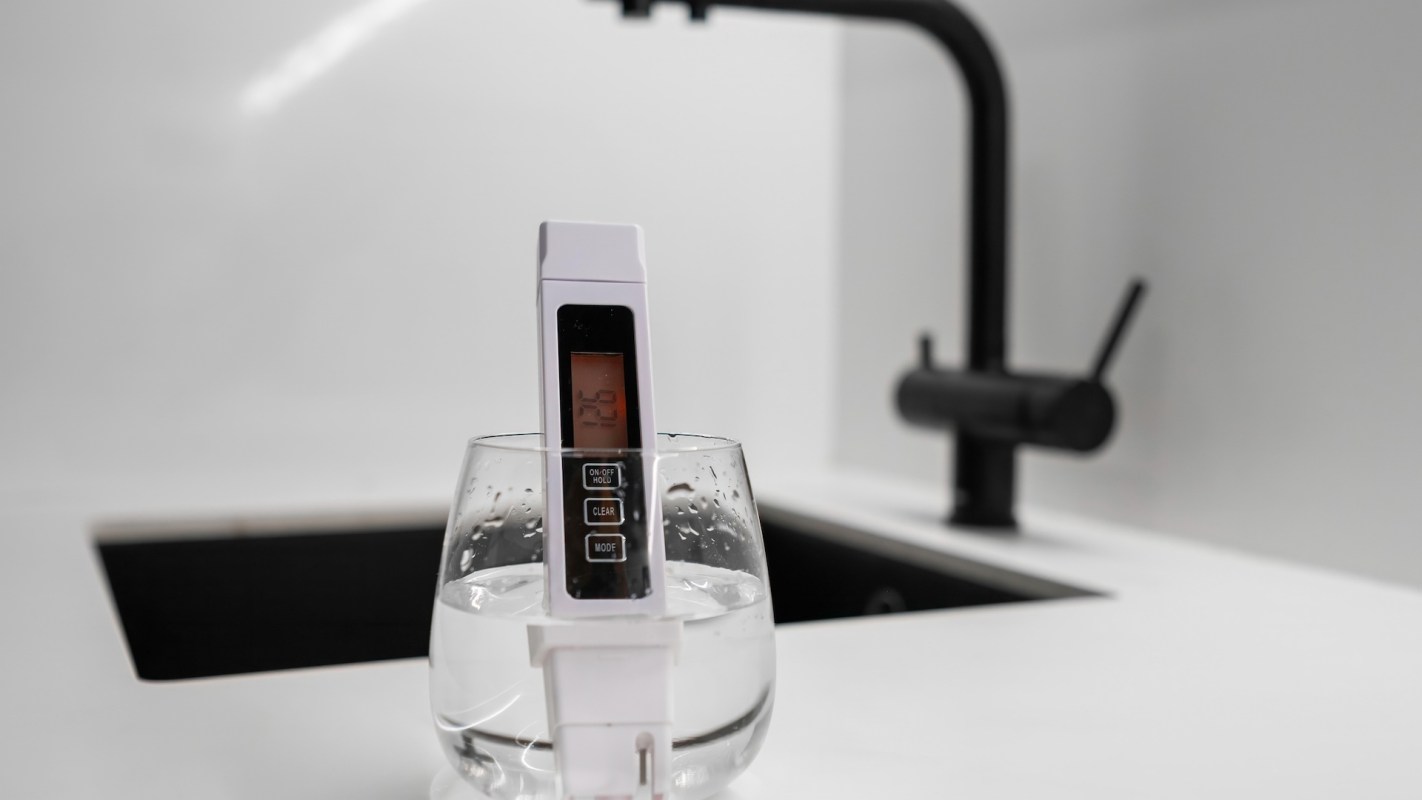
A new study indicates the U.S. may be dramatically undercounting the amount of per- and polyfluoroalkyl substances, or PFAS, in drinking water by treating many low test results as zero, potentially obscuring roughly half the contamination.
Here's what to know
A study published this month in the journal Cell Reports Sustainability analyzed 1.86 million PFAS records from 9,991 community water systems and concluded that a common reporting practice may be skewing the national picture.
In the Environmental Protection Agency dataset examined by the study team, readings below the minimum reporting level were labeled "<MRL," a result that is often rolled into broader summaries as if it were zero.
"'Below the reporting limit' does not mean 'zero,'" lead study author Gehendra Kharel, an associate professor of environmental and geological sciences at Texas Christian University, told Gizmodo.
"About 98% of the roughly 1.86 million individual PFAS test results in the January 2026 dataset were below reporting limits. Those records still carry information: Each one says the concentration was somewhere between zero and the limit."
Instead of assigning zero to those below-limit samples, Kharel and his co-authors used modeling to estimate what the missing values might look like. As Gizmodo detailed, they generated 500 estimates for each below-limit reading and applied the approach to the 25 PFAS chemical compounds detected at least once in the EPA data.
TCD Picks » Quince Spotlight
💡These best-sellers from Quince deliver affordable, sustainable luxury for all




Then they compared that nationwide estimate with one produced using the usual zero-counting method and found that the standard approach yielded only 44% of the primary model's PFAS-occurrence estimate.
More background
Because of their tendency to persist in habitats and human bodies for long periods, PFAS are commonly referred to as "forever chemicals."
The EPA monitors these chemicals — often found in household items, from cookware to fabrics and self-care products — in part because researchers believe they may threaten human health. Research has linked some PFAS exposure levels to certain cancers, reproductive and hormonal concerns, developmental delays, immune deficiencies, and high cholesterol.
It's worth noting that this new study does not indicate that any individual household's water is unsafe. But it does suggest the public may be getting an incomplete picture of water supply contamination more generally.
A "not detected" or below-limit result isn't necessarily the same as no contamination at all, especially when the testing threshold itself is put into question and when exposure may be widespread and long-term.
As Gizmodo noted, in a separate analysis of the EPA monitoring release, the Environmental Working Group estimated that roughly 176 million Americans rely on drinking water containing PFAS.
What can be done?
Experts say the solution is not to eliminate reporting limits. Those thresholds still serve an important purpose by indicating when concentrations may raise health concerns and by keeping test results clearly labeled.
Instead, Kharel suggested that agencies publish more detail about which chemicals were tested, what the reporting thresholds were, and how often results fell below them. He also said overall averages could include both zero-counting totals and estimates that incorporate below-limit results, with the uncertainty spelled out clearly.
"For communities, the practical message is to ask what 'not detected' means in their report," Kharel told Gizmodo, "which chemicals were tested, and what reporting limits were used."
Where can I learn more?
Here are some more stories about how PFAS contamination is affecting drinking water systems and private wells across the country:
• In Virginia, drought can make PFAS levels jump just as water rules face rollback.
• In Rhode Island, residents demanded answers after PFAS were found in wells near a fire station.
• In Wisconsin, a town stopped using its taps after PFAS-tainted wells sparked lasting fear.

Get TCD's free newsletters for easy tips, smart advice, and a chance to earn $5,000 toward home upgrades. To see more stories like this one, change your Google preferences here.






