


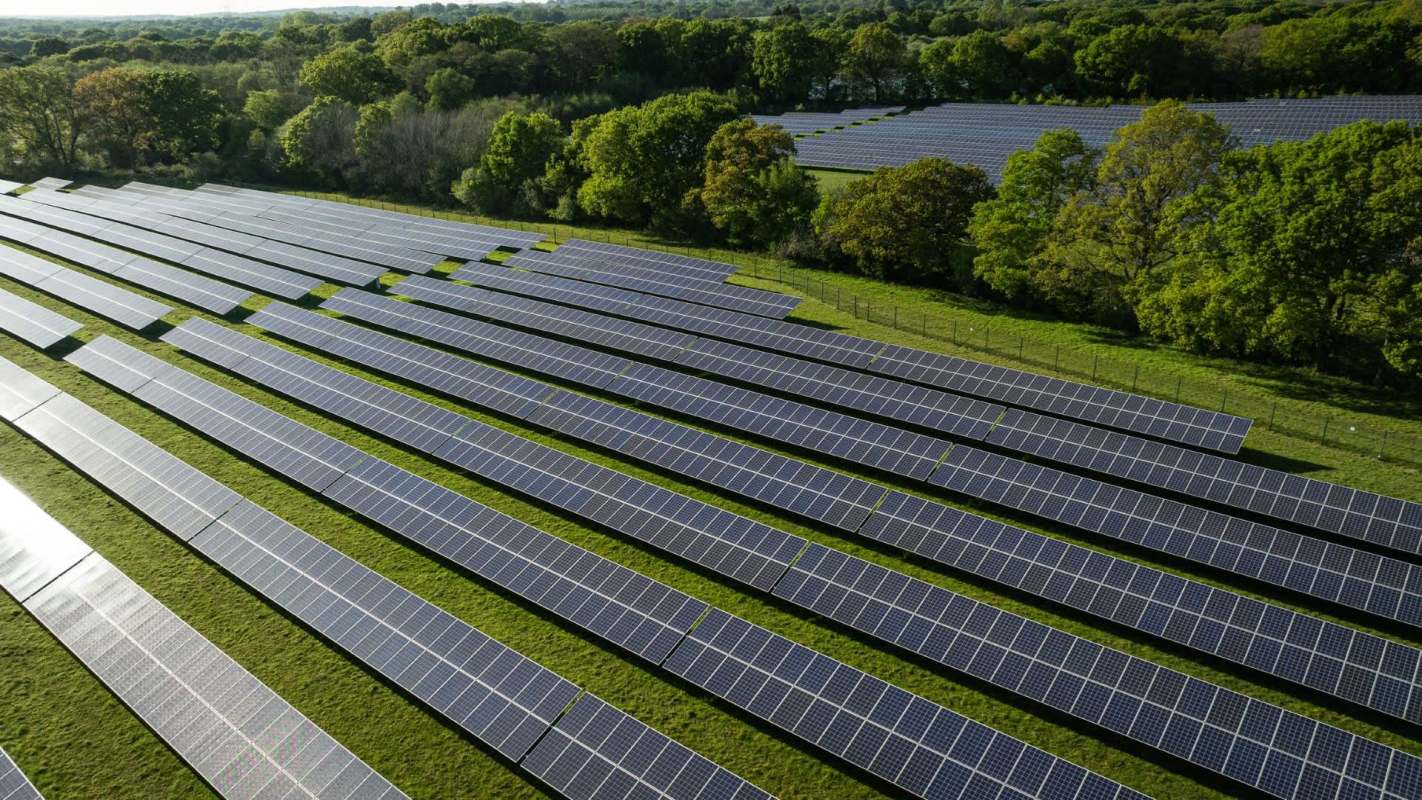
Maryland plans to invest $200 million in battery storage and renewable energy development as officials try to add much-needed power supply, shore up a stressed grid, and respond to rising electricity costs driven by data-center demand.
Here's what to know
Under a new initiative called Megawatts for Maryland, the state will award grants over the next two years for battery storage and renewable energy projects.
Maryland Energy Administration officials say the effort could support "several hundred megawatts" of power — enough for about 150,000 homes, according to the Baltimore Banner.
Projects using battery storage can qualify, as can renewable technologies including solar, wind, geothermal, and certain biofuels. Democratic lawmakers authorized the program in 2025 through the Utility RELIEF Act, a sweeping state energy measure.
Maryland Energy Administration Director Kelly Speakes-Backman said that the strategy is intended to address the state's supply problem as electricity demand rises.
"This is simple economics," Speakes-Backman explained. "When high demand sends prices up, we need to bring more supply online."
TCD Picks » Quince Spotlight
💡These best-sellers from Quince deliver affordable, sustainable luxury for all




More background
Officials announced the program as Maryland contends with shrinking in-state generation, rising electricity demand, and a clean energy rollout that hasn't kept up with its climate ambitions.
Maryland has struggled to replace major coal and gas plants with renewable power quickly enough, the Banner reported.
Local pushback has made that harder. In parts of Maryland, proposed wind, solar, and battery projects have drawn opposition, slowing renewable development as electricity demand continues to rise.
Officials at the Maryland Energy Administration also point to federal actions as part of the problem.
According to the Banner, the grants are partly meant to close financing gaps left by President Donald Trump's cuts to federal clean energy tax credits, while the administration's actions targeting offshore wind have further hindered Maryland's clean energy buildout.
When supply lags and demand rises, energy becomes more expensive.
In Maryland, officials are betting that expanding generation and storage can help stabilize a system already under strain.
What's being done?
Maryland's clean energy fund, financed through compliance payments from utility companies, will provide the grant money.
Although that fund has expanded significantly, lawmakers and Gov. Wes Moore's administration have also tapped it extensively for energy rebates, clean energy projects, and budget balancing.
Applicants seeking Megawatts for Maryland grants must meet multiple requirements before awards are made.
Maryland Energy Administration spokesperson Erin Dempsey noted that projects must show financial solvency and already have applied for state permits and regional grid connections.
They must also present public engagement plans, which can include potential community benefits agreements — an important condition in a state where local resistance has repeatedly delayed clean-energy projects.
Even so, state law still requires auction awards to prioritize projects offering the lowest energy prices. That structure reflects the program's dual goal: adding cleaner power while trying to protect consumers from even higher costs.
The tradeoff is timing — because grants will be administered over two years, any effect on household electric bills is likely to be gradual rather than immediate.
Speakes-Backman asserted that Maryland's investment still matters even if the state cannot fully counter federal policy on its own.
"We are one state within the entire nation. But I don't think it's a drop in the bucket, either."
Where can I learn more?
Maryland's push to add cleaner power is unfolding alongside a wider fight over utility costs. These stories cover the state's long-term solar deals, utility rate hikes, and customer refunds.
• Maryland just locked in a 20-year solar deal that officials say could save $300 million.
• Maryland regulators expect more utility rate hike requests even as RELIEF Act savings begin.
• Maryland utility customers could still see $160 million back on bills after a court tax ruling.

Get TCD's free newsletters for easy tips, smart advice, and a chance to earn $5,000 toward home upgrades. To see more stories like this one, change your Google preferences here.






