


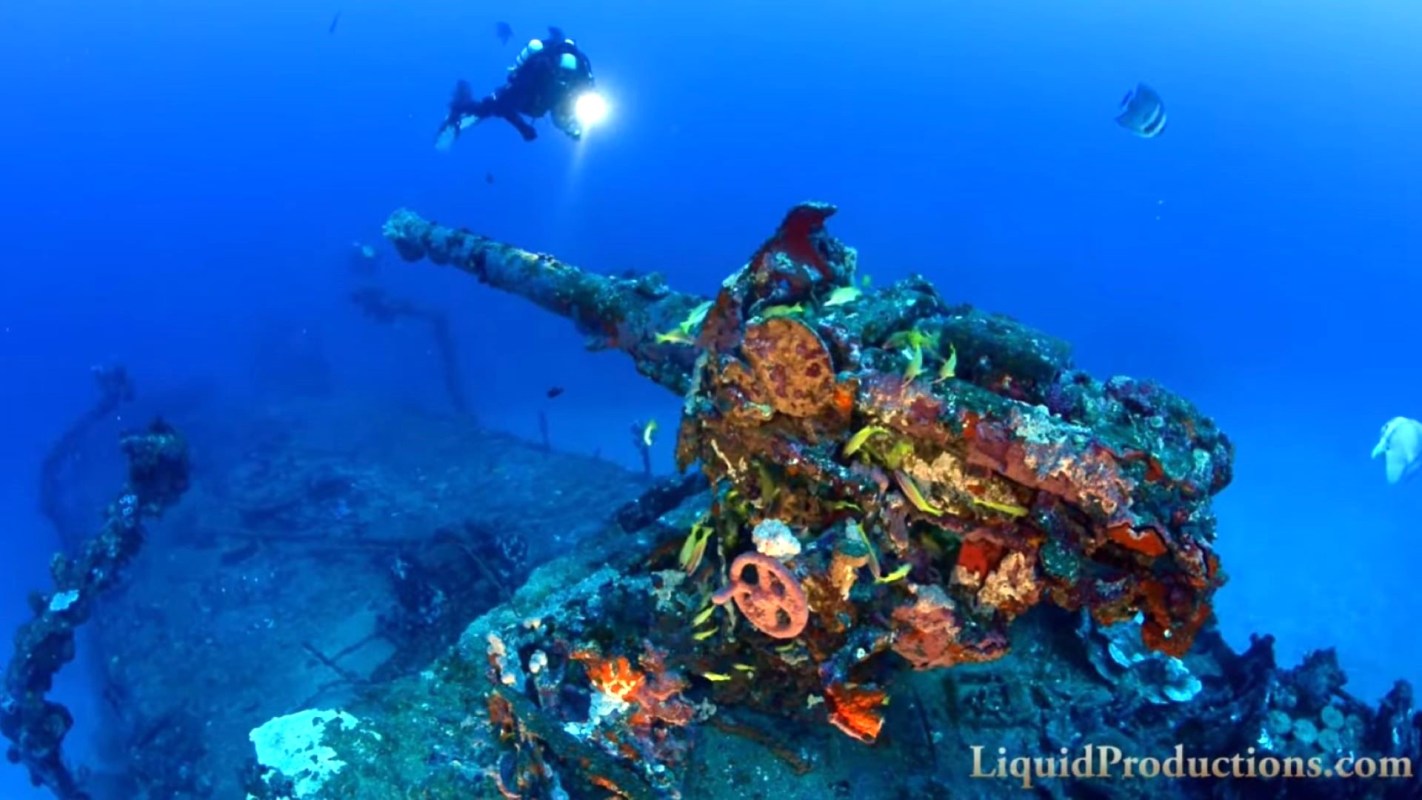
More than eight decades after World War II, fuel escaping from sunken Japanese ships in Micronesia continues to contaminate Chuuk Lagoon. When researchers examined the oil, they found something strange that surprised them all.
Here's what to know
Scientists analyzing fuel from the Shinkoku Maru and Kiyosumi Maru in Chuuk Lagoon identified bacteria across 42 phyla, with 1,505 species-level classifications, according to ScienceAlert.
The results suggest that these wrecks, which have been leaking since 1944, may contain microbial communities that could one day help address long-running oil contamination in the Pacific.
Awei Bainivalu, a microbiologist at the University of the South Pacific in Fiji, led the study, published in Marine Pollution Bulletin.
Bainivalu and colleagues examined a medium fuel-oil sample from the Shinkoku Maru, a heavier fuel-oil sample from the Kiyosumi Maru, and a sample taken from the oil-water boundary at the Shinkoku Maru.
Chemically, both fuels contained petroleum hydrocarbons known to harm marine life. The Shinkoku Maru sample contained more volatile aromatic compounds, while the Kiyosumi Maru fuel contained more persistent hydrocarbons that can linger longer in the environment.
TCD Picks » Quince Spotlight
💡These best-sellers from Quince deliver affordable, sustainable luxury for all




DNA sequencing revealed bacteria from genera including Ralstonia, Sphingomonas, and Corynebacterium, groups that include species known to use petroleum hydrocarbons as carbon and energy sources.
More background
Before it took its current name, Chuuk Lagoon was known as Truk Atoll and functioned as Japan's principal naval hub in the South Pacific. Operation Hailstone, a series of U.S. air attacks in 1944, left the lagoon littered with dozens of sunken vessels.
Those sunken ships remain an environmental hazard: roughly 200,000 tons of wreckage sit in the lagoon, and they continue to leak oil.
Chuuk Lagoon is only part of a larger Pacific problem. About 330 oilers and tankers from World War II remain underwater, where corrosion gradually weakens and splits their hulls, allowing fuel in their tanks to leak through newly formed gaps.
The consequences reach both marine ecosystems and the people who depend on them, including fisheries. Petroleum hydrocarbons can also form tar balls, which can inflict significant damage in fragile marine environments.
Rather than being lifeless, the leaked oil and the boundary where it meets seawater each contained their own bacterial communities. That pattern suggests leakage has helped shape distinct microbiomes around the wrecks.
What's being done?
The main effort is scientific groundwork that could inform future cleanup.
Bioremediation — a pollution cleanup method that uses microorganisms to remove contaminants — depends on understanding which microbes are present and what conditions they can withstand. In this case, the team found strong microbial diversity even in fuel containing toxic hydrocarbons.
The researchers were careful not to overstate the findings. They identified bacteria linked to hydrocarbon degradation, but they did not test whether those microbes were actively breaking down the oil.
Even so, the sampling established a baseline for future Pacific research. By comparing bacteria found in the Shinkoku Maru's oil with bacteria at the oil-water boundary, the team also showed that different leak environments may favor different microbial communities — a clue that could help shape future remediation strategies.
As Bainivalu and colleagues wrote in the paper, "The results support WWII shipwreck fuel oils as natural reservoirs of hydrocarbon-degrading bacteria, providing a foundational baseline to inform future research into bioremediation applications in the Pacific region."
Where can I learn more?
Chuuk Lagoon isn't the only place where old wrecks and industrial pollution continue to cause environmental problems.
• At Pearl Harbor, the USS Arizona still releases black tears into harbor waters more than 80 years later.
• In South Carolina, crews are removing derelict boats leaking oil, gas, and lead paint into marshes.
• Off Denmark, a lost WWI U-boat is leaching TNT into the food chain in the North Sea.

Get TCD's free newsletters for easy tips, smart advice, and a chance to earn $5,000 toward home upgrades. To see more stories like this one, change your Google preferences here.






