


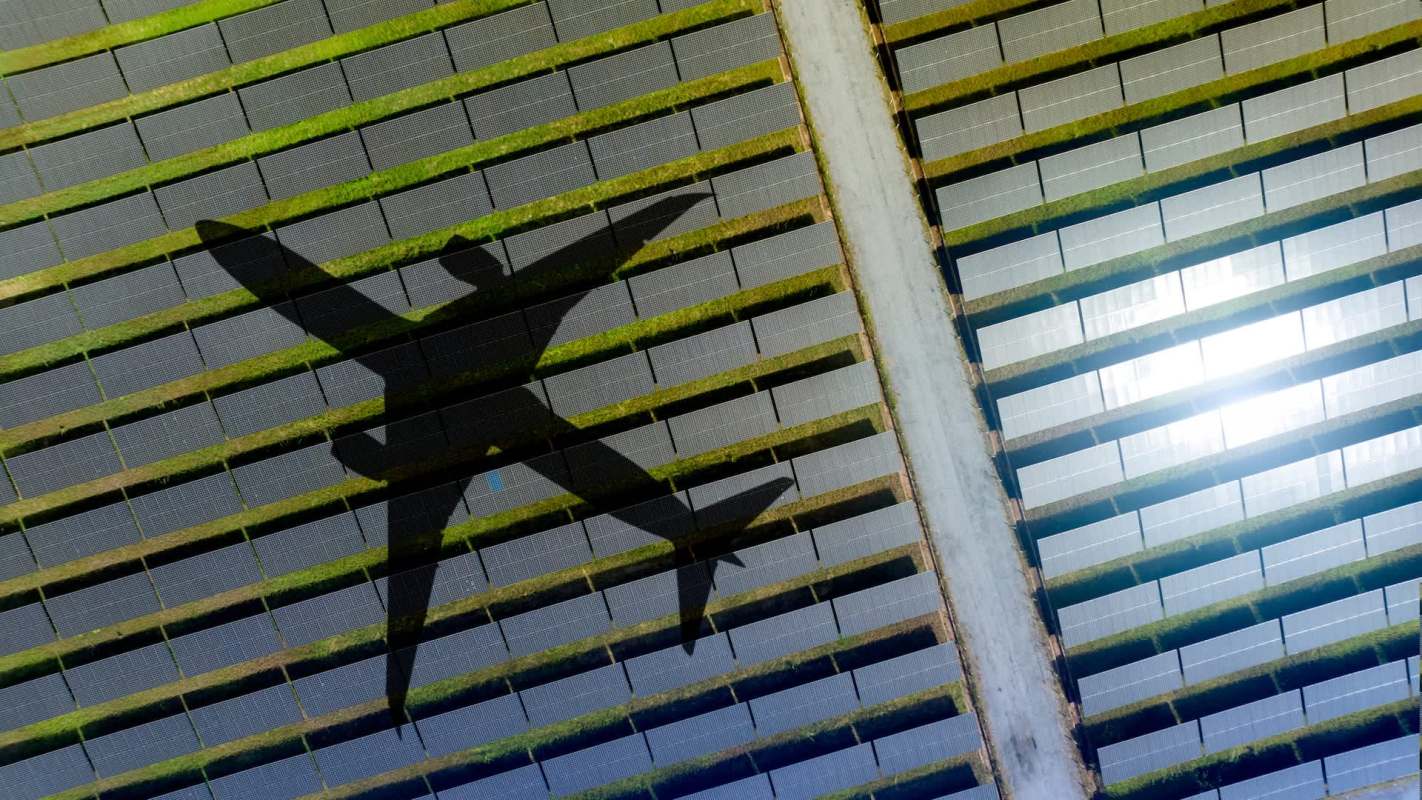
A major solar installation on airport land in Christchurch shows how even one of the most challenging places for infrastructure can support clean energy.
Located just beyond the runways of Christchurch Airport, the project is already New Zealand's largest solar farm on the South Island.
Here's what to know
Prime Minister Christopher Luxon formally opened Kōwhai Park on Oct. 15, but according to Autonocion, it began operating in August and has since increased the amount of electricity it feeds into New Zealand's national grid.
About 300,000 solar panels are spread across the 568-acre site west of the airfield.
The project has two key capacity figures: 168 megawatts of direct-current panel capacity and 150 megawatts of alternating-current output that can be sent to the grid.
The airport expects the farm to produce 275 gigawatt-hours in a full year, roughly equal to the annual use of 36,000 homes.
TCD Picks » Quince Spotlight
💡These best-sellers from Quince deliver affordable, sustainable luxury for all




It adds a major local source of electricity near existing demand.
Producing electricity at the airfield cuts transmission losses compared with generating it farther away and moving it in, allowing more of the electricity to reach homes and businesses.
More background
An airport-adjacent solar farm has to meet requirements that most other projects do not.
Runway areas limit how tall nearby structures can be, and authorities also have to consider whether reflective materials could create glare for pilots. In its public FAQ, Christchurch Airport said solar panels absorb light rather than reflect it and added that technical studies and consultations with aviation groups were completed as part of the safety process before construction began.
Linking the project to the wider electricity network was also a significant undertaking.
Ventia designed and built the grid connection and both substations while installing around 10.5 miles of cable across about 2.8 miles of trench. A Pound Road substation raises the solar farm's power from 33,000 to 66,000 volts for transmission, and a Grays Road substation brings it back down to 33,000 volts, where the airport and Orion, which operates the local power lines, are expected to connect.
Kōwhai Park is part of a broader plan.
The airport has reserved a 988-acre energy park under the same name, with this solar farm serving as the first phase of that wider development.
What's being done?
Long-term power purchase agreements support the project, providing electricity to committed buyers from the start.
New Zealand dairy company Synlait will take a quarter of Kōwhai Park's electricity for its Dunsandel and Dairyworks facilities, while Christchurch Airport will buy power from the farm for its own operations.
This setup connects clean electricity directly to large, everyday users rather than leaving output without a destination. It offers a more dependable path for using locally generated renewable energy in high-demand industrial and transport settings.
Contact Energy and Lightsource bp each hold a 50% stake, and the airport values the development at NZ$273 million, or about $160 million.
The workforce peaked at 235 people during construction.
Keeping construction aligned with ongoing airport activity was one of the biggest hurdles. Kalim Guthrie, who managed the job for Ventia, said crews needed to stick to the timeline because "the disruption to the airport would be huge otherwise."
Where can I learn more?
Solar is increasingly being built on difficult or overlooked sites. These stories look at projects on a former military range, between rail tracks, on capped landfills, alongside crops, and in Namibia's power grid.
• Near Thimphu, Bhutan is turning a former range into solar as winter shortages deepen.
• In Switzerland, Sun-Ways is putting solar between rail tracks to squeeze power from transport land.
• In New Hampshire, towns are giving dead land new life with solar on capped landfills.
• In Hadley, Massachusetts, a farm is growing sweet corn under panels while keeping most of the yield.
• In Namibia, a new plant can power 14,000 homes and send electricity across southern Africa.

Get TCD's free newsletters for easy tips, smart advice, and a chance to earn $5,000 toward home upgrades. To see more stories like this one, change your Google preferences here.






