


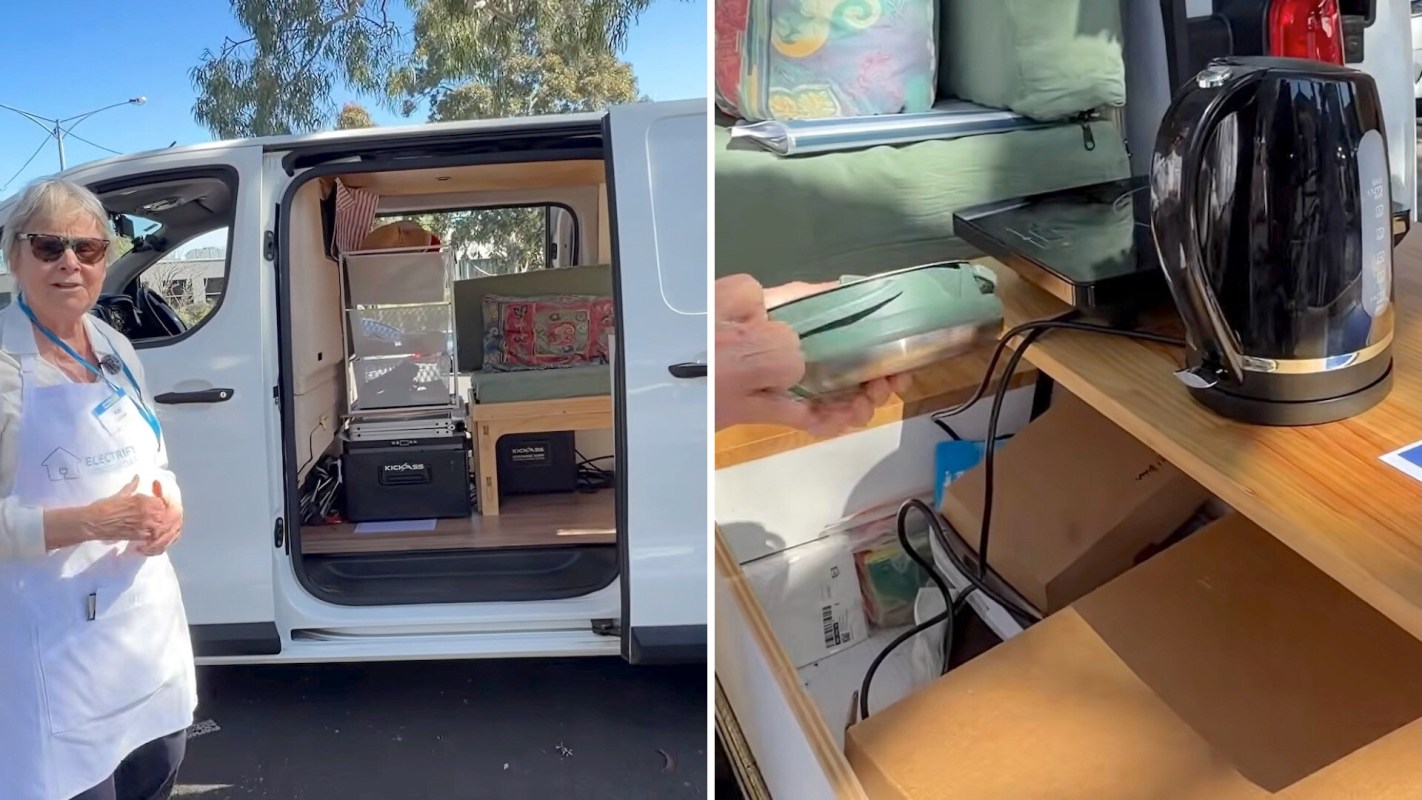
Kay, an Australian EV owner, turned a secondhand Citroën ë-Dispatch into what she believes was one of Australia's first electric camper vans.
On a 3.5-week round-trip journey through the Outback to Lake Eyre / Kati Thanda and Marree, she said her energy costs were a fraction of what her friends spent.
Here's what to know
In an Electrify This (@ElectrifyThis) feature with host Sarah Aubrey, Kay said her 2022 van uses a 75-kilowatt-hour battery and can cover up to 199 miles (320 kilometers) "on a really good day."
It also supports up to 100-kilowatt DC fast charging and 7-kilowatt AC charging. She turned the former tradesperson's vehicle into a modular camper intended to remain lightweight, sustainable, and useful for everyday jobs.
In the video, Kay looked back at the filled lake on the round trip.
"There was absolutely no problem with any charging stations or roads along the way at all," she recalled. "It was just brilliant."
TCD Picks » Quince Spotlight
💡These best-sellers from Quince deliver affordable, sustainable luxury for all




The interior setup combines a sofa bed that slides out into a double, storage room for electric bikes, induction cooking gear, and a fridge-freezer run by a 2.4-kWh portable battery station. Because the van does not offer vehicle-to-load power, she said that the battery is "trickle charged off the cigarette lighter."
More background
Rather than starting with a factory camper, Kay bought the van used after it came over from England, and it still had shelving from its earlier life as a work vehicle. She said she wanted a flexible layout so her husband could still take it out for handyman work when necessary.
Kay said the bed extends in sections, letting her leave part of the space open for day trips with e-bikes or take the whole setup out when she needs to fit larger cargo. She also uses a portable table, a tent attachment, two induction cooktops, a plug-in kettle, and an induction kettle-saucepan combo.
For insulation, she said the stripped van received a sprayed cork layer, with lamb's wool placed behind the panels to help manage temperature and reduce sound. After spending a night in 27°F (-3°C) conditions and finding the van "too hot," she added airflow by cutting an opening behind the driver's area and installing an opening window in the sliding door.
One commenter wrote, "Absolutely MAD PROPS to Kay, this van is absolutely BRILLIANT."
"I can see this being part of my retirement plan for sure," another added.
What can be done?
Her approach focused on using a secondhand electric van and avoiding heavy, permanent fittings, relying instead on removable components to keep the camper light and protect usable range.
Kay said she charged through public infrastructure and caravan-park hookups, adding, "When you're staying at caravan parks, you charge for free because you just plug into the 15-amp power." That meant she could top up overnight while already paying for a site.
She depended on the 2.4-kWh portable battery for basic power needs. When track conditions near the lake got rougher, she rode with friends in a four-wheel drive instead of taking the camper on those roads.
Compared with her friends' diesel setup, she said, "their fuel cost was triple, more than triple ours."
Where can I learn more?
Kay's lightweight electric camper raises some of the same questions other travelers have tackled about powering life on the road.
• In an off-grid van, AC can run 'forever' on solar when insulation does most of the work.
• An Indiana overlander found the hardest part of adding 400W rooftop solar was routing cables.
• After a portable power station failure, an RV owner found EcoFlow backs up the full 50A rig.
• A Pacific Northwest car camper weighed DIY charger installation options after 12V was capped at 99W.

Get TCD's free newsletters for easy tips, smart advice, and a chance to earn $5,000 toward home upgrades. To see more stories like this one, change your Google preferences here.







