


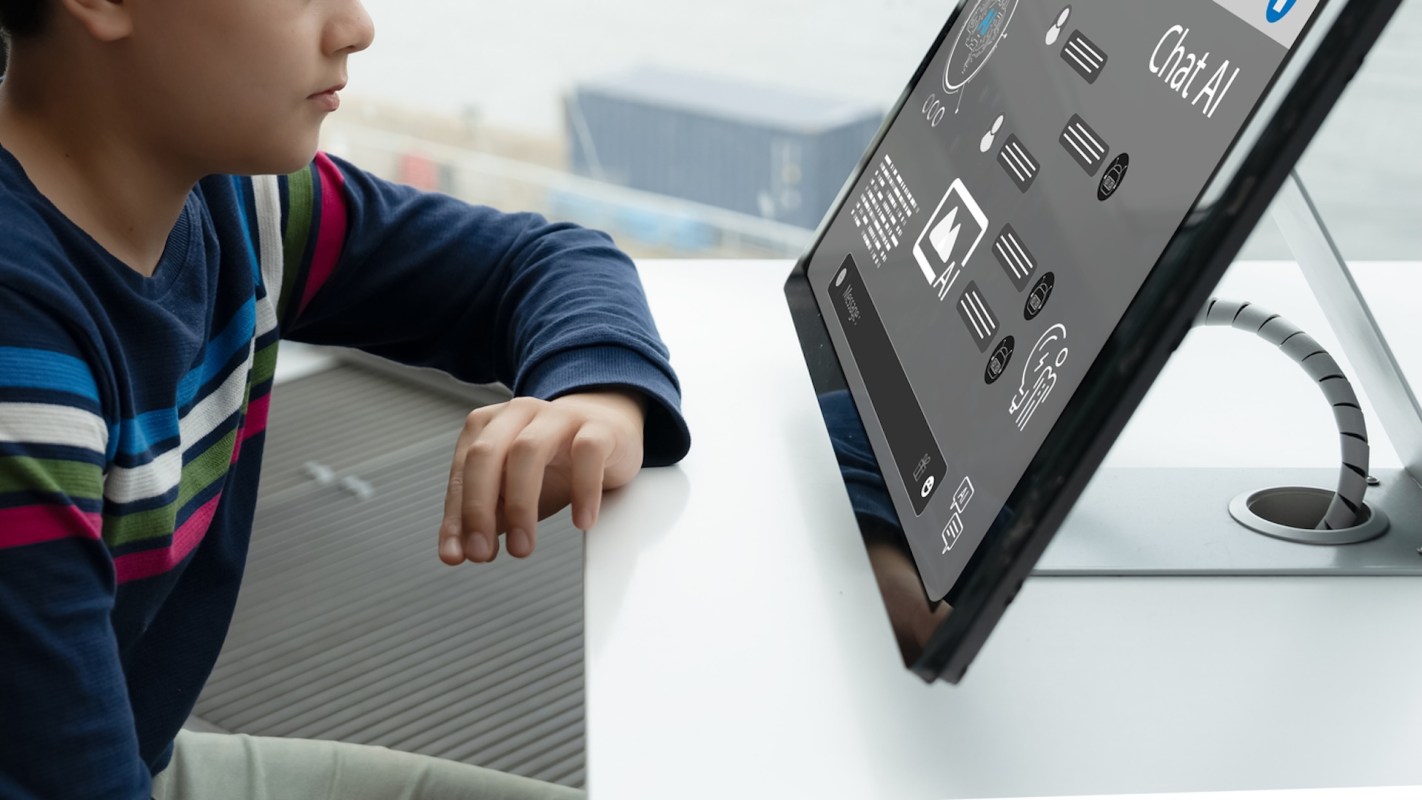
At Alpha School in Chicago, 13-year-old eighth grader Zane Shah starts his day much like many other middle schoolers: greeting friends, putting away his backpack, and logging on for class.
The difference is that no traditional teachers are leading those lessons.
Instead, Alpha says artificial intelligence handles every academic subject, while adults in the building serve as "guides" focused on motivation, behavior, and life skills.
Here's what to know
Founded in Austin, Texas, in 2014 by MacKenzie Price, Alpha operates as a private, for-profit school network. CBS News reported that at the Chicago location, children from pre-K through eighth grade use adaptive software on laptops for roughly two hours a day across math, reading, writing, language, and science.
The price tag is $55,000 annually; U.S. News & World Report puts that at about $8,000 more than the typical one-year cost of private college.
Brian Howell, dean of parents at Alpha Chicago, said students from the network are "getting accepted to fantastic schools — Stanford, Northwestern, Rice." Alpha also says its pupils score in the top 1% nationally on standardized tests and that admissions don't depend on previous grades or test results.
TCD Picks » Quince Spotlight
💡These best-sellers from Quince deliver affordable, sustainable luxury for all




Shah came to Alpha after time in conventional schools, and he told CBS News, "I feel like I can be more focused instead of having 20 to 30 kids in a classroom all talking at once."
More background
CBS News reported that Alpha's instruction runs through TimeBack, a proprietary platform built by a research team headed by cognitive scientist Carl Hendrick at the Netherlands' Academica University of Applied Sciences. According to the school, the program adapts to each learner and returns to prior material when a pattern of errors points to a gap in understanding.
Administrators say that description misses how the system works. "It's important to understand that they're not interacting with chatbots. They're not getting answers from AI," Howell said. Alpha also says the platform is "closed" and doesn't draw from the open internet.
In a February review, the University of Colorado's National Education Policy Center said only about a third of Alpha guides had education degrees or training. Rebecca Winthrop, a senior fellow at the Brookings Institution who has visited Alpha campuses, said, "Parents should know that this is an experimental model. There's no clear externally validated evidence around the results they claim."
What's being done?
The school says students are not left to navigate the software without monitoring. Instead, Alpha said a global learning science team — including subject-matter experts, licensed teachers, curriculum experts, and early childhood specialists — reviews daily student data and checks progress toward academic goals.
Howell said the model is mastery-based, so students stay on a concept until they show they understand it. If they hit a roadblock, the school says guides may ask them to reread the question and work through software-generated hints rather than immediately supplying the answer.
When those supports aren't enough, Alpha says its academics team can join via a remote coaching call. Carrington Haas, Alpha Chicago's lead guide, described the role of staff this way: "We're not teaching academics. The main part of our job is to support the students motivationally and emotionally."
According to Alpha, academic performance alone is not grounds for dismissal; students are removed only for behavioral issues. Shah's father, Binoy Shah, said he has already noticed longer conversations at home about what his son is learning.
Where can I learn more?
Debates over Alpha's AI-led model are part of a broader fight over how schools use artificial intelligence. These stories look at parent backlash, district bans, and evidence that AI may be undermining student learning.
• In Georgia, parents are challenging Amira dyslexia screening as kindergartners face more AI in reading assessments.
• Across 91 countries, OECD data suggest 15-year-olds are less capable as AI use spreads through schoolwork.
• New York and Los Angeles moved to ban most student AI as classroom fears intensified.
• In New York, a college student built an AI bot to do calculus homework slowly enough to dodge detection.

Get TCD's free newsletters for easy tips, smart advice, and a chance to earn $5,000 toward home upgrades. To see more stories like this one, change your Google preferences here.






