


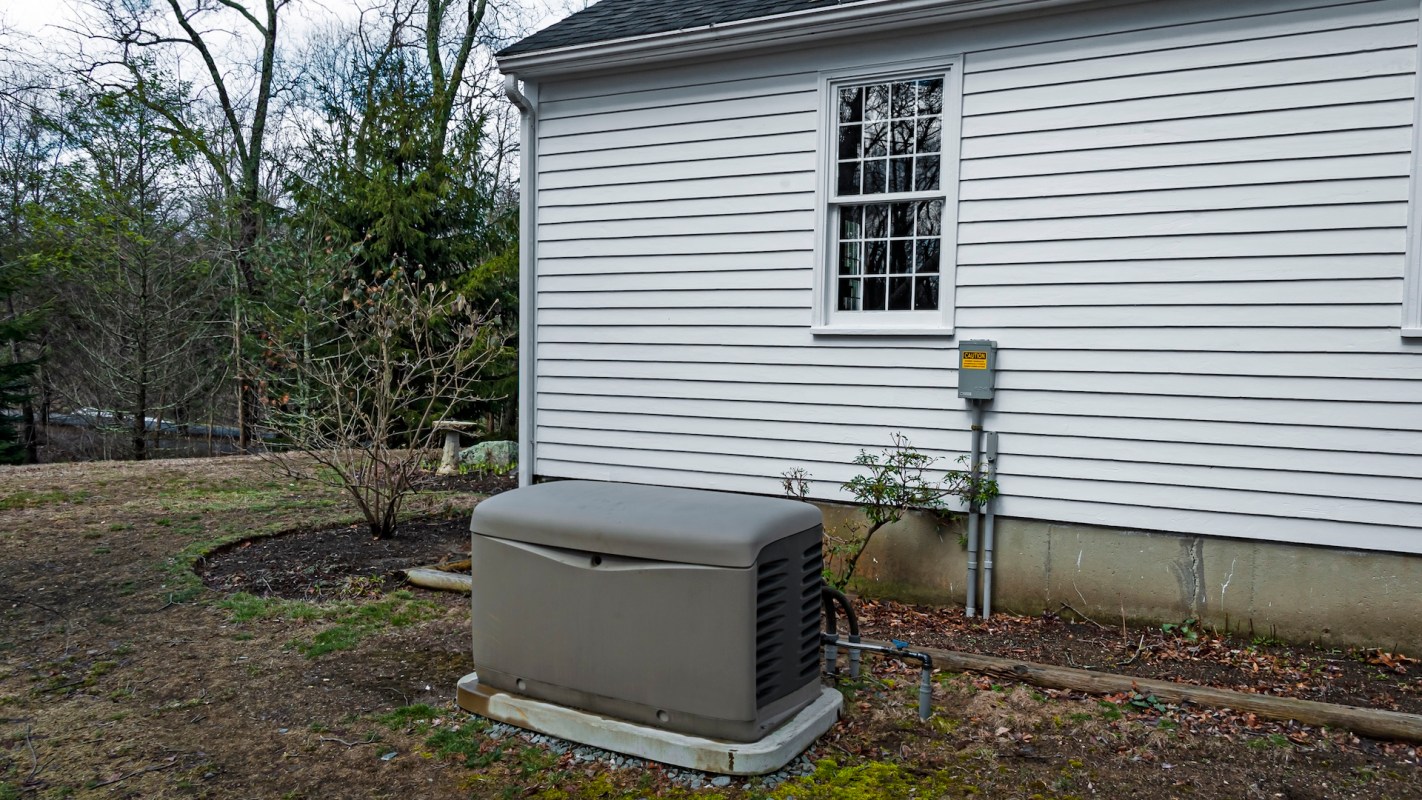
Repeated short outages—and one three-day blackout—left one homeowner trying to decide whether a standby backup system was worth the five-figure bill, according to a Reddit post.
Writing on r/generator, the poster estimated that an 11-kilowatt natural-gas generator would cover the essentials, but over-the-phone quotes for a whole-home setup with an automatic transfer switch came in between $14,000 and $20,000.
Here's what to know
Commenters identified the trade-off as convenience versus upfront cost. The original poster could either choose a far cheaper portable generator or spend much more on a standby system that starts automatically when utility power fails.
The OP's backup list included the refrigerator, gas furnace, gas water heater, window AC units, a 230-volt well pump, the garage door opener, smoke detectors, bath lights, and several household circuits. While a stand-by setup would be ideal for the OP, who often worked long shifts away from home, they found that installing one "triples the price."
More background
The homeowner had already done some "back of the napkin math," estimating that they required 6,800 running watts and 10,900 surge watts. They also noted having a 1/2-inch natural-gas inlet rated for 7 iwc, a detail that could affect the final installation price.
Commenters focused on gas delivery and actual electrical demand.
TCD Picks » Quince Spotlight
💡These best-sellers from Quince deliver affordable, sustainable luxury for all




"How long is your 1/2" run?" asked one. "That is a huge factor in the amount of gas you can supply without running a new line."
As for the electrical demand, another noted that the gas furnace's BTU rating was less important than the blower load, writing, "BTU on the gas furnaces doesn't matter; how many watts are the fans drawing?"
The conversation also explored whether a smaller and cheaper system would meet the OP's needs. One commenter said a 4,500-watt inverter generator with an interlock switch handled their heat and hot water because the boiler fan draws less than 150 watts. Another commenter said a 9,375-watt portable generator powers all of their 120-volt loads, including two freezers, a fridge, and a sump pump.
As for the installation itself, the OP shared that one installer expected about 15 feet of gas piping and roughly 10 feet of electrical work, with surface-mounted conduit instead of trenching. However, the potential need for a gas meter upgrade could become a major sticking point.
Where can I learn more?
Like the OP, homeowners dealing with repeated outages have been weighing the same tradeoff: whether the convenience of automatic backup power justifies the price.
• In North Carolina, an automatic backup ran 3 to 4 times the cost of a portable setup.
• After burst pool pipes, one homeowner saw a $3,110 portable compete with a $22,436 whole-home system.
• After outages in Ottawa, a homeowner weighed a $15,000 standby generator against a $4,000 portable.
• In Central Florida, four days without power made a $15,000 whole-home generator seem suddenly plausible.
• Owners learned a smaller setup could land under $12,000 after a $19,500 pitch.

Get TCD's free newsletters for easy tips, smart advice, and a chance to earn $5,000 toward home upgrades. To see more stories like this one, change your Google preferences here.






