


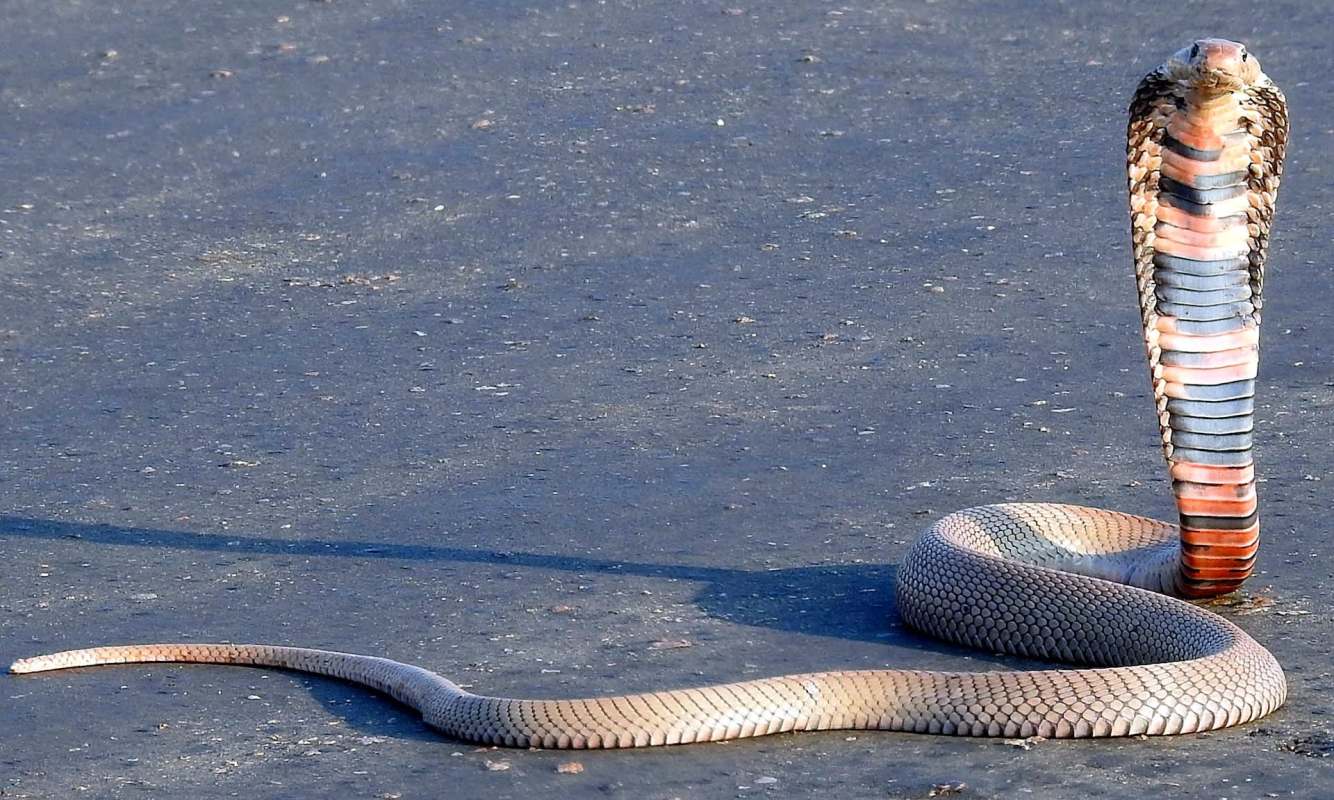
A family in Vryheid, South Africa, got an unsettling surprise when they found a Mozambique spitting cobra measuring a little over 3 feet (one meter) in their backyard compost pile, the Vryheid Herald reported.
Even without lifting its hood, the species can spit venom up to 10 feet (three meters), turning a routine yard task into a dangerous one.
Here's what to know
Amy Panikowski, a snake expert based in Eshowe, identified the snake the Erasmus family found on Kommissie Street in Vryheid as a Mozambique spitting cobra. According to Panikowski, the species can be recognized by markings on the top of the head, black-edged scales, its overall body color, and a salmon-colored throat.
Ezemvelo KZN Wildlife has authorized her to work with reptiles covered by Threatened or Protected Species regulations, and she began training in venomous snake handling at Ndlondlo Reptile Park in 2016.
She urged residents to leave snake handling to properly trained people, saying, "People need to be more responsible so they don't get hurt and neither does the snake."
Mozambique spitting cobras cause most serious snakebites in southern Africa. Their cytotoxic venom can cause pain, swelling, and tissue damage, and venom in the eyes can cause blindness if left untreated.
TCD Picks » Quince Spotlight
💡These best-sellers from Quince deliver affordable, sustainable luxury for all




Panikowski explained that warm conditions alone do not necessarily mean people will see snakes more often. Instead, she said, extreme heat can stress snakes, so they may be more active earlier in the day or later in the evening.
"We rarely get calls in the thick of the heat," she said.
More background
Panikowski explained that food, water, and shelter can draw snakes into residential areas, while shrinking natural habitats, continued development, and climate change can also influence how wildlife moves. Human activity adds to that pressure, which may explain why encounters between people and animals are increasing.
She also said snakes may go into houses to regulate their body temperature. A snake in a yard, compost heap, or home may not be chasing anyone. It may simply be trying to cool down or find cover.
Rumors had circulated about several snake encounters and possible bites in residential areas, but AbaQulusi Private Hospital noted it had neither received nor heard of any snakebite patients.
What can be done?
When a snake appears nearby, Panikowski recommends keeping your distance. Stay about 16 feet (five meters) away from any snake, remain calm, and, if possible, give it space to move off. Keep children and pets away and avoid trying to injure or kill the animal.
If it is safe, Panikowski recommends taking a photo from a distance and sending it to an expert for identification. She said photos are more useful than videos because they make it easier to examine the features needed to identify the species.
If you need a snake catcher, contact a competent catcher and track where the snake goes from a safe distance. Anyone who is bitten or spat in the eyes should seek medical care immediately. Take exposed pets straight to a veterinarian.
"There are no at-home remedies, so do not waste time," Panikowski said.
Residents can also make their properties less appealing to snakes by keeping grass short, clearing building rubble near homes, and picking up pet food bowls left outside, which may attract rodents.
Panikowski said burning tires or spreading Jeyes Fluid doesn't work, and she advised against stripping gardens of all trees and plants.
For Panikowski, the compost-pile scare was another reminder that people live alongside wild animals. "We share this land with other wildlife," she explained. "We can't be shocked that there is nature in our nature."
Where can I learn more?
Other cobra encounters in South Africa show how often these snakes turn up in and around homes.
• In South Africa, police found a yellow cobra hiding in a debris pile.
• In South Africa, a snouted cobra was found behind a woman's couch.
• In Mariannhill, rescuers discovered a cobra in a bed.
• In South Africa, a snake catcher pulled a giant Cape cobra from behind a couch.
• In South Africa, a terrified helper watched a hidden Cape cobra force apart a bathtub.

Get TCD's free newsletters for easy tips, smart advice, and a chance to earn $5,000 toward home upgrades. To see more stories like this one, change your Google preferences here.







