


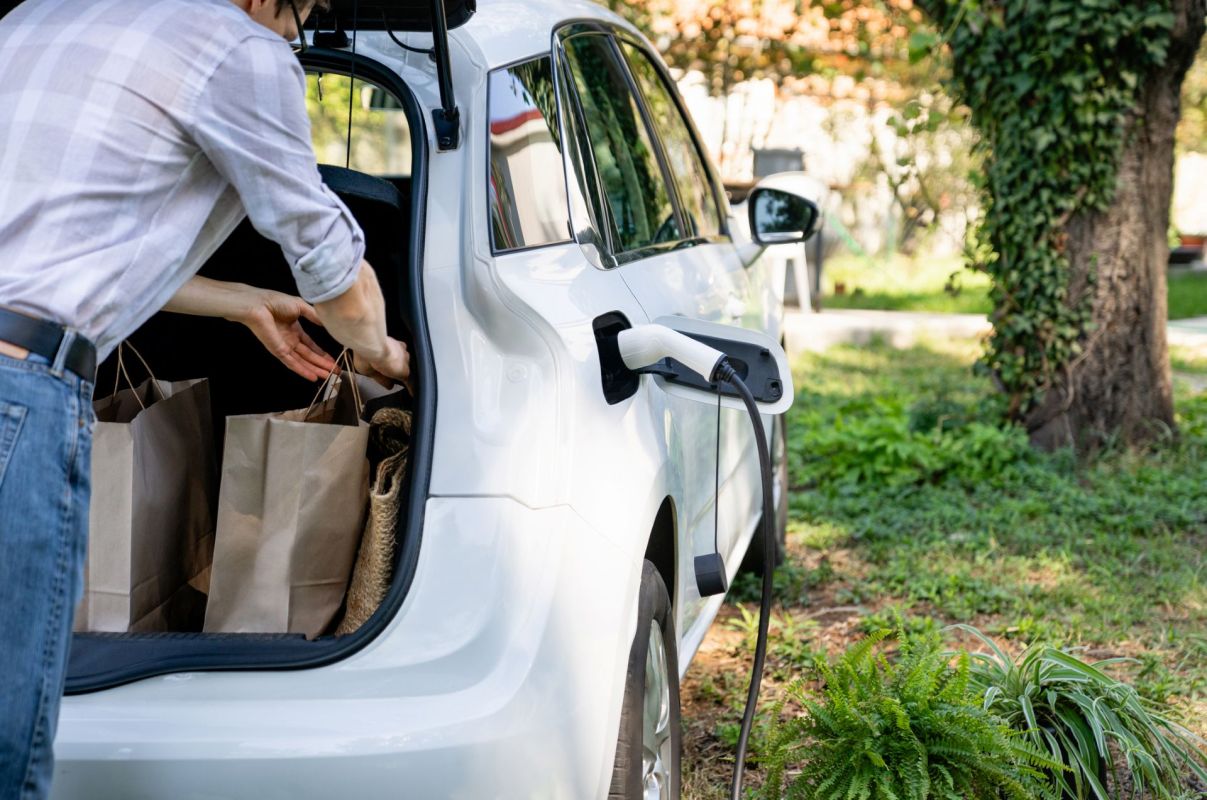
A Southern California homeowner wondered whether a small backyard solar build — mounted on a shed or pergola — could handle off-grid charging for an electric vehicle.
"The idea of being completely independent of both the gas pump or the power company has always been appealing to me," they shared in Reddit's r/diySolar.
Here's what to know
The homeowner said they could build a 120-square-foot shed without a permit and that their backyard gets sun from about 10 a.m. to 5 p.m.
While they usually biked to work and drove less than 5,000 miles a year — mostly for groceries and to visit family — they did want enough solar to add about 60 kilowatt-hours over five days.
Before jumping into the project, though, they had questions, including how many panels they'd need, which ones were "good," how to eliminate conversion losses, and, most importantly, if their plan was even possible.
"I don't imagine it is safe to run a long charging cable from wherever the battery storage is all the way to the front of the house where the garage is," they added.
If you're considering a similar project, EasyHome can help you explore vetted installers in your area. Going solar is one of the best ways to save money on home energy, and solar leases in particular can deliver hundreds of dollars in monthly savings with zero upfront cost.
More background
Commenters turned to practical examples and rough calculations.
Crushed by your bills? See instant solar savings from vetted installers in just a few clicks With energy prices through the roof, there's never been a better time to go solar — and EasyHome can help you find the best prices from the best installers in your area. EasyHome takes the guesswork and headaches out of energy upgrades by showing you estimated savings from a network of vetted local partners. To get started, just enter your ZIP and share a few details about your home — seeing your estimate is really that easy. |

One said a similar setup worked for household errands, but they cautioned it could not cover their spouse's 67-mile round-trip commute.
Another explained there was "no way around" getting a "buffer battery."
"You can't charge your EV directly off solar panels," they noted. "You have minimum output requirements to meet with AC or DC charging."
Others pointed to working systems that cover parts of what the homeowner had in mind.
One person said they use 15 portable panels totaling 5,900 watts and still bring in at least 15 kWh per day even with "short days, tall trees, and low sun."
On the question of efficiency losses, a commenter in Scotland said a 2.1 kW solar setup was producing 10 kWh per day. "Something like 75-80%," they wrote. "In and out of battery is a chunk of that. If you can match EV charging rate with solar generation, battery doesn't really get touched, and that's what I'd recommend."
What can be done?
The main takeaway was that property layout and sun conditions matter more than some universally "best" panel.
Because the yard only got full sun from 10 a.m. until 5 p.m., one commenter suggested using a solar production calculator.
They also said the garage distance did not rule out the idea, noting, "There's plenty of people with large solar arrays several hundred yards from their inverter/batteries."
For homeowners who don't want to create a system from scratch, EasyHome can help compare vetted solar options and explore backup battery storage.
Pairing solar with a battery can not only maximize savings but also let homeowners power their homes with solar when the grid goes down.
"As long as you use it for something you were planning to do anyway, it's all money you didn't give to the power company," one commenter concluded.
Where can I learn more?
Real-world examples of solar-powered EV charging range from portable home setups and rooftop systems to off-grid designs and backup power projects.
• One homeowner used 900 watts of portable panels to cover EV charging at home.
• Another homeowner skipped a battery and found his solar setup works with an EV charger.
• At Dartmouth College, engineers unveiled an off-grid evolution for solar-powered EV charging.
• Across the U.S., drivers pay 5 to 6 cents a mile to charge at home.
• GM wants EVs to power homes in blackouts, though owners question installation costs.

Get TCD's free newsletters for easy tips, smart advice, and a chance to earn $5,000 toward home upgrades. To see more stories like this one, change your Google preferences here.






