


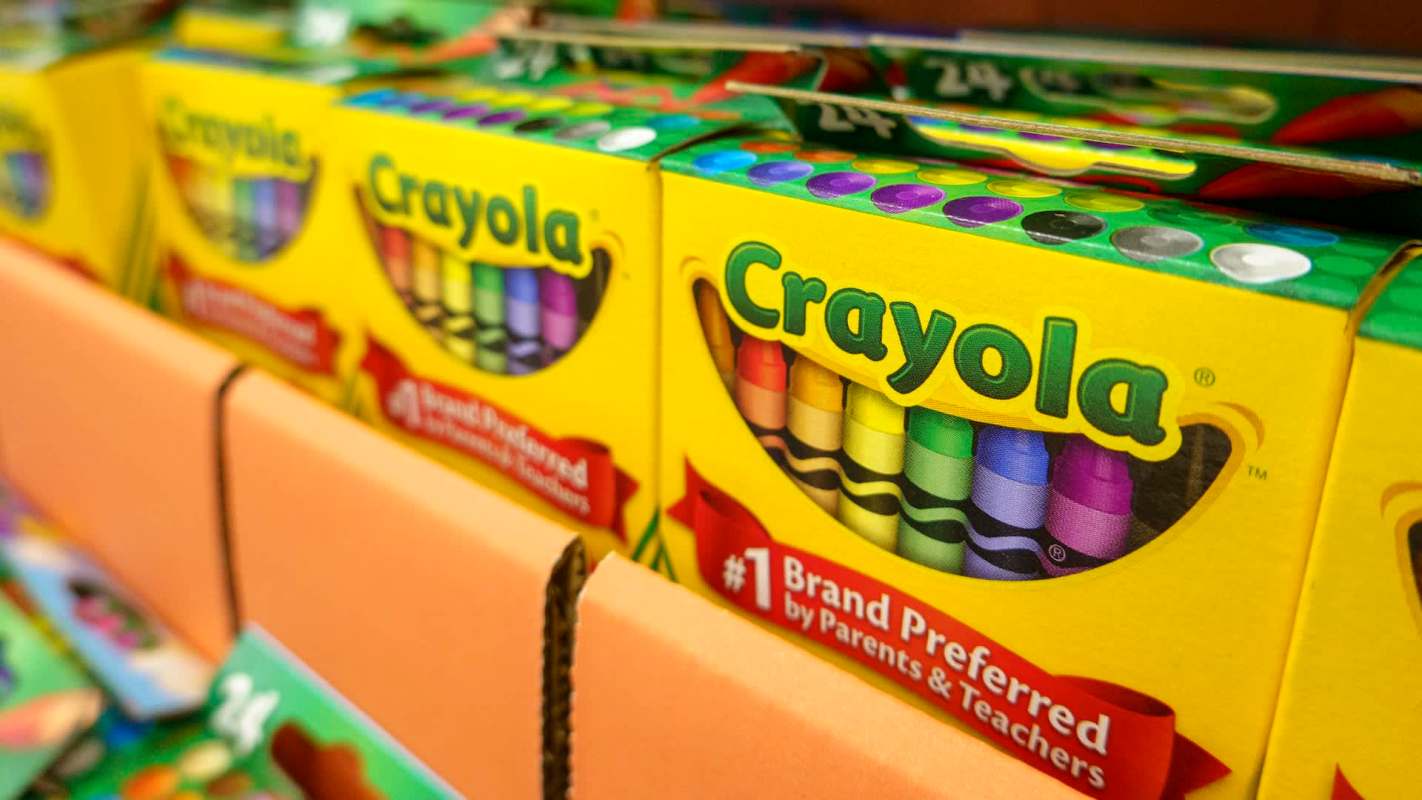
State filings outside Maine continued to identify formaldehyde in more than 300 Crayola products for children, even though the company told an advocate that it had never put the chemical in those items.
According to Defend Our Health and state officials, those product lines were sold in Maine without the disclosures state law requires, raising fresh doubts about how much families can rely on major brands' safety claims.
Here's what to know
More than 300 Crayola children's products — including washable felt-tip markers, finger paint, and modeling clay — were listed with formaldehyde in filings submitted in Vermont, Washington, and Oregon, the Portland Press Herald reported. In similar disclosures, Build-A-Bear Workshop reported toy accessories containing phthalates, arsenic, and heavy metals such as mercury.
Portland-based advocacy group Defend Our Health found the discrepancy while reviewing a shared chemical database. The Maine Department of Environmental Protection said neither company had filed the required reports before selling those same product lines in the state.
After Emily Carey Perez de Alejo, executive director of Defend Our Health, reached out to Crayola about the filings, the company first said it had not used formaldehyde and later said it removed the chemical in 2025, according to the Portland Press Herald. DEP Deputy Commissioner Dave Madore said companies that sell products without filing the required reports are not complying with Maine law.
More background
Under Maine's Kid-Safe Products Act — passed in 2008 and rolled out beginning in 2011 — manufacturers must disclose priority toxic chemicals within 30 days of starting sales in the state. In practice, that framework works only if companies report their products accurately and consistently.
TCD Picks » Quince Spotlight
💡These best-sellers from Quince deliver affordable, sustainable luxury for all




Children face particular concern because their bodies are still developing. The Portland Press Herald reported that the American Academy of Pediatrics says formaldehyde can cause severe allergies and raise cancer risk, phthalates can interfere with hormones and growth, and lead and mercury can damage brain development and function.
On its website, Crayola says all of its products are safe for children because third-party reviews found no toxic substances at levels significant enough to harm humans. When marketing claims and regulatory disclosures point in different directions, recognizing greenwashing becomes even more important.
"Formaldehyde is a known carcinogen. I'm beyond outraged that a trusted brand like Crayola thinks it's OK to put something so dangerous in a product found in nearly every home and school in the country," Perez de Alejo said.
What's being done?
Defend Our Health's Safe Kids campaign is turning dense regulatory spreadsheets into free, searchable tools so parents can look up children's products without navigating complicated state filings.
The group is building on earlier work it did after PFAS contamination polluted Maine drinking water wells and devastated farms. It had already reviewed the websites of hundreds of cookware manufacturers to build a searchable directory of thousands of noncompliant products.
Madore told the Portland Press Herald that the Maine Department of Environmental Protection reached out to Crayola after Defend Our Health identified the missing reports. He said the agency can require certificates of compliance and stop sales of products sold without the required disclosures.
Where can I learn more?
Concerns about chemicals and product safety in children's items extend beyond craft supplies. These stories cover investigations into kids' clothing, toothpaste, and snacks, along with warnings about school supplies and toys.
• In Texas, the attorney general is demanding answers from Hanes and Fruit of the Loom about chemicals in kids' underwear.
• Parents grew alarmed after Hello kids toothpaste tested at lead levels far above children's safety limits.
• Consumer Reports found concerning chemical contaminants in 14 of 21 popular kids' snacks.
• Shoppers questioning school supplies found wood-free pencils pitched as greener even though they were plastic.
• U.S. regulators warned some toddler toys can turn deadly after broken parts create choking hazards.

Get TCD's free newsletters for easy tips, smart advice, and a chance to earn $5,000 toward home upgrades. To see more stories like this one, change your Google preferences here.






