


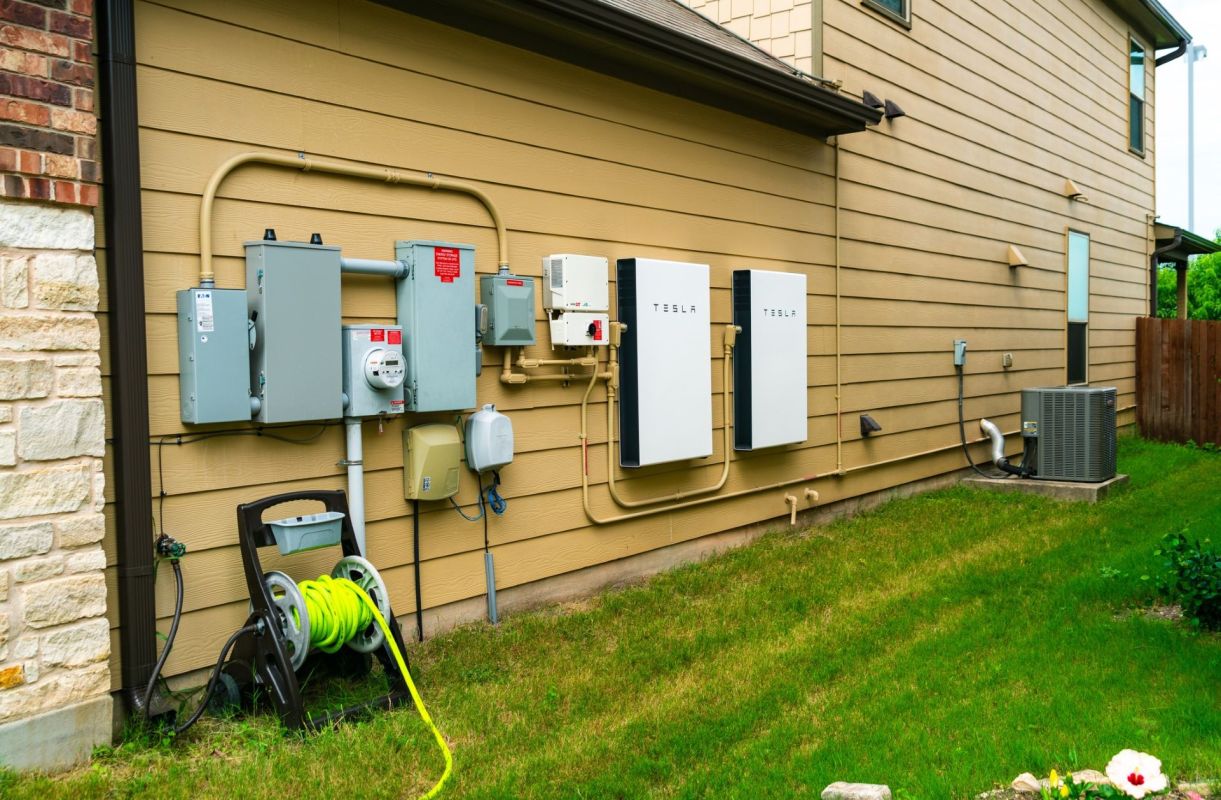
A homeowner trying to add backup power to their house posted a straightforward question on social media: should batteries go in the garage or on an exterior wall that gets the hottest afternoon sun?
Here's what to know
A Reddit post on the site's r/TeslaSolar forum laid out the choice between a garage installation and an outdoor setup for two Powerwall 3 units, an extension pack, and 18 kilowatt-hours of capacity.
The homeowner's main concern was simple: "Is it not too hot to have them outside?" Almost immediately, commenters streamed into the thread to add their two cents.
One user noted that the Powerwall 3 is rated for "-20 to +50 C (-4 to 122 F) including direct sunlight." The same commenter also wrote that "At the extremes, the battery self limits to preserve lifespan."
Other commenters said meeting the published temperature range does not automatically settle the placement question. Some said while indoor installations can reduce temperature swings, outdoor placement may help with garage space limitations and certain safety considerations.
Requirements for garage installs varied widely in the thread. One commenter said, "My local fire department requires both a heat detector AND sprinkler system to be installed in the garage if I want a battery," adding that their city also wanted a bollard, distance from the entrance, and a "solid core self-closing door."
Another homeowner pointed to wording in their installation contract stating that an outdoor battery "will need to be installed on a north-facing wall, or a wall that is shaded," unless it's enclosed in a cabinet.
Installers also have to consider structural support. One commenter estimated that two Powerwall 3 units plus one extension pack would weigh "about 850 lbs," making wall suitability another issue to evaluate.
Crushed by your bills? See instant solar savings from vetted installers in just a few clicks With energy prices through the roof, there's never been a better time to go solar — and EasyHome can help you find the best prices from the best installers in your area. EasyHome takes the guesswork and headaches out of energy upgrades by showing you estimated savings from a network of vetted local partners. To get started, just enter your ZIP and share a few details about your home — seeing your estimate is really that easy. |

When outside placement is permitted, commenters kept returning to shade as a priority. One suggested that "any basic shade system like an awning or umbrella or whatever solves most of the temperature issue," while another said batteries "will be happier over time in cooler shady location" if they must go outdoors.
Taken together, the comments amounted to a practical checklist including wall orientation, required clearances, mounting height, conduit distance, and whether garage placement changes local code compliance.
What can be done?
No matter where the original poster places their battery backup, adding battery storage is one of the best ways to protect your home during outages, save money on energy, and gain more energy independence.
For homeowners comparing systems and installation details, EnergySage is one place to explore home battery storage options, including competitive installation estimates. EnergySage has teamed up with electrification brand Qmerit to help homeowners get the best price on home battery storage solutions.
For buyers who don't need a whole-home setup, Pila offers another strong backup option. Its plug-and-play batteries cost a fraction of a whole-home backup system and can protect individual appliances like refrigerators.
Where can I learn more?
For more on Powerwall ownership and installation, these stories cover Tesla's home battery tech, competing backup options, installation growth, and how some owners are using Powerwalls.
• Tesla's new home battery system shows how backup power can energize a house.
• Electricians weighing alternatives to Tesla's battery say newer backup options are winning over homeowners.
• Tesla has passed half a million installations worldwide as Powerwall adoption keeps climbing.

Get TCD's free newsletters for easy tips, smart advice, and a chance to earn $5,000 toward home upgrades. To see more stories like this one, change your Google preferences here.






