


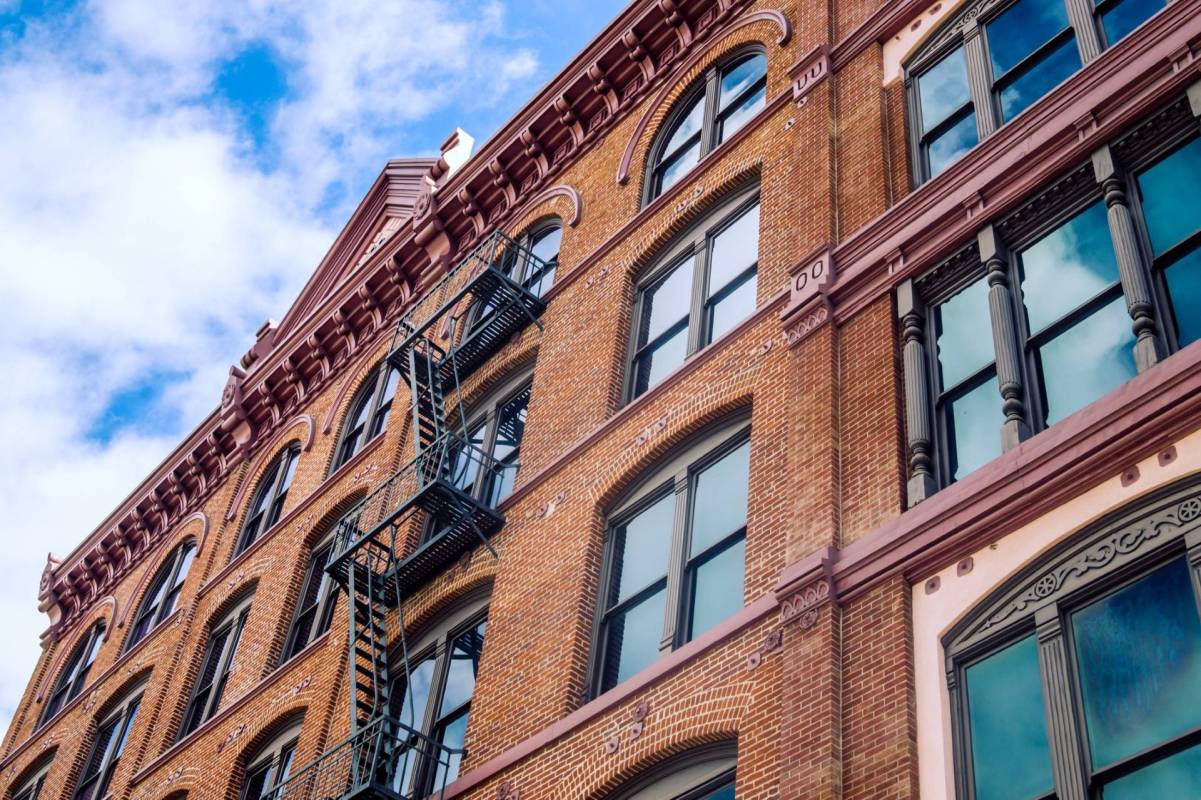
Los Angeles County still has many affordable rentals, but many of the cheapest apartments are in older buildings that may soon need major repairs.
That creates a difficult tradeoff for renters: improvements could make those homes safer and more efficient, but they could also increase the risk of rent hikes.
Here's what to know
The Los Angeles Times reported that a large share of the county's larger multifamily stock — 43% of buildings with five units or more — consists of pre-2000 properties with five to 19 units, a segment a Lusk Center for Real Estate study said includes many of Los Angeles County's lowest-cost apartments.
By both state and national standards, Los Angeles County's housing is notably old. The average home in Los Angeles County is 58 years old — 11 years older than California's average and 16 years older than the United States average.
That age profile partly reflects a steep drop in construction. The county added more than 70,000 housing units in the 1950s, compared with fewer than 15,000 in the 2010s.
"It underscores a massive slowdown in construction over the past several decades," said University of Southern California research professor Jared Schachner, who co-wrote the study, about the county's aging housing. "When you're not bringing in a large influx of units, that's the result: a large share of old buildings with a higher probability of being dilapidated."
TCD Picks » Quince Spotlight
💡These best-sellers from Quince deliver affordable, sustainable luxury for all




More background
The researchers examined homes that remain affordable without direct government subsidies, a market segment that becomes especially important when public budgets are tight and officials have limited influence over rents.
For lower-income renters, those apartments can be vital in a region where market-rate housing production has not kept up with demand.
Some parts of the county are especially dependent on that housing stock. Koreatown-Mid-City has the largest share of naturally occurring affordable rentals at 62%, followed by Hollywood-Studio City at 61% and Burbank-Glendale at 57%, according to the LA Times.
"Policymakers could look to preserve units in these areas because the affordable housing is so densely concentrated," Schachner said.
Other neighborhoods are confronting the challenge of age more directly. A 2020 map by Abundant Housing L.A. listed Cypress Park, Vermont Square, South Park, and Harvard Park among the county's oldest neighborhoods, each with average home ages of at least 90 years.
What's being done?
Measure ULA, which taxes high-end property sales, has raised more than $1.4 billion for affordable housing since 2023, including to preserve at-risk apartments. The City Council also approved a $466.6 million funding round in September, with applications running through Dec. 4, the LA Times reported.
Los Angeles Mayor Karen Bass' office has said both preservation and new construction will be needed.
"Solving the housing crisis that has been ignored for decades will not be fixed by one approach — it will take both preservation and the acceleration of affordable housing," said Paige Sterling, a spokesperson for Bass. "Since taking office, Mayor Bass has cut red tape and eliminated the bureaucratic barriers that have slowed housing production for decades."
Abundant Housing L.A. executive director Azeen Khanmalek has also argued that zoning reform is part of the solution. State Senate Bill 79 increases density near transit stops statewide, and while Los Angeles delayed implementation until 2030, it is allowing projects of up to 16 units in 55 single-family zones across the city.
Khanmalek also said small landlords are being squeezed by deferred maintenance costs and should be eligible for grants or subsidies to keep units habitable.
Some housing experts say public involvement will be necessary whether Los Angeles leans more heavily on preserving existing units or building new ones.
As PlaceEconomics principal Donovan Rypkema put it: "It's tricky to invest public resources in private homes, but what's the cost if we don't? Houses fall apart, and developers tear them down."
Where can I learn more?
These articles show how rent rules, habitability standards, and broader housing policy also shape aging apartments.
• In L.A. County, postfire rent protections expired as families braced for 50% hikes.
• Arizona lawmakers are pushing protections from dangerous indoor heat for renters in aging homes.
• A California housing fight has raised alarms over future homes' affordability and pollution statewide.

Get TCD's free newsletters for easy tips, smart advice, and a chance to earn $5,000 toward home upgrades. To see more stories like this one, change your Google preferences here.






