


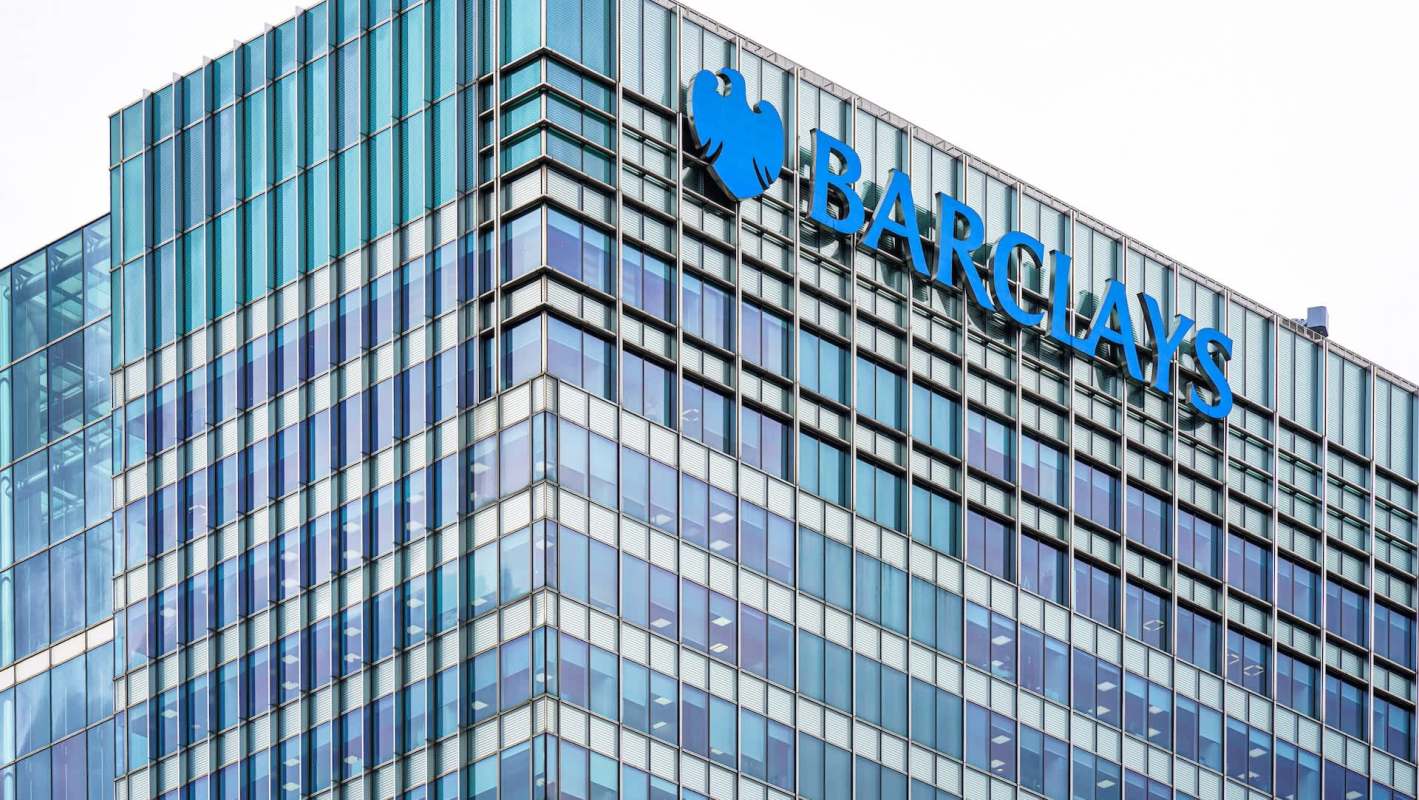
Barclays said artificial intelligence is already reshaping its workforce, with the British bank planning to cut about 5,000 full-time jobs, roughly 5% of its staff.
A large portion of those reductions is expected to fall on support roles, including developers, demonstrating how directly Barclays is connecting some layoffs to early AI-related efficiency gains.
Here's what to know
Support functions are set to absorb about three-fifths of the planned cuts, Barclays said during its third-quarter earnings report, with developers among the affected roles, Banking Dive reported.
After trimming about 1,000 jobs, the bank appears on pace to remove roughly 4,000 additional positions by the end of December.
The workforce update arrived alongside weaker performance in one part of Barclays' business: third-quarter revenue from fixed-income and currency trading fell 19% from a year earlier. Even so, Barclays explicitly said AI-driven productivity was part of the rationale for the planned cuts.
"The changes that we're making in the third and fourth quarters of this year are sizable," Barclays CFO Anna Cross said. "They relate both to the simplification of the organization and to some of the impacts that we're starting to see from AI."
TCD Picks » Quince Spotlight
💡These best-sellers from Quince deliver affordable, sustainable luxury for all




More background
Other major banks have also pointed to AI when discussing workforce changes, so Barclays is not alone in using that rationale.
In May, Standard Chartered said it would eliminate more than 7,800 roles in "corporate functions" by 2030, including jobs across human resources, risk management, and regulatory compliance.
That puts Barclays within a wider industry shift toward automating work once handled by large support teams.
Barclays CEO C.S. Venkatakrishnan said the bank intends to "employ AI at scale."
AI systems can help optimize complex systems such as clean energy management. At the same time, the technology can also require significant electricity and water for data-center cooling, which can put additional pressure on the energy grid, contribute to rising costs, and drain crucial resources.
What's being done?
Venkatakrishnan indicated that while Barclays wants to use AI broadly, the technology is not the sole force behind its strategy or staffing decisions.
Standard Chartered also shifted its messaging around AI. Speaking at Standard Chartered's May investor day, CEO Bill Winters said, "It's not cost cutting; it's replacing, in some cases, lower-value human capital with the financial capital and the investment capital we're putting in. We don't have job losses, but we do have job role reductions in favor of the machines, and that will accelerate as we go forward into AI."
The remark drew criticism for appearing to rank workers by worth. Winters apologized in a memo, writing, "Where roles do fall away, it reflects changes in the work, not the value of our people."
AI-linked job cuts have become a sensitive issue even for companies moving aggressively to expand the technology.
"AI is the icing on the cake, not the cake," Venkatakrishnan said.
Where can I learn more?
Barclays' cuts fit into a wider trend of companies using AI to reshape their workforces.
• At Klarna, executives said AI is successfully replacing workers as efficiency gains spread.
• Across multiple industries, more than 113,000 workers lost jobs as AI spending surged.
• Experts said developers and office staff are among careers at risk from AI.
• One investor warned AI could have a terrifying impact on employment as automation expands.
• Geoffrey Hinton argued AI may make a few people richer while displacing others.

Get TCD's free newsletters for easy tips, smart advice, and a chance to earn $5,000 toward home upgrades. To see more stories like this one, change your Google preferences here.






