


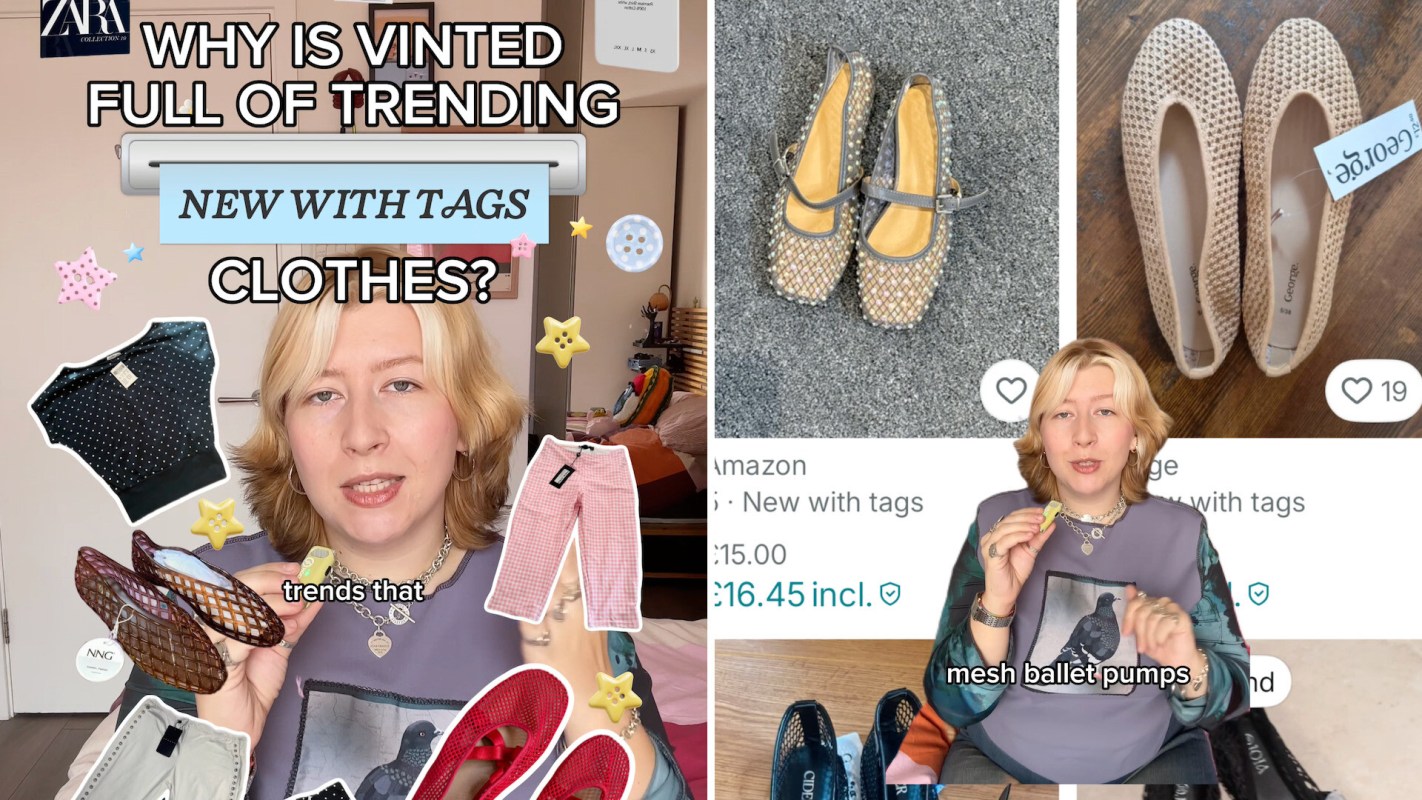
One TikTok creator raised concerns about the volume of trend-led clothing that brands are producing.
Here's what to know
Sustainable fashionista Lottie (@LottieLAshley) said that listings on secondhand clothing platform Vinted were packed with trend pieces that were still brand-new with tags.
@lottielashley BNWT clothes are ALL OVER vinted #vinted #vintedhaul #slowfashion #fastfashionsucks #secondhandfashion ♬ original sound - Lottie🐞
Among the examples shown were polka-dot items, mesh ballet pumps, and capris. Lottie noted that microtrend clothing is being made so cheaply and in such high quantities that some of it is being resold before it is ever worn.
People in the comments said they had been seeing the same thing. One commenter wrote, "The M&S viral jacket is alll over Vinted."
Another pointed to a Free People dress they decided not to buy worth over £200 ($224), saying there were now "heaps of listings for it on Vinted in all of the colours for £10-£20" ($13.37 to $26.75).
"Makes me question the quality," they added.
TCD Picks » Quince Spotlight
💡These best-sellers from Quince deliver affordable, sustainable luxury for all




More background
The comments did not frame these as one-off lucky finds. Instead, they described a familiar pattern in which hyped items reappear on resale apps, still unworn, after the initial excitement fades, suggesting many trend-led purchases are made quickly and used very little.
One commenter described trying to limit that cycle by putting tight rules around new purchases: "This year I set myself the challenge of buying only 5 new things and it had to be something I really needed (not a want)."
They said most of what they bought instead was secondhand, including a Coach handbag, a dress for a cousin's wedding, old-style Abercrombie Emerson dresses, M&S tops, a Barbour Alexa Chung trench coat, and "2x wool cashmere blend coats in pristine condition."
Those bargains may be great for resale shoppers, but they also reflect how many clothes seem to be produced, purchased, and passed on after little to no wear. If they don't get resold, they will likely end up in landfills, taking up space and contributing to the production of planet-warming gases.
A similar mindset appeared in another comment: "I've seen so many viral pieces in recent years and I've genuinely loved some of them but always wait a season or 2 to get it on Vinted as a bargain."
What can be done?
For many commenters, the clearest answer was simply to buy fewer new clothes.
In practice, that meant setting stricter limits, shopping secondhand more often, and refusing to rush into viral buys.
That approach can cut costs while keeping existing clothes in use for longer.
The savings mentioned in the comments were steep. The commenter who explained how they reduced new purchases said they "couldn't justify the cost" of some M&S tops the previous year, only to find them on sale for £5 to £10 ($7 to $13) brand-new later on.
Taken together, the comments described the same playbook: hold off, let the hype pass, and search the resale market instead of buying new.
At least for one commenter, that oversupply had a silver lining: "Someone else's trash is definitely my treasure haha."

Get TCD's free newsletters for easy tips, smart advice, and a chance to earn $5,000 toward home upgrades. To see more stories like this one, change your Google preferences here.






