


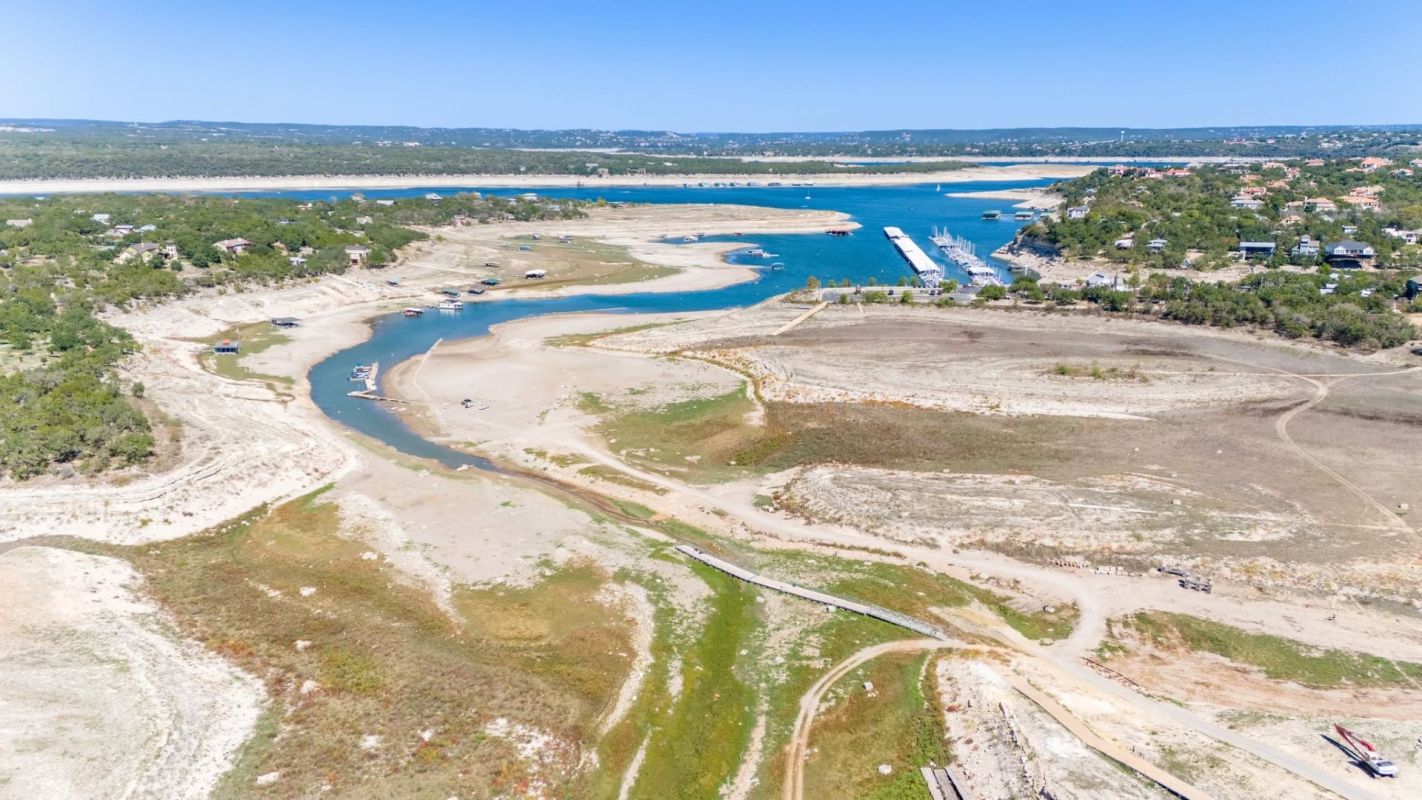
A new study is raising fresh concerns about water security in Central Texas. Community Impact reported it warns that the Highland Lakes watershed may provide far less water during a major drought than planners have been assuming.
If a drought as severe as the one in the 1950s were to return, lakes Travis and Buchanan could fall short of the Lower Colorado River Authority's current estimates by 9% to 21%.
Here's what to know
To make that estimate, the Central Texas Water Coalition reran LCRA's planning models for the proposed 2032 Water Management Plan with updated July streamflow figures, checking how the lakes would hold up under the watershed's present conditions, Community Impact reported.
In two scenarios, including the study's most comprehensive approach, combined storage in lakes Buchanan and Travis dropped beneath 600,000 acre-feet and fell as low as 532,372 acre-feet.
Under the proposed plan, LCRA rules permit water rationing and cutbacks once combined storage drops below 600,000 acre-feet.
The report said lake inflows have weakened without a comparable drop in rainfall. Since 2006, the Highland Lakes have logged nine of their 10 weakest inflow years on record. Rainfall hasn't followed the same pattern. Only three of the watershed's driest years fall in that same window.
TCD Picks » Quince Spotlight
💡These best-sellers from Quince deliver affordable, sustainable luxury for all




"The amount of rain falling on this watershed has not changed significantly, but the amount of that water reaching lakes Buchanan and Travis has. We need to understand why that is happening, but we also need to plan for the water this watershed can reliably produce today, not simply what it produced decades ago," said Shannon Hamilton, executive director of the Central Texas Water Coalition.
More background
Historical records for the watershed still state the 1950s are the driest stretch of time. According to the coalition's press release, that nine-year drought brought about 50 fewer inches of rain than the 2008-2016 drought LCRA now treats as its planning benchmark.
The study also found that a smaller share of the rain falling on the watershed now ends up flowing into the lakes.
"In a dry year today, only about 40% as much of the rain that falls on this watershed makes it into the lakes as it did in the 1950s," said Jordan Furnans, principal engineer at Windward Water Resources Engineering & Geoscience and the study's author.
Because one acre-foot equals about 326,000 gallons, the 600,000 acre-foot threshold represents a major drop in supply. Some communities on the upper lakes could lose drinking-water access once storage reaches that point, since their intake pipes sit above where they could still reach the water.
What's being done?
The Central Texas Water Coalition is pushing LCRA and the Texas Commission on Environmental Quality to check whether historical inflow data still matches today's watershed before TCEQ finalizes the 2032 Water Management Plan.
The coalition wants Texas lawmakers to order a similar study statewide, covering any basin where lake inflows are declining despite steady rainfall.
No single cause explains the shift. According to the study, though, researchers said hotter temperatures driving more evaporation, falling groundwater levels, and more than 43,000 small ponds and impoundments sitting above the lakes could all have an impact.
Where can I learn more?
Water shortages related to droughts and changing conditions are influencing areas outside Central Texas, too.
• In South Carolina, new drought restrictions forced tighter controls across the Keowee-Toxaway basin.
• In the Colorado Basin, Flaming Gorge emergency releases helped prop up Lake Powell.
• Around Washington, D.C., evaporation and drought are threatening the Potomac's long-term water supply.
• Flooded rivers brought relief to drought areas in Florida, but drinking-water concerns remained.
• Across vulnerable U.S. regions, hidden drought pressures are worsening shortages for farms and communities.

Get TCD's free newsletters for easy tips, smart advice, and a chance to earn $5,000 toward home upgrades. To see more stories like this one, change your Google preferences here.






