


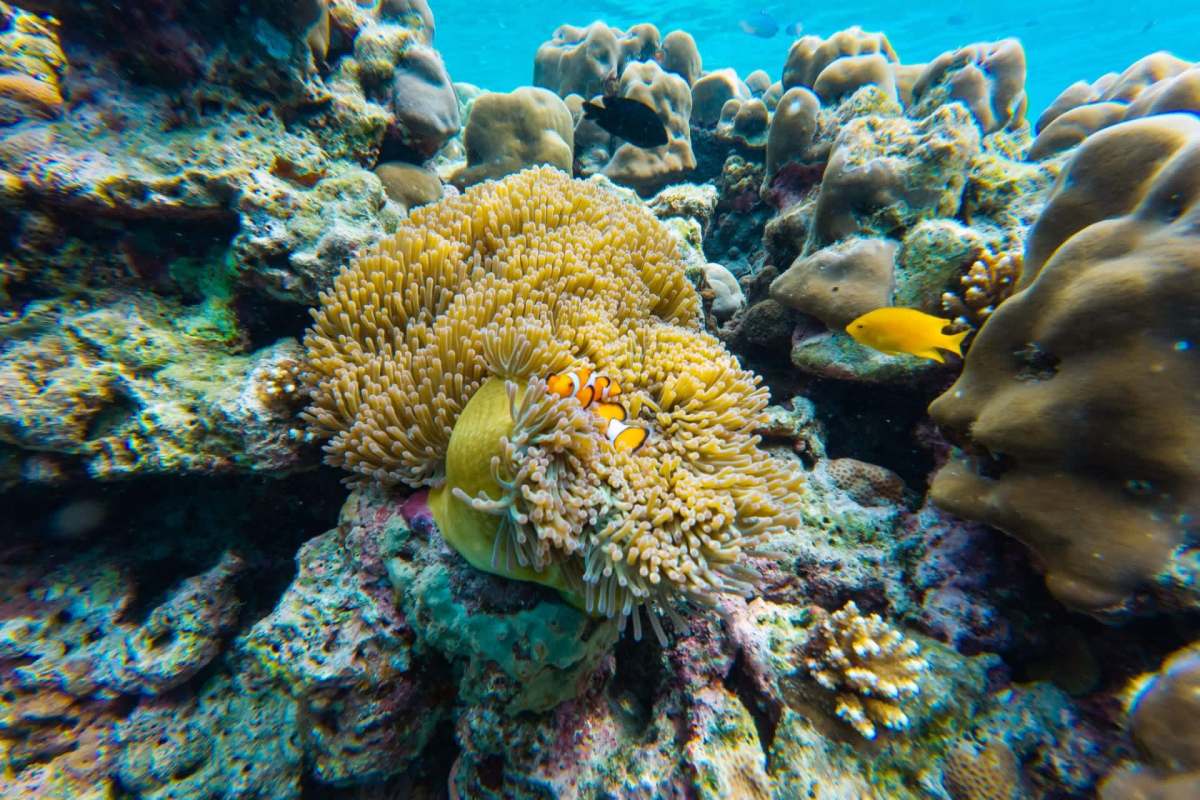
Nearly all shallow-water coral reef ecosystems could collapse by 2075, according to the International Union for Conservation of Nature's first global coral reef assessment under its Red List of Ecosystems.
The finding applies to some of the planet's most iconic reef systems and has immediate implications for coastal communities that rely on reefs for food, jobs, tourism revenue, and protection from shoreline damage.
Here's what to know
Covering 127 tropical and subtropical ecoregions in over 80 countries and territories, the IUCN assessment examined 72,727 square miles of reefs and found that 96% of shallow-water reef ecosystems are critically endangered.
Using past observations, current conditions, and projections of ocean warming, the assessment estimated collapse risk and placed major reef systems, including the Great Barrier Reef, the Coral Triangle, the Mesoamerican Barrier Reef System, and the Red Sea coral reefs, in the top threat category.
In IUCN's assessment, climate-driven heat stress is the most consistent global force behind reef decline. Under the IPCC's "middle-of-the-road" scenario used in the report, atmospheric warming would reach 2.7 degrees Celsius (4.9 degrees Fahrenheit) by the end of the century, while ocean-surface warming and marine heat waves will continue to drive mass bleaching and coral death.
IUCN considers a reef ecosystem collapsed when reef-building hard corals have nearly disappeared and algae, rubble, and sponges dominate instead. The Western Galápagos Islands coral reef ecosystem collapsed following the 1982-83 El Niño event.
TCD Picks » Quince Spotlight
💡These best-sellers from Quince deliver affordable, sustainable luxury for all




More background
Dr. Grethel Aguilar, IUCN director general, said coral reefs "support a quarter of all marine species" and warned that their decline threatens "the safety and livelihoods of coastal communities" as well as fisheries, aquaculture, and tourism.
IUCN said the outlook changes sharply when future climate projections are excluded. Based only on observed changes over the past 50 years, 24% of assessed reef ecosystems would be critically endangered.
That contrast also appears at the regional level. In East Asia, 20% of coral reef ecosystems would be critically endangered when judged only on observed changes over the last half-century, while reefs in the Northern Red Sea would be classed as vulnerable because they have developed unusually strong thermal tolerance.
The report said climate alone is not driving reef decline. IUCN found that overfishing of species such as parrotfish and grouper is affecting 63% of coral reef ecosystems, especially in East Asia, the Western Indian Ocean, the Caribbean, and Brazil. It also cited pollution, coastal development, overtourism, aquaculture, stronger storms, freshwater flooding, and crown-of-thorns starfish outbreaks as contributors to degradation.
What's being done?
Along with calling for steeper pollution cuts to limit further ocean warming, IUCN urged stronger protection and restoration for reefs and other coastal ecosystems and said reef survival will depend on action at multiple levels.
"By keeping coastal waters clean and free from pollution and ensuring fishing is sustainable, they can give coral reefs and other ecosystems like seagrass meadows and mangroves the best chance of surviving," said Dr. Mishal Gudka, the scientific lead for the global IUCN Red List of Coral Reef Ecosystems assessment. "The risk of coral reef collapse is escalating, but this must be a wake-up call rather than a cause for despair. Coral reefs have shown a remarkable ability to bounce back from devastating bleaching events. Pockets of surviving, resilient coral reefs can still remain in the future, so we must do everything within our reach to set them up for success."
Emily Nicholson, the thematic group lead for the Red List of Ecosystems, said, "Effective conservation can still make a real difference by easing local pressures, expanding marine protections and restoring key fish stocks." She also warned that shifts in reef systems will affect millions of people who depend on them directly and indirectly.
According to IUCN, the global assessment was coordinated by IUCN, IUCN Commission on Ecosystem Management, the University of Melbourne, and CORDIO East Africa through regional nodes of the Global Coral Reef Monitoring Network, bringing together more than 250 experts and using decades of monitoring data alongside satellite sea-surface temperature records.

Get TCD's free newsletters for easy tips, smart advice, and a chance to earn $5,000 toward home upgrades. To see more stories like this one, change your Google preferences here.






