


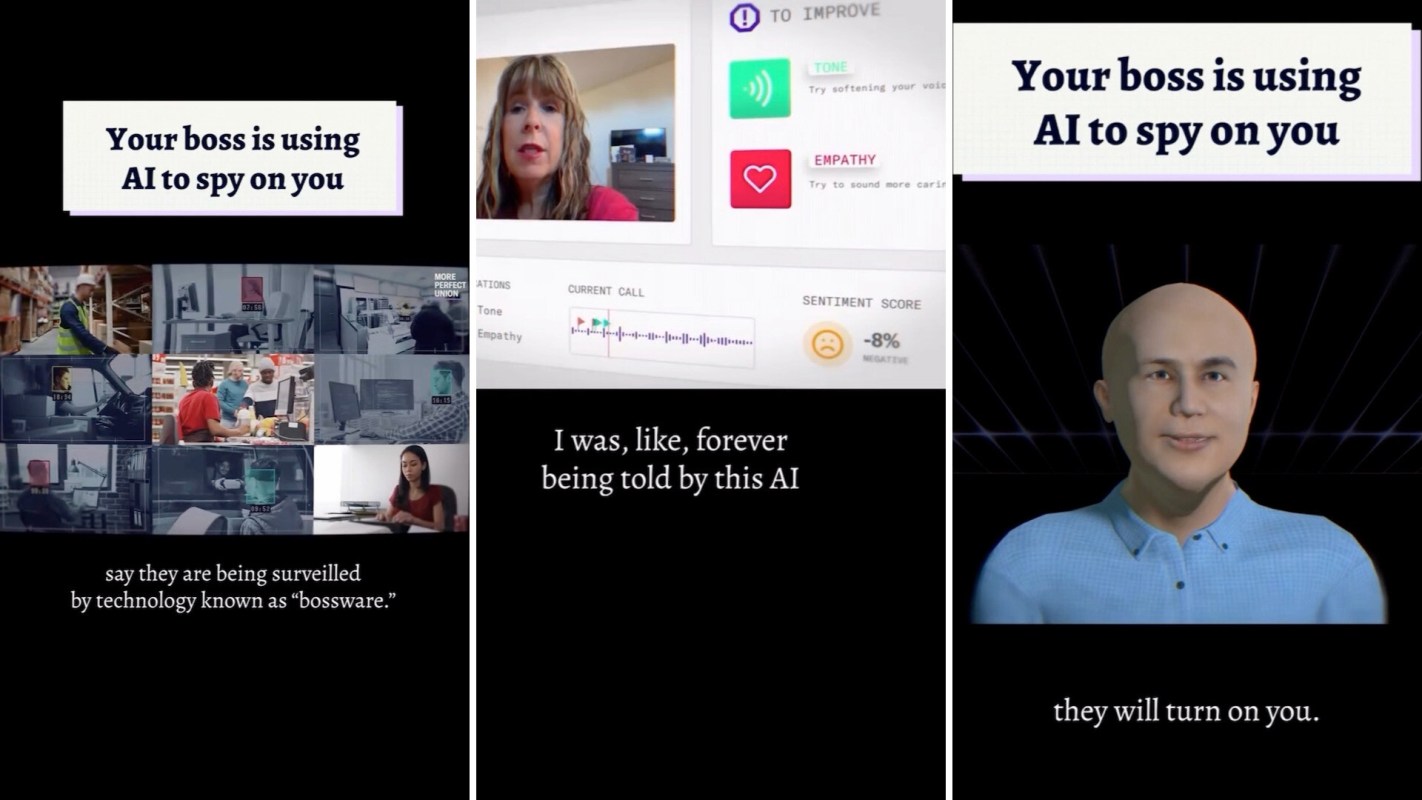
Workers in an Instagram video described AI-driven surveillance across very different kinds of jobs. A Kaiser Permanente nurse said software that analyzed her calls kept telling her she lacked empathy, while tech workers said their screens, clicks, and output were being tracked in ways they feared could help train replacements.
Here's what to know
"Bosses are using AI to spy on workers," More Perfect Union (@perfectunion) reported. The Instagram video said two-thirds of workers in the United States reported being monitored by workplace software known as bossware and that AI is making those systems more invasive.
Among the workers featured was Sherry Shaw, a nurse for 28 years. She said her triage work is closely measured, including call length and response times.
She said nurses are supposed to keep calls to 13 minutes and that a pilot program with Emotion AI repeatedly criticized how she sounded with patients.
"I was forever being told by this AI that my tone was wrong, that my voice didn't sound soft, it didn't sound engaging, it didn't sound like I cared," Shaw said.
In a statement to More Perfect Union, Kaiser Permanente said those measures were not used for performance assessment.
TCD Picks » Quince Spotlight
💡These best-sellers from Quince deliver affordable, sustainable luxury for all




Artificial intelligence scoring has spread into white-collar offices. The outlet cited a lawsuit that alleged Meta used AI-backed systems to rate employees, rank them, and recommend who should be laid off, including workers who had taken parental or medical leave.
Meta told More Perfect Union that organizational decisions "were and are made by people, not AI."
More background
To show how monitoring tools have spread and been "supercharged" by AI, More Perfect Union producer Mae Ryan installed bossware on her own computer and said it generated live screen views, photos, and a "productivity score" of 65%. She said the system labeled time spent reading reporting materials, watching webinars, and making work-related calls "unproductive."
The information gathered may travel beyond a worker's employer. Citing a study, More Perfect Union reported that some bossware companies may share data with advertisers or third-party brokers.
"We need data ownership laws," one commenter said. "People own their data, especially given how valuable it clearly is."
The outlet also noted Google spent $10 million in Spirit Airlines' bankruptcy process to acquire the airline's corporate data for AI training.
What's being done?
Workers are pushing back.
Meta's internal Model Capability Initiative, which collected employee activity data to improve AI systems, sparked a petition signed by more than 1,800 workers. After that backlash and privacy concerns, Meta put the program on hold, per More Perfect Union.
Samantha Gordon, an advocate who has tracked bossware trends and worked with labor unions in California, said one proposed bill in the state would have barred employers from using employees' personal data to train AI systems meant to replace them, though it did not advance.
Still, the Golden State passed a "no robo-bosses" law that prevents algorithms from making hiring or firing decisions, and another law restricts emotion-recognition AI and the monitoring of neural data.
More Perfect Union also pointed to collective bargaining as a safeguard. Shaw said that at her workplace employees can demand explanations for new AI tools and push back against systems they believe make care less safe or more dehumanizing.
After describing software that judged the warmth of her voice during patient calls, Shaw said, "We're not robots, but they want us to act like robots."
Where can I learn more?
These stories dig into the workplace changes behind complaints about AI monitoring and replacement.
• Across offices, AI's workplace side effects are spreading faster than many expected.
• Customer service and clerical roles are under scrutiny as AI systems improve.
• Executive says "AI is everywhere except in the incoming macroeconomic data."

Get TCD's free newsletters for easy tips, smart advice, and a chance to earn $5,000 toward home upgrades. To see more stories like this one, change your Google preferences here.






