


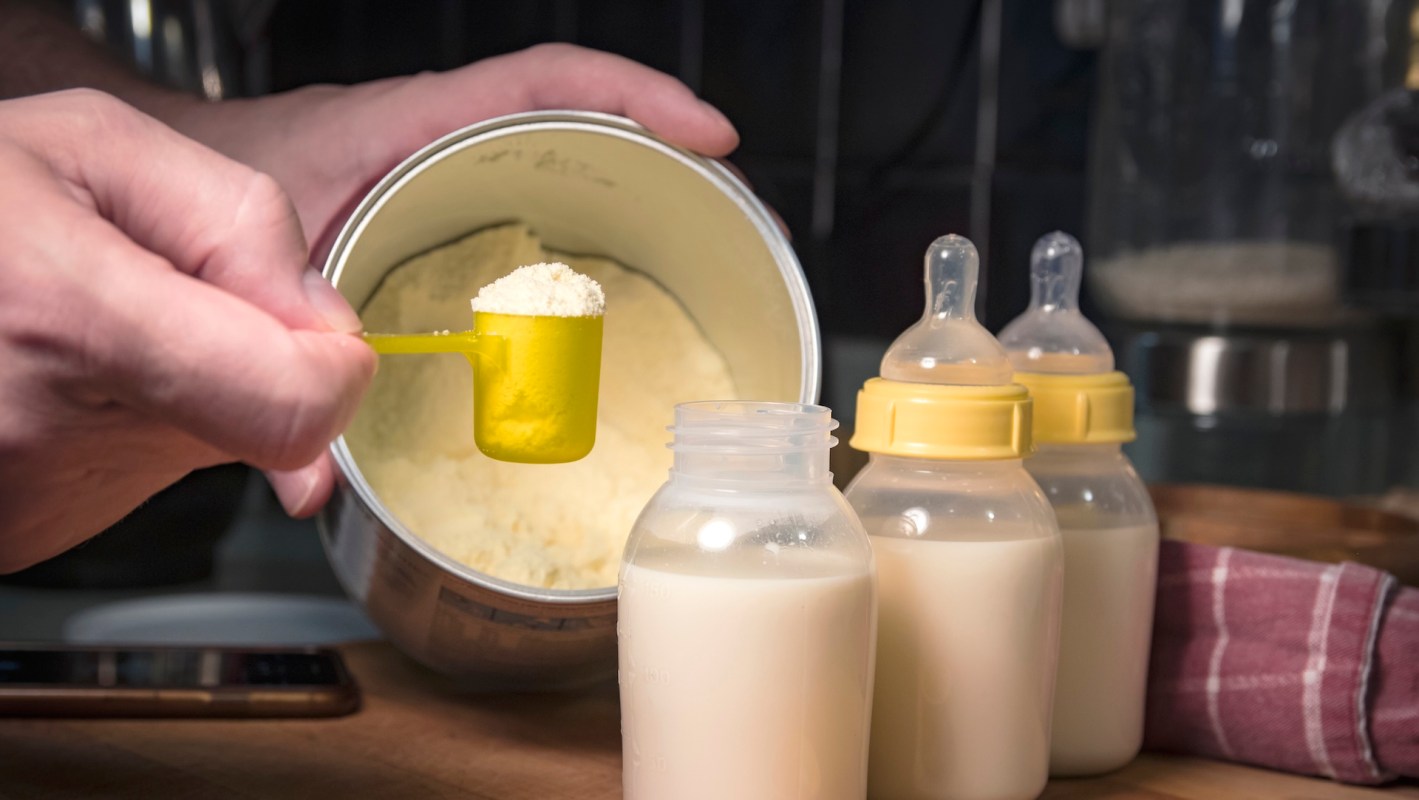
A scientific review found that infant formula, plastic bottles, and packaging, along with other feeding supplies, expose babies to microplastics and hormone-disrupting chemicals, with estimates that a 4-ounce bottle of formula could contain nearly 2 million microplastic particles.
Here's what to know
According to a September review of 27 studies published in Environmental Science and Pollution Research, cited by the U.S. Right to Know's Healthwire, microplastics were found in formula and feeding products along with endocrine-disrupting chemicals such as phthalates, bisphenols, PFAS, and organophosphorus flame retardants.
One study in the review reported that polypropylene baby bottles may shed 1.3 million to 16.2 million microplastic particles per 33.8 ounces (1 liter) during standard formula preparation. The review also reported plastic particles in powdered formula, along with chemicals including di(2-ethylhexyl) phthalate, or DEHP, and bisphenol A, or BPA, in packaging and in solid or semi-solid foods.
The review authors wrote, "This review highlights the daily, unnoticed, and poorly regulated exposure to various chemical agents that occurs today. The discovery of plastic particles in infant formula and baby bottles, even before their first use, raises ethical questions about the safety of products intended for this population."
The paper did not claim proven harm. The researchers said the existing evidence still cannot show how much infants absorb, how their bodies respond, or whether exposure leads to illness.
More background
Babies are still developing and, compared with adults, may clear contaminants from their bodies less efficiently. That can leave their nervous and hormonal systems more susceptible to disruptions in metabolism and hormone signaling.
TCD Picks » Quince Spotlight
💡These best-sellers from Quince deliver affordable, sustainable luxury for all




Several studies in the review described biological changes linked to plastic-related exposures, such as reduced gut bacterial diversity and changes in intestinal vitamins, minerals, and short-chain fatty acids. In animal research, investigators also reported hormone shifts, ovarian problems, and reproductive effects across generations in baby mice exposed to microplastics.
Studies cited by Healthwire also reported plastic particles or related substances in the placenta, breast milk, and other biological samples, and a separate study found 20- to 50-micrometer polypropylene particles in water from plastic sippy cups and toddler water bottles with straws.
The evidence is still evolving, and while testing methods vary, researchers are identifying exposure routes in everyday products, and there are still no internationally accepted limits for microplastics in food.
What's being done?
The authors called for tighter monitoring of infant products for microplastics and endocrine-disrupting chemicals through standardized testing methods, more research into early childhood exposure, safer packaging, and stricter limits on chemicals that migrate from packaging into food.
Regulators have started testing infant products, though not yet in every area identified by the review. Earlier in 2026, the FDA said infant formula remains safe after releasing results from its largest-ever testing of infant formula for contaminants including heavy metals, pesticides, phthalates, and PFAS. However, those tests did not include microplastics.
The review authors stated, "Although we have only partial evidence, it is sufficient to justify responses from regulatory, public health, and research agencies, making it necessary to establish a child toxicological surveillance system that takes concrete action to address this issue."
Where can I learn more?
As studies raise awareness, concerns about infant exposure to plastics and other chemical contaminants are becoming increasingly validated.
• Parents are increasingly choosing silicone or glass bottles after estimates of heavy microplastic shedding from plastic.
• Laser scans of infant bottles revealed formula preparation can release large amounts of microplastics.
• Scientists warn that nanoplastics in breast milk and formula may complicate infant development.
• During pregnancy, plastic exposure may pose widely underestimated health risks for mothers and babies.
• A global analysis tied phthalates to millions of preterm births and infant deaths.

Get TCD's free newsletters for easy tips, smart advice, and a chance to earn $5,000 toward home upgrades. To see more stories like this one, change your Google preferences here.






