


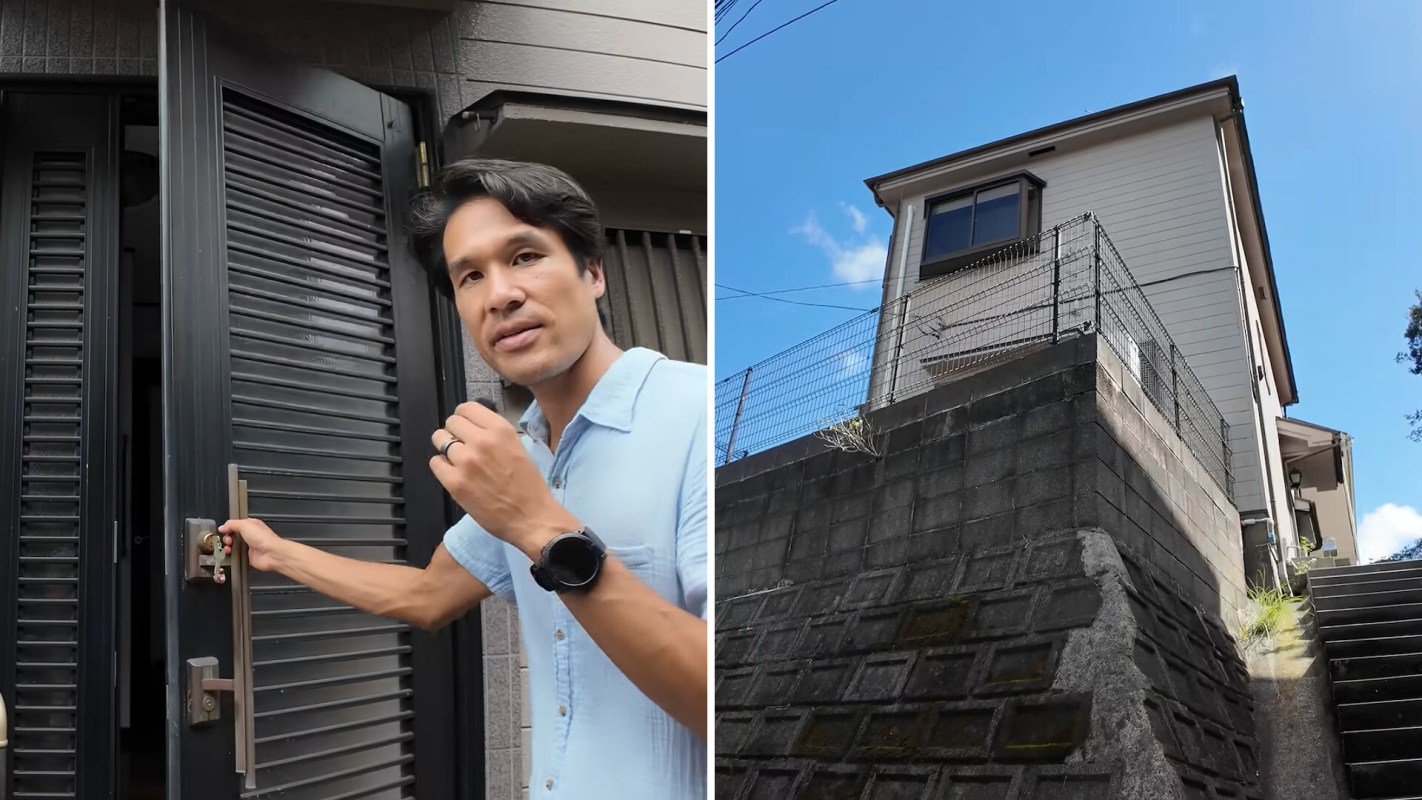
A property investor took a risk on a house in Yokohama that falls in a landslide red zone despite the feeling of uncertainty that came over him while looking at the property.
The $78,000 house in Yokohama does sit on a large concrete slab. However, the hillside in question dwarfs the home's elevation.
He nearly abandoned the purchase because of the hazard label, but the home's condition, floor plan, and price persuaded him to continue.
Here's what to know
In a YouTube video, he said it is his ninth property in Japan. He identified the purchase as a two-story home in Naka-ku, one of Yokohama's central wards, bought for 12 million yen, or about $78,000.
He described it as "one of the riskiest investments" he's made because of the property's landslide-hazard designation.
What unsettled him most was the surrounding site, even though the house's interior and foundation were solid. Standing by the entrance, he pointed across to a huge concrete retaining wall and the slope behind it and said, "This is in the red zone, a landslide red zone," explaining that this surrounding feature was the real source of hesitation.
TCD Picks » Quince Spotlight
💡These best-sellers from Quince deliver affordable, sustainable luxury for all




Despite that concern, he said the house looked "surprisingly good" for the price. The 2000-built home has 872 square feet (81 square meters) of living space, a 4LDK layout, two toilets, and an upstairs bedroom with a view.
Reactions were mixed. One commenter wrote, "You could never pay me enough to buy a house with a retaining wall like that," underscoring that the risk extended beyond landslides and into curb appeal.
More background
The property stood out partly because it seemed to need less work than many akiya (vacant homes) that often require extensive repairs. During the walkthrough, the investor highlighted the existing air conditioners, including a Daikin unit the seller agreed to leave, which could lower initial renovation costs.
He said the house also had day-to-day features that could appeal to a future tenant family, including storage, a first-floor dining-kitchen area, a double tatami room downstairs, and a large tatami room upstairs. On a hot summer day, he added, the place had "really good circulation," which he suggested could help it feel livable without a full rebuild.
He said the main bedroom also has a good view; occupants would "wake up to this view every day," and the property is near a large park that he said draws people for walks and runs. The nearest station is about 20 minutes away on foot, or around seven minutes by bike.
What can be done?
Instead of letting a low price override the red zone warning, he said he tried to gather firsthand context before deciding. That included speaking with a neighbor who, he said, had lived beside the retaining wall for about 50 years. He questioned the neighbor about what he had actually experienced.
He also brought another real estate agent, Morohasan, to see the property. After hearing the renovation plan, the agent offered a cautious sign-off: "Yeah, just make sure these things are taken care of, and otherwise, you should be good to go."
In his telling, the purchase was a judgment call based on renovation plans, face-to-face research, and his own comfort with uncertainty, and is not a blanket recommendation for everyone.
"For me, you know, after doing my own research, like talking to people in person, I decided that this is a risk that I'm willing to take."
Where can I learn more?
For readers interested in the long-term tradeoffs that can shape a home's value, these stories look at how energy features can affect resale prices, financing, and homeowner decisions.
• Homeowners say solar panels can lift resale appeal even as buyers weigh upfront costs.
• Zillow data suggest homes with solar panels impact home values and may sell faster.
• Homeowners trying to justify the expense keep asking whether solar panels add value at resale.

Get TCD's free newsletters for easy tips, smart advice, and a chance to earn $5,000 toward home upgrades. To see more stories like this one, change your Google preferences here.






