


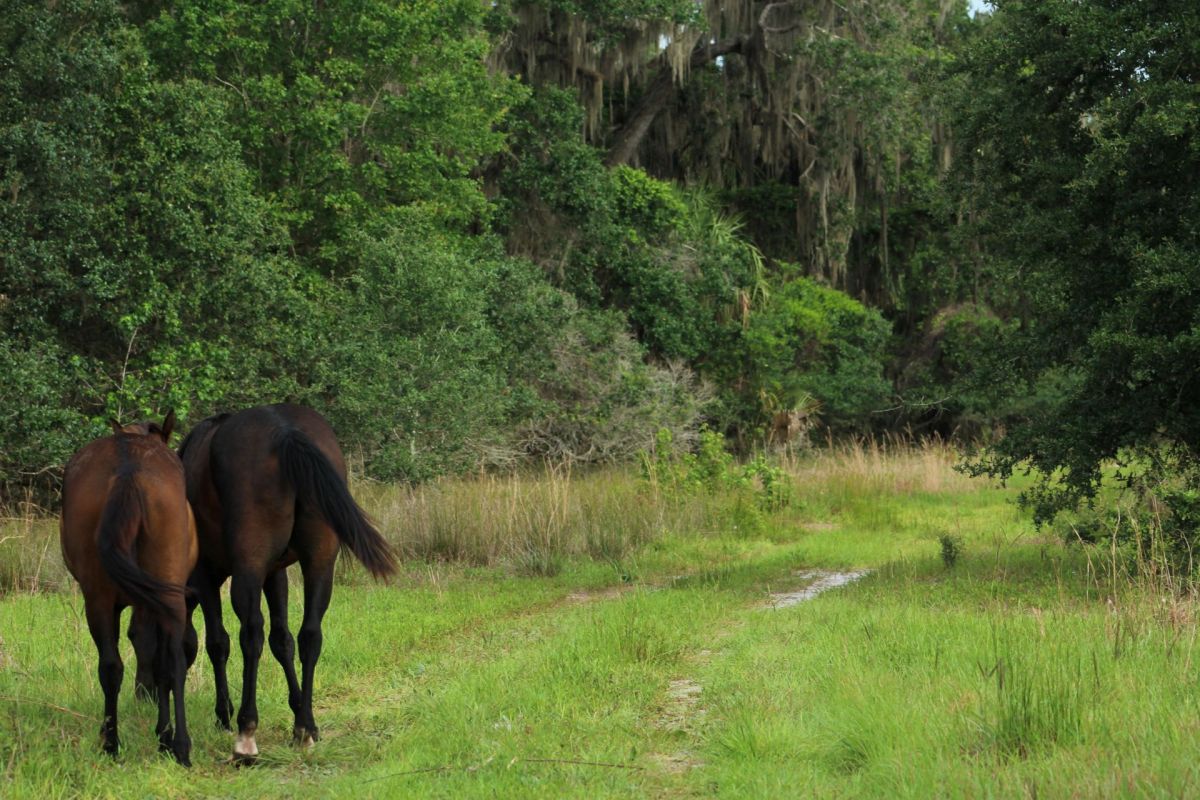
A 5-year-old wild mare named Beatrice on North Carolina's Outer Banks briefly got back on her feet before collapsing again, leaving rescuers facing a hard decision.
Over several days, staff watched Beatrice with her relatives staying close and concluded she could no longer safely remain in the wild.
Here's what to know
The Animal Rescue Site reported that Corolla Wild Horse Fund was alerted on Oct. 12 after a tour driver spotted Beatrice on the ground. When staff reached her, they said the young mare was alert but struggling to use her hindquarters, so they gave anti-inflammatory pain medication while a veterinarian made the trip to the scene.
An examination turned up no fever, fractures, or other visible injuries. "Right as we were about to call it she made one last effort to stand, and with our help was able to stand all the way up," CWHF said. "She was weight bearing on all four legs, and while a bit weak and wobbly, was able to walk. She immediately started grazing and the longer she stood the more stable she became. Because of this, we decided to leave her with her harem for the night and see how she did."
By Oct. 13, Beatrice had moved about a mile and was standing near her mother and yearling before a tour guide reported around 5 p.m. that she was down again and could not rise.
By Oct. 14, she still had not gotten up, so CWHF removed her from the wild and transported her to the farm. The group said this kind of intervention is reserved for extreme cases because banker horses are strongly tied to their harem and cannot be released back into the wild.
TCD Picks » Quince Spotlight
💡These best-sellers from Quince deliver affordable, sustainable luxury for all




More background
CWHF said Beatrice had her first foal in 2025 and has spent her entire life in the same harem. The organization also described the young mare as "very deeply bonded" with her mother, according to The Animal Rescue Site.
Over the multi-day period staff watched her in the wild, the organization said Beatrice's dam, daughter, and another older mare "never left her side." Her mother stood over her while she was down, and all three mares remained close even after Beatrice briefly got back up.
CWHF called her "an exceptionally valuable broodmare," and said the decision affected not only Beatrice's welfare, but also the social structure of her group.
Staff is still trying to determine what caused the weakness in her hind end. The Animal Rescue Site said some Facebook followers speculated it could be Equine Protozoal Myeloencephalitis, a neurological condition in horses that affects the brain and spinal cord and is linked to contaminated food or water carrying infected opossum feces, though no diagnosis has been announced.
What's being done?
At the farm, Beatrice is in quarantine while blood tests are run to investigate her hind-end weakness, according to The Animal Rescue Site. She has stood up again since arriving there and appears to be settling in well.
The group said she has been eating hay, calling out to the other horses, and gradually accepting a few head scratches from humans.
CWHF said the response depended on reports from both a tour driver and a tour guide and described the rescue as a village effort to watch over the herd.
The fund said it will post her test results and further updates on its Facebook page, and supporters can contribute toward Beatrice's care. For those looking for more ways to back conservation work, they can also learn more about donating money to climate causes.
"In Beatrice's case we gave her as much of an opportunity as we could to stay wild but ultimately, intervention was the right course of action not only for her own welfare but for the safety of the rest of the herd too," CWHF said.
Where can I learn more?
Beatrice's rescue is one example of the tough calls animal welfare emergencies can force, and these articles look at others.
• In the U.K., neighbors rallied to save a field for rescue animals after a community outpouring.
• In Texas, railroad workers spotted a raccoon laying motionless on tracks and rushed her to rehab.
• At WRAS, a wildlife hospital bursting at the seams appealed for help treating injured gulls.

Get TCD's free newsletters for easy tips, smart advice, and a chance to earn $5,000 toward home upgrades. To see more stories like this one, change your Google preferences here.







