


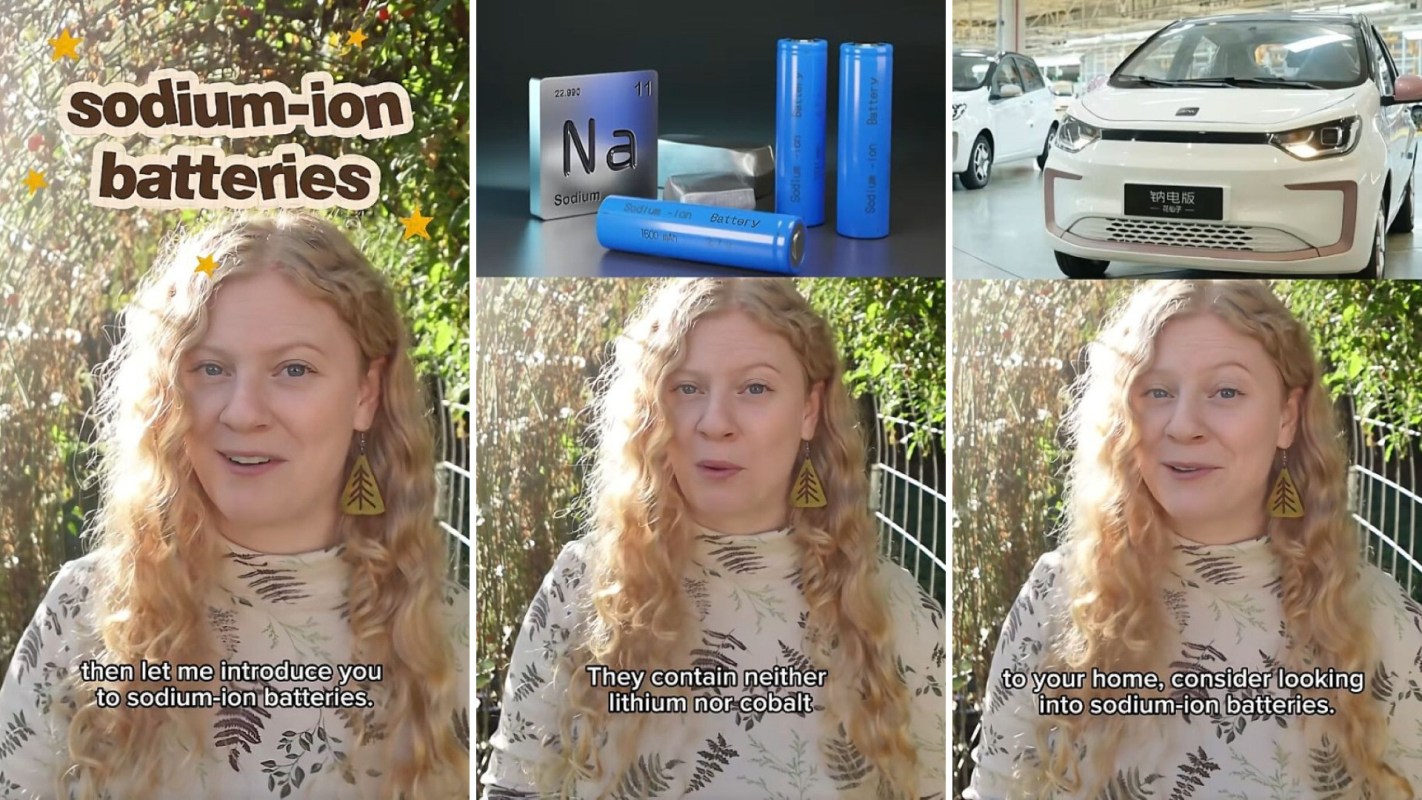
Sodium-ion batteries are an emerging alternative to lithium or cobalt and are beginning to edge into the markets for electric vehicles and home energy storage.
These batteries are generally more stable than lithium and don't carry the same humanitarian concerns that come from child labor and slavery tied to lithium.
Here's what to know
Speaking in a TikTok video, @thegarbagequeen spotlighted the shift, framing the chemistry as a possible answer for consumers who have been reluctant to embrace lithium-ion batteries.
@thegarbagequeen Did you know there's other battery chemistries out there besides lithium-ion??
♬ original sound - Alaina Wood
The creator said the batteries are "just now beginning to hit the commercial market for both electric vehicles and energy storage." She also described sodium-ion batteries as ones that "contain neither lithium nor cobalt" and can be made with sodium that is "a byproduct from existing industrial processes."
A big part of her case focused on the lesser impact of the new battery technology. She said the materials used in sodium-ion batteries are "more abundant and less detrimental to human health and the environment" than the materials needed for lithium-ion batteries.
She also pointed to cost, saying, "The price of sodium ion batteries is expected to become competitive with lithium ion ones in the next few years," and adding that the timeline could shorten because "the world's largest battery producer just launched their own sodium ion batteries."
TCD Picks » Quince Spotlight
💡These best-sellers from Quince deliver affordable, sustainable luxury for all




More background
Commenters started discussing the nuance of the chemistry: "I may be out of date here, but I hear sodium ion batteries have lower energy density than lithium," one commenter wrote, adding that it "won't be a problem with home storage or mass battery storage, where space is not an issue."
She said sodium-ion batteries were held back in the past by the lack of technology rather than by a lack of interest in the concept.
"The main reason why the world initially latched onto lithium ion batteries is because the tech for sodium ion batteries just wasn't there," she said. "Well, that is until now."
The first applications highlighted in the video were EVs and energy storage, both of which connect to daily life in different ways.
For drivers, a new battery chemistry could eventually widen the range of electric-vehicle options. For homeowners, apartment buildings, utilities, and cities, stationary storage can help capture and hold electricity for later use.
Several commenters also asked whether sodium-ion batteries could be used in smartphones and said they hoped to see the chemistry make its way into consumer electronics.
What can be done?
In practical terms, the new battery technology requires significant manpower to advance, and the future lies in the hands of the manufacturer and engineering teams, but consumers can help in a few ways.
Prioritizing a sodium-ion EV and adding sodium-ion battery storage at home is one of the best ways for consumers to support the new technology.
A second category could be useful for households thinking about backup power or resilience during outages and severe weather. Even if sodium-ion batteries ultimately require more space than lithium-ion packs, commenters noted that stationary storage may be more forgiving on size constraints than cars or buses.
The new storage technology also likely fits well with grid modernization, so contacting authorities and requesting sodium-ion grid improvements is also a way to contribute.
One commenter seemed very happy battery technology was getting its time in the limelight: "I've been onto the salt batteries for yearsssssd so great to finally hear ppl talk about them."

Get TCD's free newsletters for easy tips, smart advice, and a chance to earn $5,000 toward home upgrades. To see more stories like this one, change your Google preferences here.






