


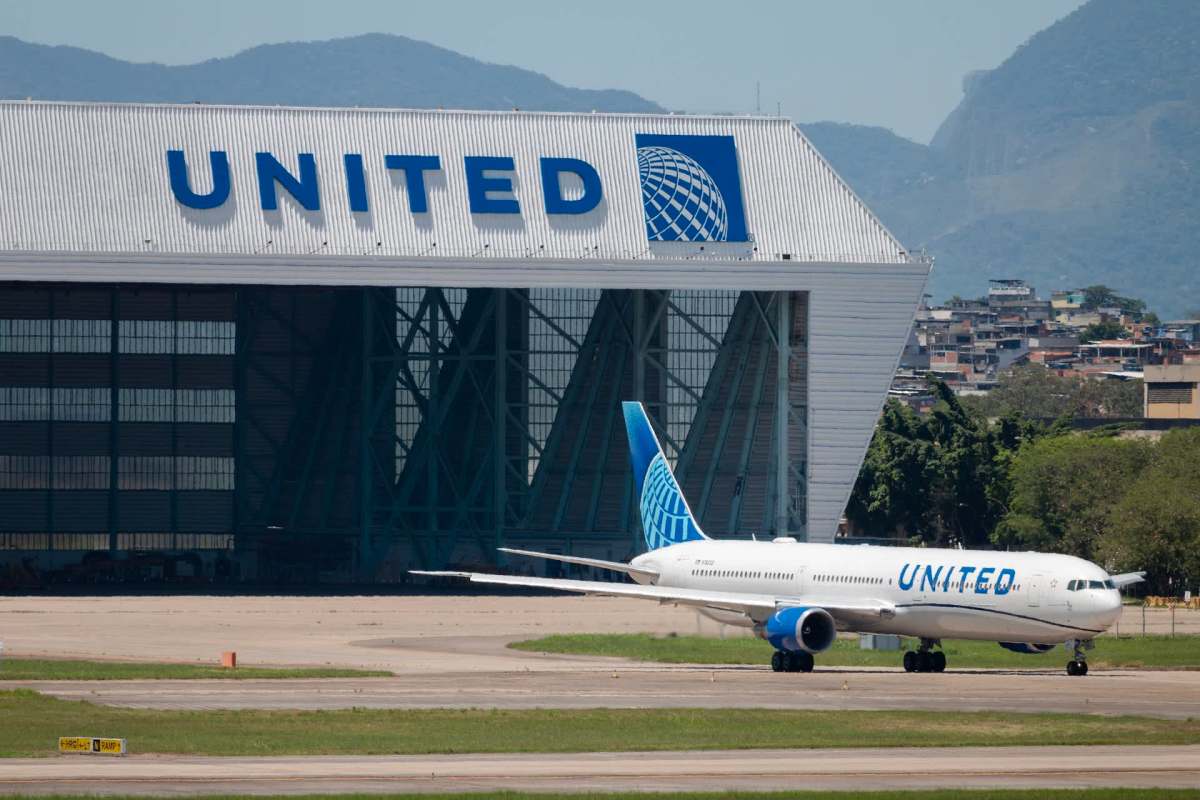
Even as Scott Kirby, the CEO of United Airlines, raked in 334 times what the company's median employee made in 2025, he argued that the country's wealthiest people should be paying more in taxes.
Here's what to know
According to Fortune, Kirby's 2025 compensation was valued at $32.28 million in the company's proxy filing, while the airline's median employee earned $96,670 — a pay ratio of about 334 to 1. Despite that, Kirby has said the country's wealthiest people, himself included, should face higher taxes on both accumulated wealth and large inheritances.
In discussing the erosion of public trust in CEOs, Kirby told The New York Times that he supports a U.S. wealth tax and inheritance taxes that could rise to nearly 100%.
"Wealth inequality has become a danger to our society, and we need to address that," Kirby said, per The Times. "We should have a national wealth tax — it won't work by state because people will just move. And I think we should have inheritance taxes that get close to 100 percent at some level."
"I would pay them," he added.
Such a tax might force America's wealthiest individuals and families to contribute more in taxes, but it would not automatically solve the problem of wealth inequality in the U.S. The United Airlines proxy statement cited by Fortune broke down Kirby's 2025 pay package as consisting of $1.2 million in base salary, $22.6 million in stock awards, $8 million in non-equity incentives, and about $500,000 in other compensation.
TCD Picks » Quince Spotlight
💡These best-sellers from Quince deliver affordable, sustainable luxury for all




Kirby has hardly been alone in significantly out-earning others who work for the same company, as the wealth gap between CEOs and rank-and-file workers has continued to grow. A study by the International Trade Union Confederation and Oxfam found CEO pay increased 11% in 2025, compared with just 0.5% for workers, per Fortune.
More background
Although United is headquartered in Chicago, Kirby lives in the Dallas area, where the airline advertised a part-time airport customer service representative job helping passengers at boarding gates for a starting wage of $19.64 an hour, according to Fortune.
At that hourly rate, a person working 40 hours a week would still need about 790 years to make what Kirby earned in 2025, assuming no raises, bonuses, or overtime.
According to Federal Reserve data, the richest 1% of U.S. households controlled 32.5% of total net worth in the second quarter of 2026, up from 31.1% a year earlier, while the bottom half held 2.3%, down from 2.4%.
Other business leaders and public figures have also acknowledged that such inequality is unsustainable and bad for society. Jamie Dimon, CEO of JPMorgan Chase, has said that he understands anti-rich sentiment in some communities, per Fortune. Some billionaires, including Bill Gates and Marc Benioff, the CEO of Salesforce, have also expressed support for higher taxes on top earners.
What's being done?
Kirby's 100% inheritance tax proposal, if ever enacted, would mark a stark change in policy for the U.S. Presently, the federal estate tax's top rate is 40%, and the 2026 basic exclusion amount is $15 million, according to Fortune.
Not everyone embraced Kirby's comments. Jeff Landry, the governor of Louisiana, wrote on X that if Kirby feels that strongly, "he could simply cut a check," and linked to a Treasury page for voluntary donations to pay down the national debt, Fortune reported.
Fortune also asked United whether Kirby believes the CEO-worker pay gap contributes to inequality and what tax thresholds he supports, but the airline did not respond.
Where can I learn more?
The following stories take a closer look at the widening pay gap between CEOs and workers, including backlash over outsized compensation packages and proposals to tax extreme wealth:
• At major U.S. companies, CEO-worker gaps measured in centuries have intensified scrutiny of executive pay.
• At Walmart, backlash over Doug McMillon's pay underscored how executive compensation fuels resentment.
• At Apple, Tim Cook's salary sparked outrage as rich-poor divides became harder to ignore.
• A first-of-its-kind U.S. analysis found wealthiest individuals leave startling footprints on emissions and inequality.
• Tesla shareholders demanded an investigation into Musk's pay after a huge award drew fire.

Get TCD's free newsletters for easy tips, smart advice, and a chance to earn $5,000 toward home upgrades. To see more stories like this one, change your Google preferences here.






