


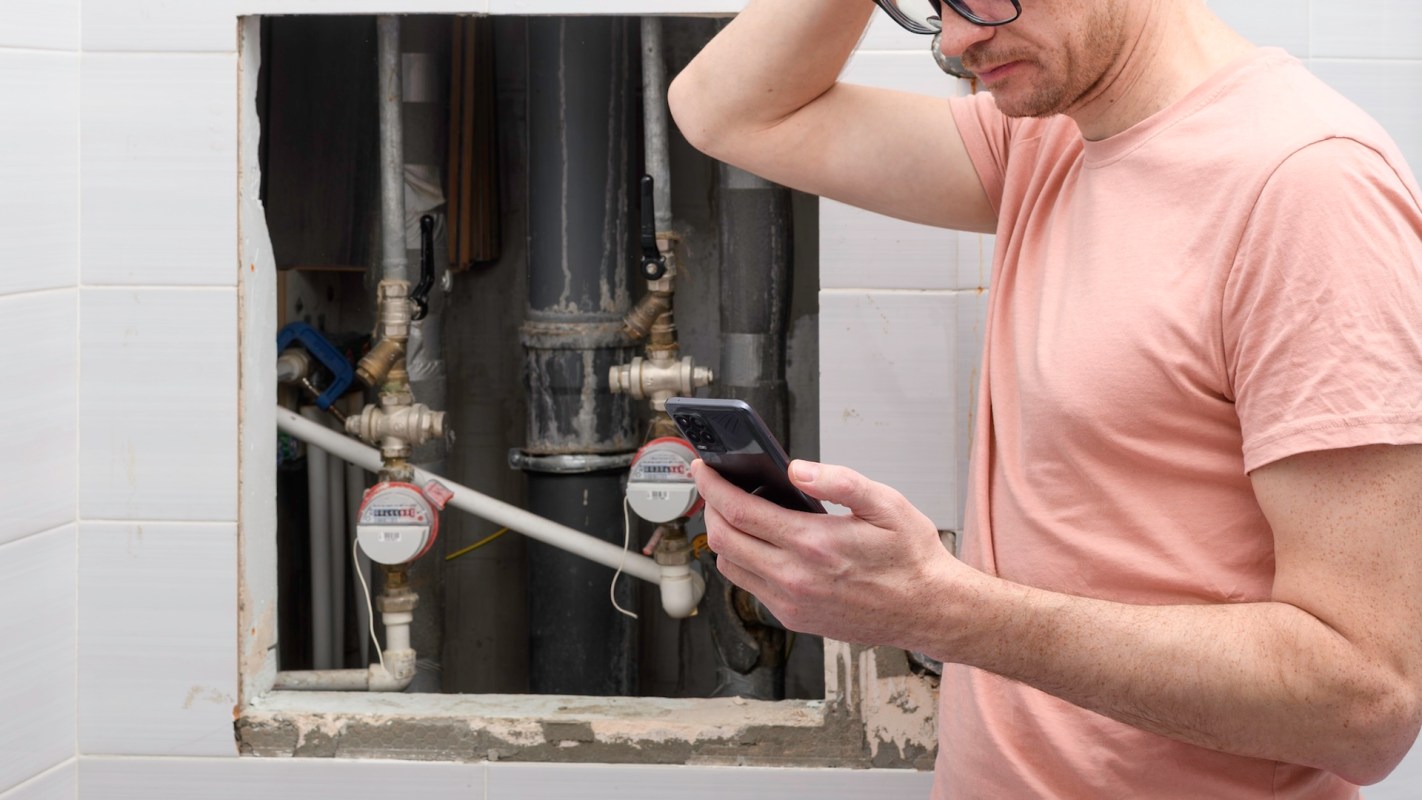
A condo owner sparked a Reddit troubleshooting thread after noticing a water meter moving forward and backward even when every faucet and appliance in the unit was off. The puzzling part was that the household's monthly bill still looked normal at about $65.
Here's what to know
The resident, who said two adults live in a 909-square-foot unit, said indoor checks found no obvious problem: no visible leak, and a toilet dye test showed no seepage. Even so, the meter would move "forwards and then backwards and then it stops for a bit then moves again."
Advice in the Reddit thread focused on the utility and the shutoff valves. One user said, "Call the water compny," and another replied that the provider could likely tell "pretty quick if its a meter issue or not."
An update from the OP said a leak-detection specialist did not think the dial behavior pointed to an active leak. The resident said, "He said the movements of the dial isn't correlated with a leak since it's going backwards and not continuously spinning forward."
The OP added that the city likewise said usage "shows a normal amount for a 2 person household."
If the unusual dial movement is just oscillation and not actual water loss, the resident may avoid both a higher bill and the cost of an unnecessary repair.
TCD Picks » Quince Spotlight
💡These best-sellers from Quince deliver affordable, sustainable luxury for all




More background
To explain the concern, the resident did the math in the comments: if the odometer were "moving slightly up a gallon an hour," that would total 1,440 gallons over a month.
The OP compared that estimate with the home's reported 2,000-gallon monthly use. By that reasoning, only 560 gallons would remain for two adults' day-to-day needs — which the resident said "isn't possible." On that basis, the poster argued that a real leak should have pushed total use above 3,000 gallons a month, but the bill didn't show that.
Not everyone in the thread agreed that the numbers ruled out a hidden leak. One user noted that "15 gallons per day per person is within the normal range," while another described the meter as the "demarcation point" and said anything downstream would usually be on the owner's side.
That distinction can determine whether the problem belongs to the city or whether the homeowner pays for leak detection and repairs.
What can be done?
One troubleshooting step raised in the discussion was to isolate the line after the meter. A user said that if the condo's post-meter valve were shut and the meter still moved, the leak would likely be somewhere between that shutoff and the meter box.
The resident reported trying that kind of shutoff test, writing: "We have the water shut off at the city meter and the indoor unit valve and the spinner stopped spinning."
The OP also escalated the issue, as many users recommended — first with a leak-detection professional and then with the city.
Where can I learn more?
Other households have run into the same mix of twitchy meters and surprisingly normal bills. Their experiences show how hidden leaks, meter swaps, and rate structures can reshape what ends up on a water bill.
• A renter learned a still-spinning meter means a leak after massive bills arrived.
• A simple blue dye toilet test can expose hidden seepage before bills climb.
• In one city, a new water meter revealed years of estimated billing.
• In Terry, Mississippi, a water bill jumped overnight, and officials had no explanation.

Get TCD's free newsletters for easy tips, smart advice, and a chance to earn $5,000 toward home upgrades. To see more stories like this one, change your Google preferences here.






