


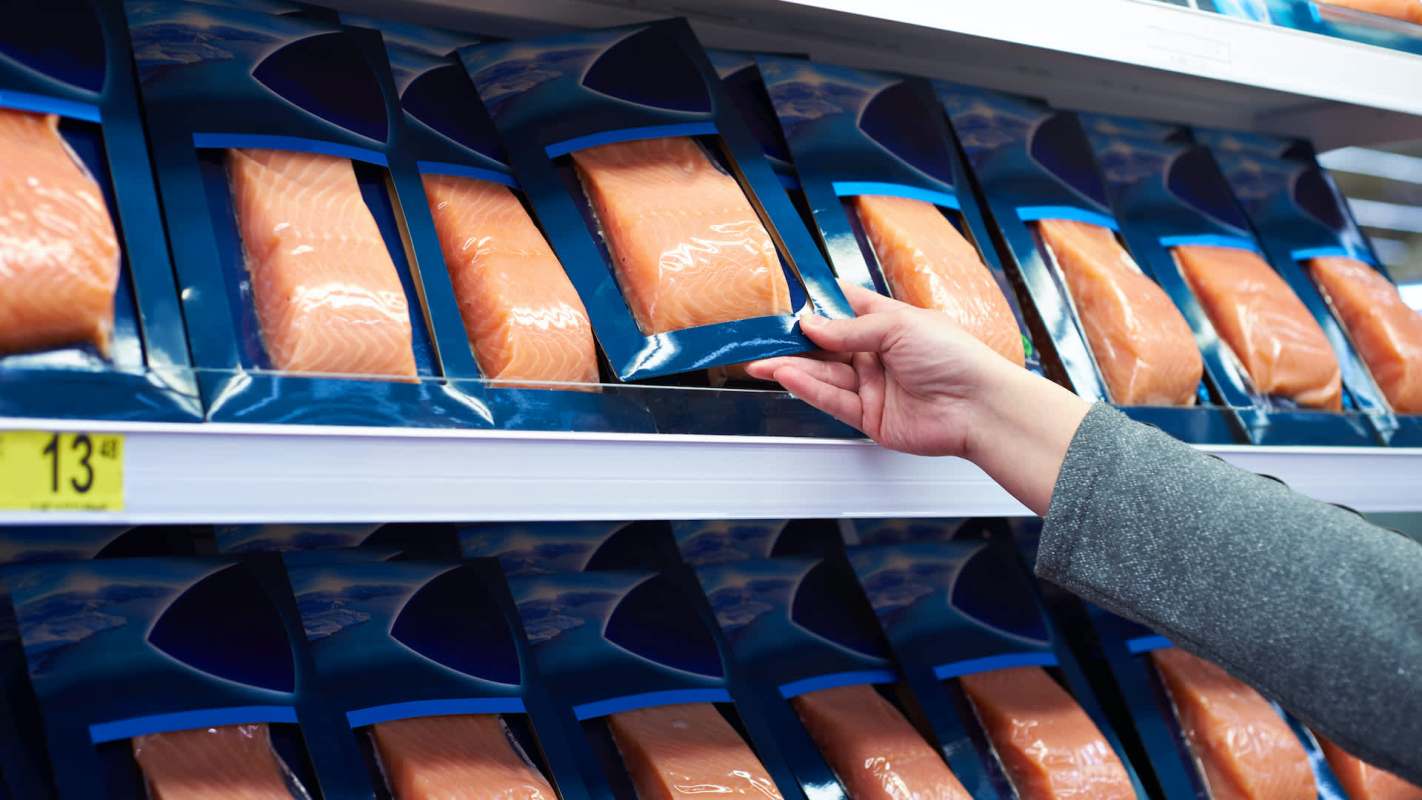
Major European salmon producers are swapping fishmeal for chicken byproducts in farmed salmon feed, a change meant to save money — but shoppers may not notice it at the seafood counter.
In an Instagram post, Ground News (@groundnews) said the move was "reversing a practice long avoided over concerns about consumer reactions."
Here's what to know
According to Ground News, Norway's Lerøy Seafood Group has already introduced poultry-based feed at its salmon farms, and Mowi — the largest producer of salmon worldwide — is expected to do the same.
A sharp change in feed costs is driving the decision. Fishmeal prices have nearly doubled as stocks decline and demand increases, while poultry-based feed costs less than half as much, Ground News reported.
Chicken bones, organs, and other poultry leftovers not eaten by people make up the lower-cost feed. That cuts expenses for producers, but shoppers probably won't see any labels indicating the salmon are being raised differently.
Labeling rules do not require feed ingredients to be disclosed. As a result, consumers could purchase salmon raised on chicken byproducts without seeing that information on the package.
TCD Picks » Quince Spotlight
💡These best-sellers from Quince deliver affordable, sustainable luxury for all




More background
The shift reveals pressure on two parts of the food system. Farmed salmon producers are dealing with rising fishmeal costs, and the fish stocks used to make that feed are under strain.
"'We're going to feed chicken byproducts to fish because we've depleted fish stocks so badly that the predatory fish populations cannot be sustained,'" one commenter wrote.
Another user brought up a food-safety concern, saying: "Remember what happened last time they started feeding animal byproducts to other animals? Mad cow disease."
Others questioned whether such a major supply-chain shift should happen without clear labeling.
People comparing seafood options based on price, sourcing, or environmental impact typically rely on labels and retailer standards. If feed ingredients are not disclosed, consumers have less ability to decide whether a product aligns with their expectations.
What can be done?
European retailers have historically restricted poultry-fed salmon, according to Ground News, so companies have shown they can set standards beyond minimum labeling requirements.
Asking grocers and seafood brands directly about feed practices may be one of the few options available to shoppers who want control over what they eat. If you're trying to sort out whether a product's marketing matches what's happening behind the scenes, it can help to educate yourself about greenwashing.
"WTF are we doing guys?" one user wrote.
Where can I learn more?
The stories below look at similar issues.
• At major aquaculture firms, feed for carnivorous fish is draining wild forage stocks.
• In grocery stores, shark meat can slip into seafood products without buyers noticing.
• At the USDA, environment-related label claims are facing tougher scrutiny across meat and poultry products.
• For shoppers, smaller fish species can offer cheaper protein with lower mercury risks.
• In U.K. supermarkets, millions of chickens showed painful hock burns tied to farming conditions.

Get TCD's free newsletters for easy tips, smart advice, and a chance to earn $5,000 toward home upgrades. To see more stories like this one, change your Google preferences here.







