


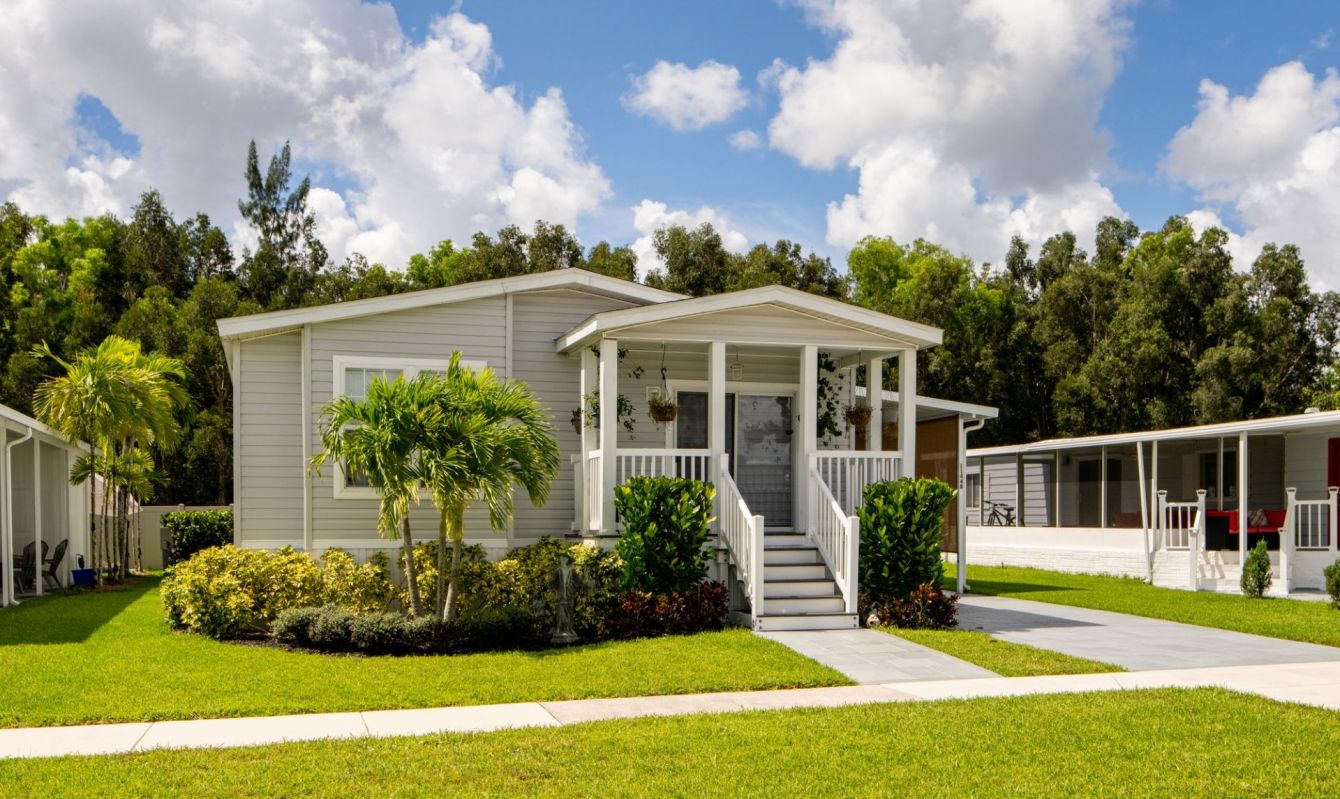
A federal rule change could make manufactured homes — one of the country's cheapest forms of housing — even more affordable, but more than 30 states need to update their own zoning laws to reap the benefits.
Here's what to know
As Stateline reported, the 21st Century ROAD to Housing Act eliminated a 1974 mandate that manufactured homes be built on a nonremovable steel frame. Housing experts said lifting that requirement could reduce costs and make these homes workable in more places.
Stephanie Hawke, associate research director of land use and supply at the Terner Center for Housing Innovation at the University of California, Berkeley, said, "First of all, you were putting a very heavy, expensive thing on the bottom of these homes that is not needed and it is not used … If you've got this heavy piece of steel on the bottom of a home, stacking it becomes more difficult."
The Pew Charitable Trust's housing initiative estimated that regulations in 30 states need to be updated to match the new federal law. States have until July 11, 2027 — or until 2028 in states with biennial legislatures — to certify equal treatment of manufactured homes with or without a chassis.
Experts said that could mean savings of $5,000 to $10,000 per home while also making two-story and multifamily construction more practical.
More background
Manufactured homes are built in factories under U.S. Department of Housing and Urban Development codes before being moved to a home site. According to the Manufactured Housing Institute, they cost about 50% less per square foot than site-built houses.
TCD Picks » Quince Spotlight
💡These best-sellers from Quince deliver affordable, sustainable luxury for all




About 20 million people live in manufactured housing, and Census survey data showed the average price of a new manufactured home climbed from $81,900 in 2019 to $127,200 in 2025.
Growth has slowed since the late 1990s as fewer manufactured home communities have been built and zoning rules often limit where these homes can be placed.
In Texas, a National Zoning Atlas analysis found that 33% of localities explicitly restrict manufactured housing. Another 11% allow it only through a special hearing or permit.
The stigma around these homes has also lingered, even as the homes themselves have changed. Dustin Brakemeier, a manufactured home community owner and operator in Minnesota, South Dakota, and Wisconsin, said, "They have the same walls, ceiling, sheetrock, windows and shingles. One's built in a factory, one's built outside. They're the same."
What's being done?
Some states have already started updating their laws to reflect the federal change. North Carolina, Tennessee, and Texas have updated their definitions of manufactured housing so they automatically track U.S. Department of Housing and Urban Development code changes.
Kentucky and Texas have banned local ordinances that unreasonably restrict where manufactured homes may be placed. Kentucky also barred local governments from imposing stricter design standards on manufactured homes than on comparable site-built homes.
Financing rules are also getting a closer look. Rachel Siegel, who researches housing policy for Pew's housing initiative, said many states still classify manufactured homes as personal property, like cars, rather than real estate.
Classifying manufactured homes as personal property can prevent buyers from accessing traditional mortgages. A Pew analysis found that a standard $100,000 mortgage on a manufactured home could save a borrower about $49,000 over the loan's lifetime compared with home-only personal property loans.
Georgia, Maine, and New York have already passed laws making it easier for some owners to convert manufactured homes to real property and qualify for mortgage financing.
As states revisit those rules, Siegel argued, "If we're going to title manufactured homes without a chassis the same way as we're titling manufactured homes with a chassis, let's make sure that that process is as streamlined and makes the most sense for what these modern homes are today."
Where can I learn more?
New policies and building methods are shaping housing norms.
• In California, lawmakers backed a clean-energy housing setback that critics said could raise costs.
• In Massachusetts, a new gas rule ended automatic utility subsidies for hookups in future homes.
• New York's All-Electric Buildings Act pushed new construction away from fossil fuels.
• In Oklahoma, legislators proposed 3D-printed homes subsidies to address the state's housing crunch.
• Papaya Homes launched state-of-the-art steel construction to deliver faster prefab housing at scale.

Get TCD's free newsletters for easy tips, smart advice, and a chance to earn $5,000 toward home upgrades. To see more stories like this one, change your Google preferences here.






