


Homeowners can save as much as $550 a year on energy bills by upgrading to a heat pump water heater, but one Reddit post reminds us that even efficient water heating equipment still depends on basic plumbing details being handled correctly.
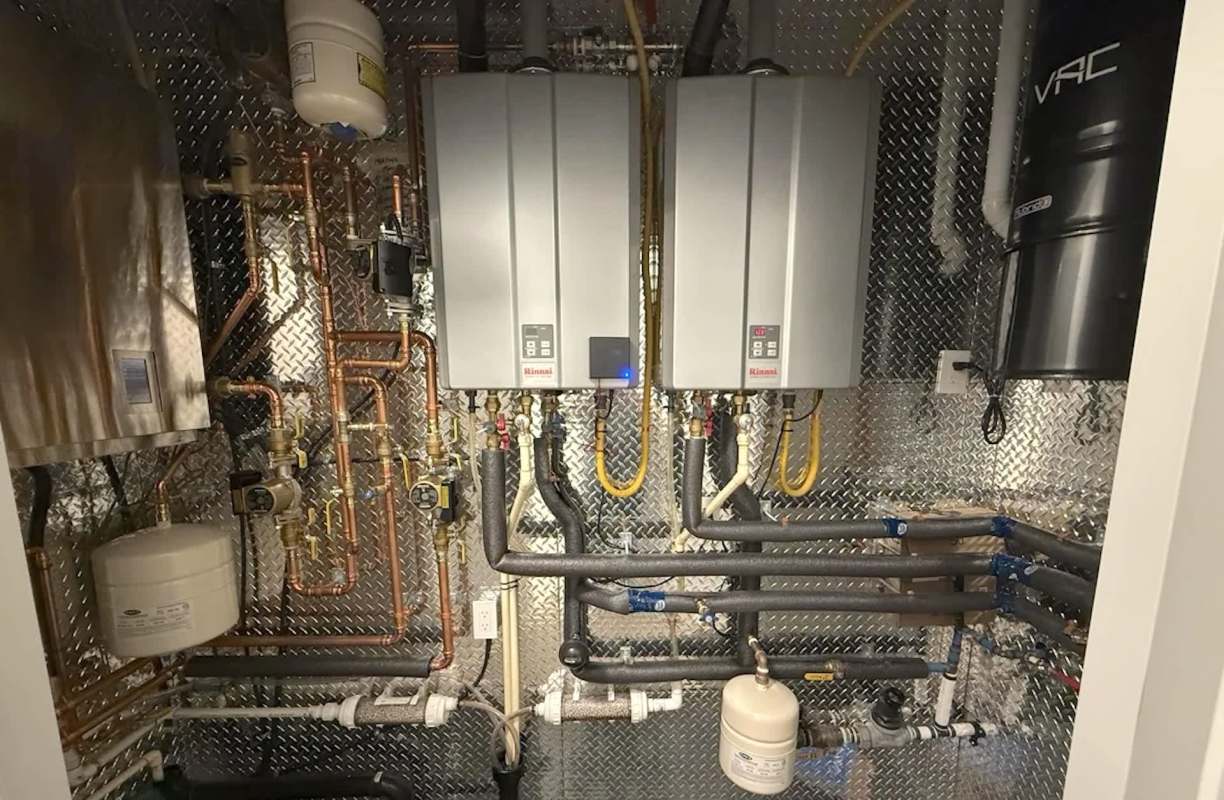
A homeowner with two Rinnai tankless water heaters in a basement closet said a lingering odor spreads through the basement and up the stairwell, and commenters overwhelmingly pointed to a missing P-trap that may be allowing sewer gas indoors whenever the units run.
Here's what to know
According to the homeowner's post on Reddit, the odor issue began after the poster's father and other people worked on the septic tank just outside the basement door in February.
At first, the homeowner described the smell as strongly sewage-like, then said it gradually weakened without fully disappearing. After their father replaced "the two condensation capsules" in the closet, most of that sewage smell went away, according to the post.
A different strong odor still lingered, with the closet and the top of the basement stairs standing out as the worst areas. The original poster wrote, "If I turn off both water heaters, the smell dissipates after a few hours."
That clue pushed commenters toward the condensate drain arrangement. One commenter wrote, "There's no traps on the drains for condensate neutralizers...... it's sewer gas you're smelling. That install was obviously done by professionals that should have known better. Call them back and have it corrected."
More background
Condensing tankless water heaters produce condensate — water that has to drain away. The homeowner specifically mentioned two replaced condensation capsules, suggesting the drain and neutralizer system is central to the issue.
In the replies, multiple people said sewer gas can move back through a condensate drain if there is no trap or if the trap has dried out, especially when the heaters are running. Another commenter added, "The fact that it goes away when the units are off pretty much confirms this imo."
Crushed by your bills? See instant solar savings from vetted installers in just a few clicks With energy prices through the roof, there's never been a better time to go solar — and EasyHome can help you find the best prices from the best installers in your area. EasyHome takes the guesswork and headaches out of energy upgrades by showing you estimated savings from a network of vetted local partners. To get started, just enter your ZIP and share a few details about your home — seeing your estimate is really that easy. |

Another response noted that a trap might be located under the slab instead of being visible in the room. That commenter also said sewer gas odors can vary with temperature and barometric pressure, which fits the poster's observation that the smell changes with heat and is strongest in the closet.
The odor is noticeable beyond the utility room as well. The original poster said guests notice it in the stairwell, while their father "refuses to do anything about it because he claims he can't smell it."
What can be done?
Many replies urged the homeowner to get the installer involved. One commenter said, "Call them back and have it corrected," while another urged the homeowner to find out who handled the installation and "have them have a go at your concerns."
Commenters also recommended mapping the condensate route step by step: look for a floor drain in the closet, confirm whether a P-trap exists or could be under the slab, and check whether the line drains straight into the septic system. One commenter recommended pouring water into a dry trap or adding "an inline p-trap/air gap," while another said an Oatey drain seal solved a similar floor drain odor in a mechanical room.
For homeowners rethinking their whole water heating setup, checking out Cala is a good place to start. Cala's customizable smart heat pump water heaters can help homeowners decrease their energy bills by heating water exactly when it is needed.
That kind of control could be especially appealing in a home already dealing with utility room headaches and energy costs. Once the drain issue is fixed, comparing options from Cala could be one way to lower long-term water heating bills.
One commenter summed up the likely culprit, saying, "Bet it's the condensate drain line tied into the septic without a p-trap (or with a dry one). When the heaters run they pull sewer gas back into the closet, and when they're off it stops."

Get TCD's free newsletters for easy tips, smart advice, and a chance to earn $5,000 toward home upgrades. To see more stories like this one, change your Google preferences here.






