


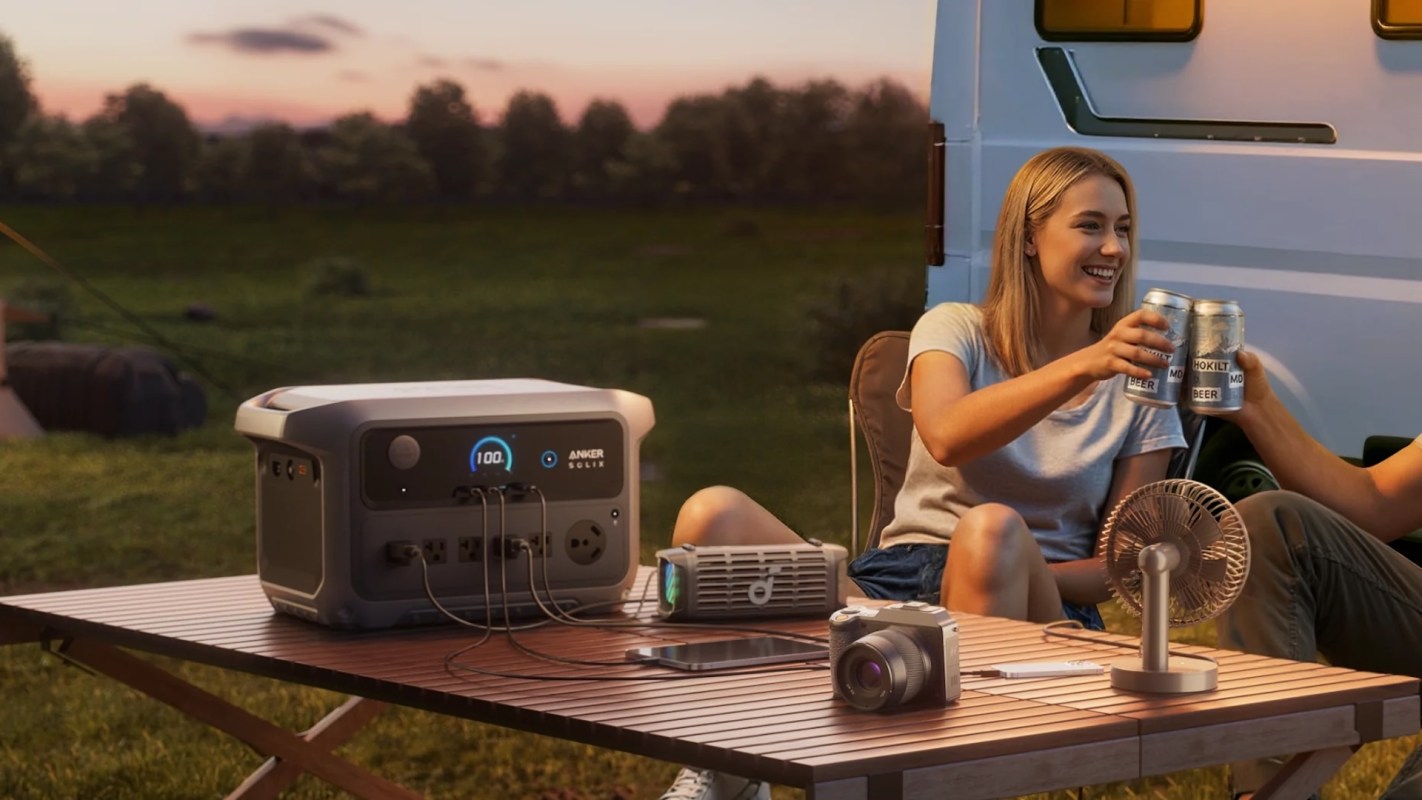
Backup batteries are getting far more everyday use than their name suggests, with owners in a Reddit thread about Anker SOLIX power stations describing how they use them for everything from heating pads at a drive-in movie and a fan-and-projector camping setup to air conditioning, reef tanks, TVs, fridges, and freezers.
Here's what to know
On r/AnkerSOLIXCommunity, a user first shared a few ways they used their C2000 Gen 2, then asked other owners how they put Anker SOLIX power stations to work on Reddit.
They said: "I had solar panels outside the tent and ran the solar power into the power station while it remained in the tent. Pretty awesome!"
A different user said their C2000 is tied to Wi-Fi for remote on-off control and, when paired with a 440-watt solar panel, can run an AC unit; in full summer sun, they added, it could cool their space "without being plugged into the grid."
Another reply outlined a more built-out arrangement centered on an F3000, with three expansion batteries, a six-circuit transfer switch, and 2,400 watts of solar.
According to that user, the setup covers a converted-garage ADU with a 60-gallon reef tank, along with a garage fridge, a freezer, and another ADU, and it usually pulls about 500 to 1,000 watts per hour.
TCD Picks » Quince Spotlight
💡These best-sellers from Quince deliver affordable, sustainable luxury for all




More background
Several replies suggested that, for many owners, these batteries are functioning less like emergency-only gear and more like always-on household infrastructure.
One user said an S2000 backs up a 55-inch TV, Sky Q box, Raspberry Pi 5, and a double LED matrix display showing a pixel-art fish tank.
They said that group of devices can stay powered for around 24 hours without dimming lights or switching to eco mode.
They also said a second S2000 was on the way to back up a freezer and a large fridge/freezer for what they estimated would be an entire day.
Other users focused on resilience for essentials.
Another owner said their unit keeps a security system and internet service running for roughly five days or more during an outage, while someone else said theirs is reserved just for a sump pump.
Instead of waiting for a blackout, owners in the thread described trimming some grid use with solar, avoiding the hassle of buying cooler ice every day, and getting steady value from equipment they had already bought.
What can be done?
The simplest approach is pairing it with solar panels for daytime recharging, whether that means keeping a camping setup running or using sunshine to offset an appliance at home.
Another tactic is dedicating a unit to one critical load.
The sump-pump-only setup and the security-system-and-internet backup both show that limiting connected devices can extend runtime and make outage planning more predictable.
For people with bigger energy needs, some users are integrating power stations into home circuits.
Describing that larger installation, one user said their system runs in TOU mode 24 hours a day and switches to bypass mode from midnight to 3 a.m. "to give the system a break from running the inverter all day."
Separately, the OP said a compact power box similar to the C300 can keep outdoor lights running for roughly 10 straight hours.
For the user running AC from a solar-fed setup, the payoff came down to three words: "Free cooling baby."
Where can I learn more?
These articles look at the same trend: batteries that pull double duty in daily life and during outages. They cover portable and plug-and-play backup systems people use to keep homes, devices, and essentials running.
• A 1,000-watt portable battery showed what a solar-fed backup can keep running off-grid.
• At CES, companies rolled out plug-and-play backup power that skips the rewiring many homes dread.
• Anker's F3800 Plus joined the home backup rivalry with Tesla Powerwall ahead of outages.
• BioLite unveiled a sleek battery backup that can protect essentials and qualify for incentives.

Get TCD's free newsletters for easy tips, smart advice, and a chance to earn $5,000 toward home upgrades. To see more stories like this one, change your Google preferences here.






