


A Northeast homeowner is learning a harsh lesson about issues that can be hiding in a floor plan. Their kitchen-and-bathroom zone has no heating.
The homeowner said the first floor is about 800 square feet, but a red-marked area on the blueprint has no heating. That area includes the plumbing-heavy rooms they fear could be most vulnerable as temperatures drop.
Here's what to know
The homeowner posted the layout on Reddit. It shows an odd gap in coverage: the kitchen and bathroom sit inside a red-circled zone with no hydronic baseboard radiators, while the existing units are marked in green elsewhere. According to the homeowner, the kitchen sink and dishwasher are on the upper wall, directly under the window.
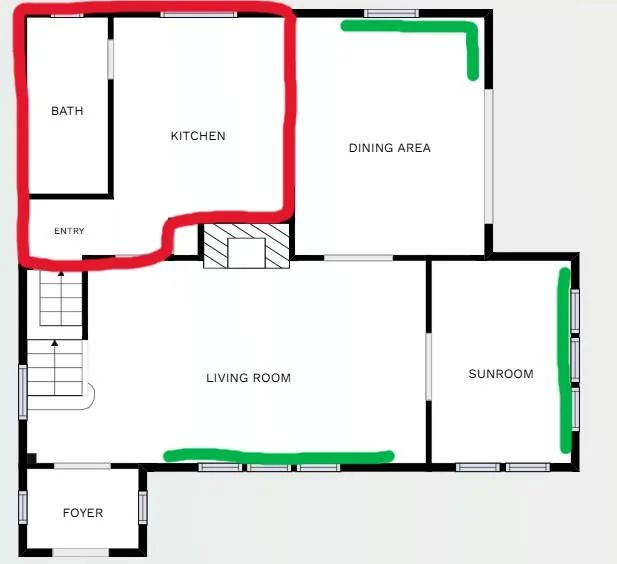
Commenters quickly focused on the plumbing risk. One commenter wrote, "That bathroom is definitely going to be cold. 2 exterior walls and a window." Another pointed to the bigger issue: "You happen to have no heat where all your plumbing is. And that could be pretty bad in the winter."
The original poster made clear that burst pipes, not chilly floors, were the main concern, writing: "we are in the northeast US, so... cold. Worried about pipes, primarily."
That concern is one reason many homeowners consider more efficient heating upgrades: newer HVAC systems and heat pumps can cut energy bills while delivering more even temperatures throughout the home. Palmetto can help homeowners understand their HVAC options, and its Comfort Plan network can connect them with vetted installers and efficient heating and cooling solutions.
More background
The homeowner said the basement is "finished, the boiler is center underneath the fireplace," with hydronic radiators in the finished basement room, but "nothing in the basement bathroom or the maintenance room right beneath the first floor bathroom."
Commenters repeatedly noted that the radiator-free area appears to contain the home's water lines most vulnerable to freezing.
Crushed by your bills? See instant solar savings from vetted installers in just a few clicks With energy prices through the roof, there's never been a better time to go solar — and EasyHome can help you find the best prices from the best installers in your area. EasyHome takes the guesswork and headaches out of energy upgrades by showing you estimated savings from a network of vetted local partners. To get started, just enter your ZIP and share a few details about your home — seeing your estimate is really that easy. |

The homeowner also uncovered a likely explanation for the cold spot: "I found older pictures of the house and there used to be a heating element where the bathroom currently is." They added that the bathroom "used to not be there," and that a closet/pantry had been extended to create it.
Even with solid original construction, a home can end up with a remodeled section where heat was removed or never replaced, creating comfort problems and potentially expensive plumbing damage.
What can be done?
One commenter said access from below could matter, adding that, "It's definitely going to get cold. I typically install a toe kick heater in this instance."
Before doing upgrades, other commenters urged the homeowner to map out the conditions around the cold zone. They asked whether the water lines are insulated or have heat tape, where the boiler is located, and whether a past renovation removed heating from that part of the floor plan.
For homeowners facing a similar situation and who decide to upgrade their heating but are not ready to pay upfront, Comfort Plan options include $0-down plans that can lower heating and cooling costs by up to 50%, along with 12 years of free maintenance. That can make it easier to address uneven heating before a cold room turns into a frozen-pipe repair.
Toward the end of a bigger home-energy upgrade, owners can also pair solar panels with electric appliances, including efficient HVACs, to push utility bills even lower. EnergySage makes it easy to compare solar options and find the best solar system and installer for a home and budget, and it can help homeowners save up to $10,000 on solar installations.
In this situation, the risk is concentrated exactly where the water lines are. As the OP put it, "Worried about pipes, primarily."

Get TCD's free newsletters for easy tips, smart advice, and a chance to earn $5,000 toward home upgrades. To see more stories like this one, change your Google preferences here.






