


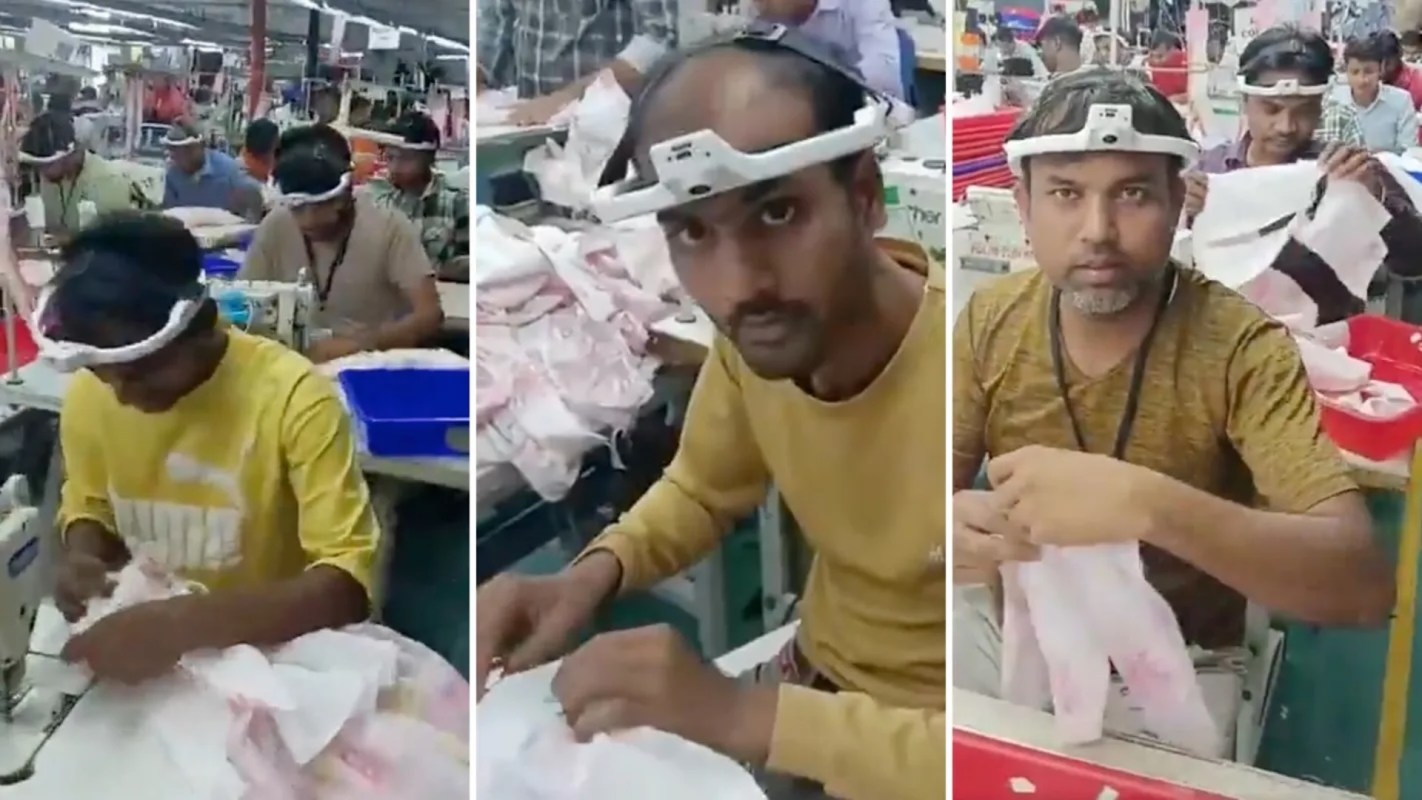
At a People's Assembly on AI, author Arundhati Roy delivered a striking warning: Some workers in India are reportedly being told to wear forehead cameras so robots can study their movements and eventually replace them.
The Instagram post presented that image as part of a broader concern about tech power, surveillance, and what Roy described as a new form of colonial control.
Here's what to know
More Perfect Union said it made the remarks at its People's Assembly on AI, held with the AI Now Institute. In an Instagram post shared by More Perfect Union, Roy said, "These Big Tech companies are looking to replace the state and fuse themselves into the state, giving of course the shiny gifts of colonialism but taking away all forms of governance and all forms of freedom." She added: "In India a lot of labor is now required to wear a camera on their foreheads that is documenting their movements so that they will be replaced by robots."
Roy's comments drew a direct line between workplace surveillance and automation. In the example she described, the camera not only documents workers' movements, but does so in a way that could help machines replicate them.
In the comment section, one Instagram user said, "This is a dystopian nightmare. What happens if they refuse to comply?" Another added, "But those recordings will eventually help robots to learn the actions done by human hand."
Indian factory workers wearing head-mounted cameras to record hand movements for training AI systems https://t.co/uHTnWMoTUg
— Interesting things (@awkwardgoogle) April 12, 2026
More background
Roy's warning folds several major debates about artificial intelligence into one: who controls the technology, who benefits from it, and who bears the consequences when employers use it to cut labor costs. In her framing, the issue is not simply innovation but power.
TCD Picks » Quince Spotlight
💡These best-sellers from Quince deliver affordable, sustainable luxury for all




The example from India is especially jarring because the same device can serve two functions at once: worker surveillance and data collection for automation. That means everyday labor can become training material, potentially forcing workers to help build systems that may ultimately displace them.
AI is also closely tied to the energy grid. The data centers that power AI tools can consume enormous amounts of electricity and water for cooling, putting pressure on local infrastructure and resources.
What's being done?
According to More Perfect Union, the video was taken from its People's Assembly on AI with the AI Now Institute, which it presented as a forum focused on how AI is reshaping work and public life.
Roy used that platform to challenge the idea that automation automatically amounts to progress. More Perfect Union's caption summarized her remarks as a warning about companies seeking to "replace the state and fuse themselves into the state," linking labor practices to much larger questions about governance and freedom.
Where can I learn more?
These stories dig further into the concerns Roy raised about AI displacing workers and concentrating power. They look at warnings from investors and AI leaders, jobs already under pressure, and growing backlash over AI's broader social costs.
• An expert investor warned of terrifying employment losses as robots take over more work.
• Geoffrey Hinton warned Fortune that AI-driven unemployment could spread as companies bet big.
• Geoffrey Hinton said the future of human labor may hinge on difficult AI choices.
• Public anger is rising as AI strains jobs, water, and electricity all at once.

Get TCD's free newsletters for easy tips, smart advice, and a chance to earn $5,000 toward home upgrades. To see more stories like this one, change your Google preferences here.






