


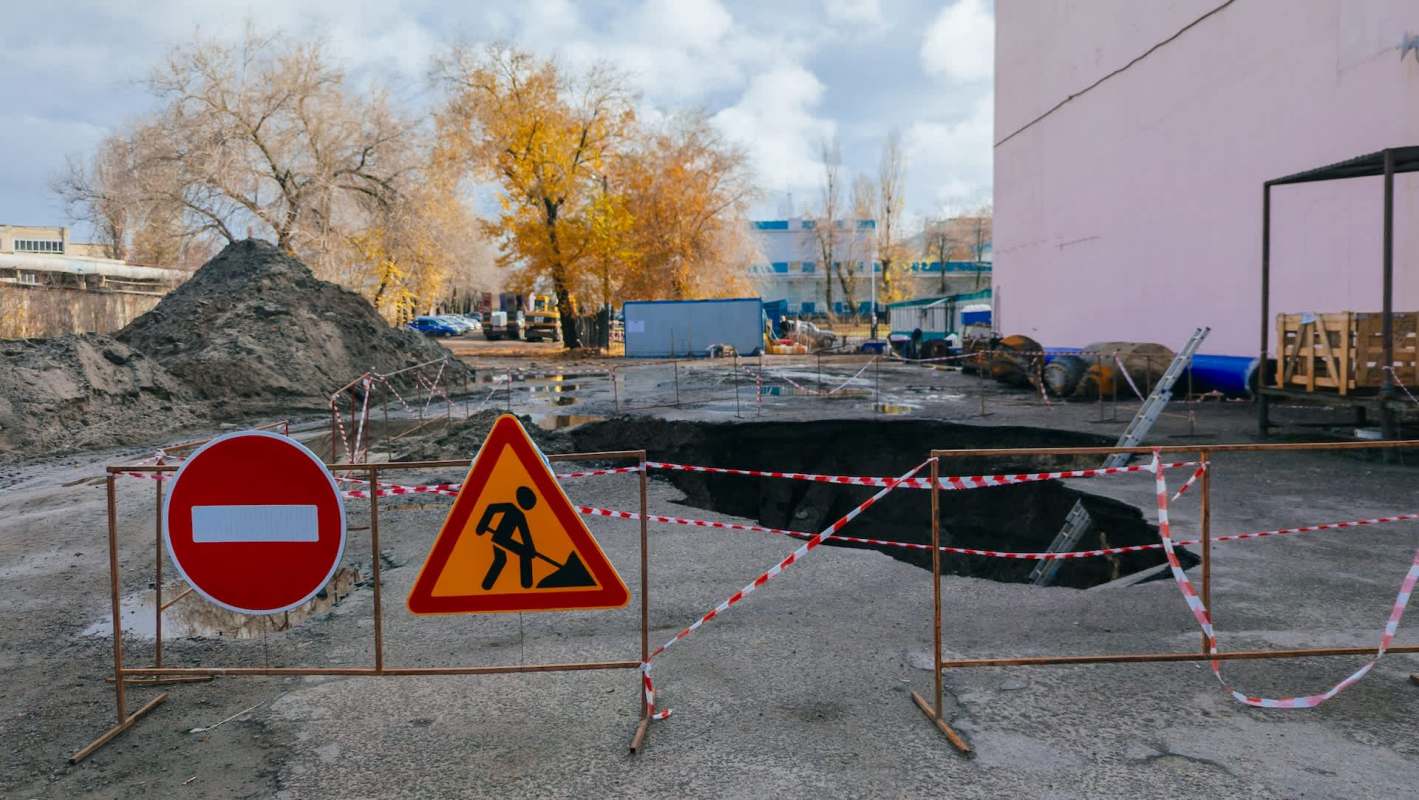
Even with a sinkhole shutting down Ferry Street, Easthampton continues to advance redevelopment of its Ferry Street mill site.
City officials expect demolition to begin, clearing the way for a 96-unit housing development with 91 affordable apartments.
Here's what to know
The Daily Hampshire Gazette reported that city officials are in the final stages of securing permits to demolish portions of the former mill complex at 7 and 11 Ferry St.
Plans for the biggest building set to be torn down, the boiler building at 11 Ferry St., call for replacing it with 61 one-bedroom apartments and 35 two-bedroom apartments.
A financing plan the city released in September estimated the 96-unit project at about $51 million and said it would include 134 parking spaces. It would add another residential project to a site where the city previously redeveloped 3 and 5 Ferry St. into market-rate housing and office space.
Ferry Street has remained closed after a collapsed seven-foot-wide pipe created a sinkhole in the road. City Procurement Officer Michael Owens said there is no timeline for reopening the street.
TCD Picks » Quince Spotlight
💡These best-sellers from Quince deliver affordable, sustainable luxury for all




He said the road work is not expected to stop demolition.
"The demolition contractor believes, with communication and coordination, he can undertake the demolition while the sinkhole work is ongoing," Owens told the Gazette.
More background
The One Ferry Project aims to remake the former Ferry Street mill complex with five new buildings devoted to housing and commercial uses.
The larger structure at 7 Ferry St. is planned to be converted into 77 market-rate apartments, with that portion of the project projected to cost $41 million.
At 9 Ferry St., the water turbine building is slated for mixed commercial and residential use, though city officials have no cost estimate for that part of the redevelopment.
Building Commissioner David Gardner said the structure cannot be entered safely because it is unstable and contains asbestos.
In an email to project manager Mike Michon, Gardner warned that the structure was "unsafe and dangerous to enter or be near."
He also said parts of the roof had collapsed and that wall damage had left the building in "imminent danger of catastrophic failure."
What's being done?
To move the teardown forward, the city is using a demolition contract worth nearly $2 million, funded through Easthampton's Ferry Street Improvement Financing (DIF), a 2018 economic development tool built around a payment-in-lieu-of-taxes program that collects funds over time.
Connecticut-based contractor Bestech obtained a nontraditional work plan from the Massachusetts Department of Environmental Protection to proceed with work at 11 Ferry St. despite the asbestos and structural instability.
The approval carries several conditions, including an on-site project monitor, air-quality monitoring around the perimeter, and a prohibition on work when winds top 15 mph.
Bestech is also partnering with Atlas Technical Consultants, whose nearest office is in West Springfield. Rob Sullivan of Bestech told the Gazette he expects demolition to continue through mid-January.
Although the City Council approved borrowing up to $3 million in September for demolition and related infrastructure improvements, City Auditor Hetal Patel said a financial backlog means officials will not know the district's fiscal year 2025 and 2026 balances until November.
In a video posted on his Instagram on Sept. 9, Mayor Salem Derby said, "We're actually cruising into the future, building a sustainable Easthampton for the next generation."
Where can I learn more?
Easthampton isn't the only community dealing with sinkholes, redevelopment pressures, and aging infrastructure. These stories examine residents displaced by ground collapse, approaches to new housing construction, and contested development plans.
• In South Dakota, families driven out by a huge sinkhole are still pursuing a $60 million case.
• In Toronto, a groundbreaking modular housing project aims to challenge conventional construction practices.
• In Helotes, Texas, Lennar faces backlash as plans move near a vital water source.
• In Berwick, Maine, a planning board ordered review of dust, water, and truck fears.

Get TCD's free newsletters for easy tips, smart advice, and a chance to earn $5,000 toward home upgrades. To see more stories like this one, change your Google preferences here.






