


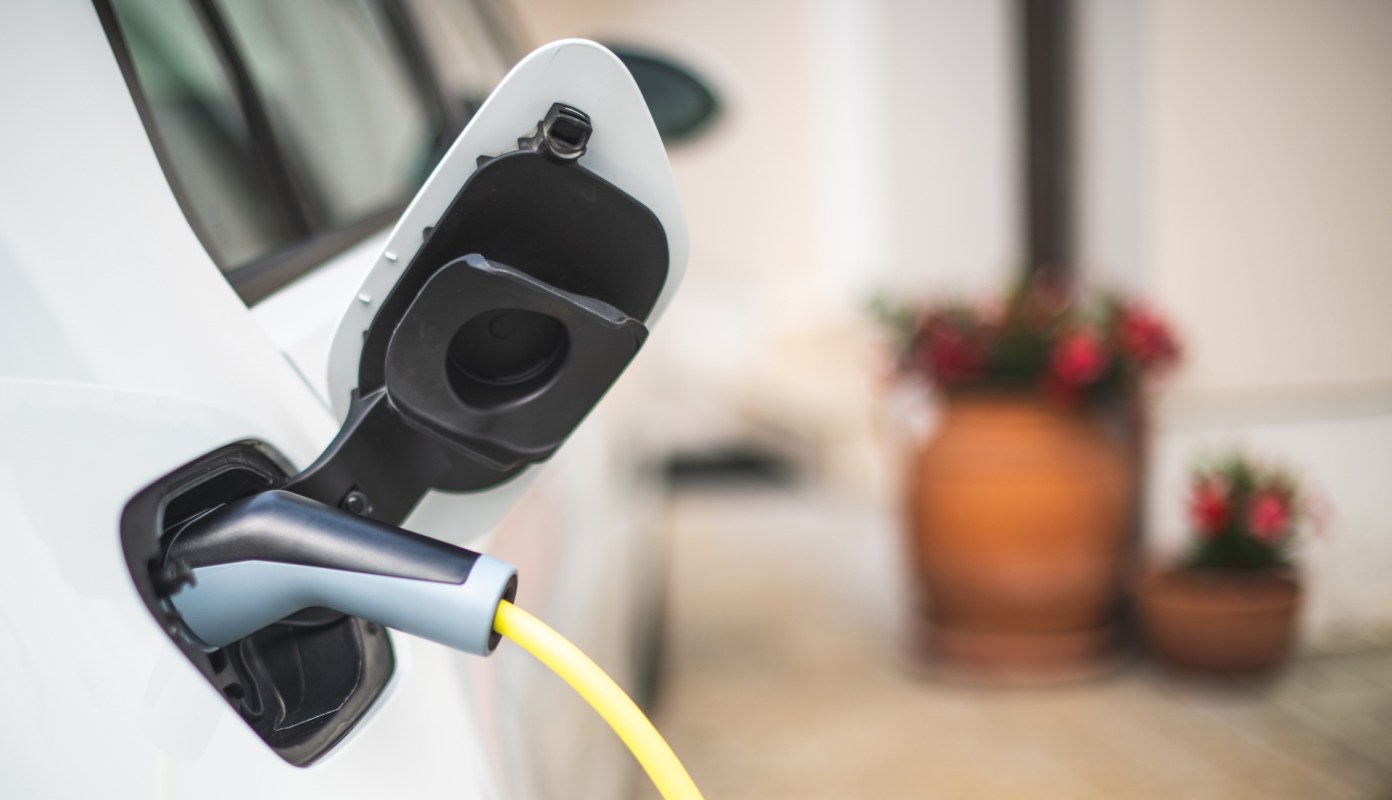
Charging an electric vehicle more slowly at home may seem like the battery-friendly choice. But a test by the German auto club ADAC found it may do little for battery health while wasting significantly more electricity.
Here's what to know
As Shayan_EV (@shayan_ev), an EV battery and charging engineer, explained in a YouTube video, ADAC, the German auto club, compared five EVs — a Mercedes CLA, Renault 5, Tesla Model Y, Volvo EX30, and Volkswagen ID.7 — under three home-charging conditions: roughly 2.3-kW household power, an about-4-kW reduced wall-charger setting, and an 11-kW wall charger.
Across the lineup, the regular household socket was the least efficient option every time.
At the more efficient end, ADAC measured all five vehicles at about 5% to 7% loss on the 11-kW charger. The standout on household power was the Mercedes, which gave up 24.2% of the energy it pulled from the wall.
Shayan boiled the pattern down to a simple point: "For every car in the test, every step down in charging power made the losses worse. Not one exception."
That extra waste shows up on utility bills.
TCD Picks » Quince Spotlight
💡These best-sellers from Quince deliver affordable, sustainable luxury for all




Based on a cost scenario Shayan used from the ADAC results — about 9,300 miles (15,000 kilometers) driven per year, about 29 kilowatt-hours per 100 miles (18 kilowatt-hours per 100 kilometers), and electricity priced at 18 cents per kWh — charging from a socket instead of an 11-kW setup could cost about $40 to $50 more per year for most of these vehicles, and about $120 more for the Mercedes.
More background
The battery itself is not the main reason low-power charging wastes more electricity. The bigger issue is that a slower session keeps the car's systems running for longer.
Shayan said the ADAC test points to a fairly steady housekeeping load during charging: the battery management system and other 12-volt electronics can use roughly 100 to 300 watts while the car charges, regardless of how slowly energy is going into the battery.
Using Shayan's 200-watt example, that fixed overhead would consume about 14% of incoming power from a regular North American outlet at about 1.4 kW, but only around 2% on a 10-kW Level 2 charger.
That also helps explain why ordinary home Level 2 charging doesn't cause the battery stress associated with fast charging. Shayan noted that a 40-amp Level 2 charger is still mild compared with DC fast charging, which can exceed 150 kW, and he cited Geotab data from 22,700 vehicles showing that the biggest battery stress came from frequent fast charging above 100 kW, not normal Level 2 home charging.
So drivers who reduce home charging amps to "protect" the battery may mostly extend charge times and increase losses with little payoff.
What can be done?
Shayan's advice was straightforward: "If your Level 2 charger is installed for its full current, use the full current."
He said drivers who want a full battery at a certain time should use the car's built-in scheduling tools instead of lowering the charging amps.
The case for slower charging usually comes down to household wiring, not battery health.
Shayan said lower current means less heat in the circuit, so if the wiring is old, near its limit, or intentionally set lower by an electrician, dialing down the charger is the safer choice.
For people with only a regular outlet, he advised plugging in every night when possible, using a dedicated circuit, and expecting weaker performance on the coldest nights.
Citing Hydro Ottawa, he said a standard 120-volt outlet adds about 5 miles (8 kilometers) of range per hour, but winter battery heating can reduce that.
One commenter highlighted that utility pricing can change the calculation, writing, "I always charge at 10A because it is cheaper than pulling more amps despite the higher losses."
Utility pricing can change the calculation, so drivers should compare both energy waste and their local rate structure.

Get TCD's free newsletters for easy tips, smart advice, and a chance to earn $5,000 toward home upgrades. To see more stories like this one, change your Google preferences here.






