


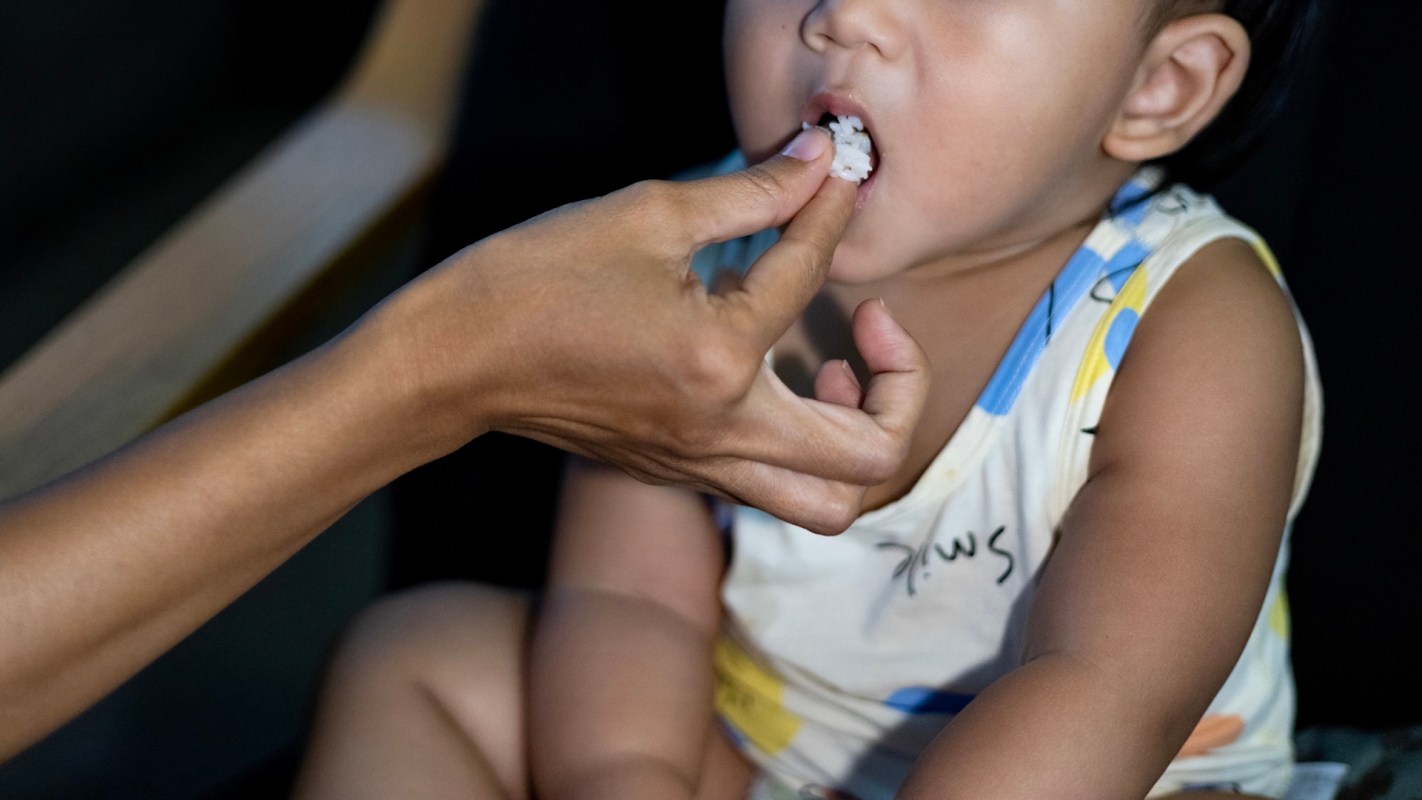
A Dorchester mother is skipping meals so her young son can eat after her Supplemental Nutrition Assistance Program benefits plunged from nearly $400 a month to just $24.
When she arrived at the Dorchester Community Fridge, most of the food was already gone, according to WBTS.
Here's what to know
Betty, a Dorchester mother raising her son on a fixed income after fleeing domestic violence, told WBTS that food aid from nonprofits and community groups became essential to getting by.
She still uses the Dorchester Community Fridge even on days when options are scarce because it is easier to access than some traditional pantries.
That ease of access matters when every extra hurdle can mean less food at home.
Recalling efforts to get assistance, Betty said: "The line was around the block, and you had to do so much. It was not this easy."
TCD Picks » Quince Spotlight
💡These best-sellers from Quince deliver affordable, sustainable luxury for all




For Betty, the sharp reduction in SNAP has been especially hard. Her household benefit fell from nearly $400 to $24 before Greater Boston Legal Services helped raise it to $94 a month for the two-person household.
The higher amount is still far less than her previous benefit, and remains insufficient to cover basic household food needs.
Asked how she makes it work, Betty was resolute.
"Realistically, it just doesn't," she admitted. "A lot of the times I just don't really eat too much at all, but my kid does, and that's what matters."
More background
Families across Massachusetts are facing rising costs for essentials while incomes stagnate.
Betty told WBTS that complex post-traumatic stress disorder affects her ability to work, and she is also not receiving child support.
When food assistance falls short, families must rely on friends, informal support systems, and emergency nonprofits to fill gaps that basic benefits were meant to cover.
Action for Boston Community Development CEO Sharon Scott-Chandler warned that her organization is seeing that pressure firsthand.
"Food is an area that has increased exponentially," Scott-Chandler explained. "I think it's not even one single thing. It's everything at once."
She added that families are being forced to choose between food, medication, housing, and heating costs.
What's being done?
After fleeing domestic violence, Betty now cobbles together help from several sources, including Action for Boston Community Development.
She said the Dorchester Community Fridge was still useful because she managed to get a loaf of bread, even though the shelves were nearly empty when she arrived.
While Greater Boston Legal Services helped Betty increase her SNAP benefit from $24 to $94 a month, that remains far below what she once received, and food prices continue rising.
ABCD acknowledges demand for that kind of assistance is both high and growing.
The nonprofit serves about 100,000 people each year with resources such as food help, housing support, utility aid, job training, and other services.
"We want people to know that help is available for everyone and that they really should not struggle alone," Scott-Chandler said.
The National Domestic Violence Hotline is available by phone at 1-800-799-SAFE (7233), at www.thehotline.org, or by text at LOVEIS to 22522.
Betty's survival depends on community support just as much as on formal programs.
"They have that saying, 'It takes a village' for a reason," she told WBTS. "We all talk to each other. I'm like, 'Okay, I have this, I have this, I have this. What do you have?' We all just figure this out together."

Get TCD's free newsletters for easy tips, smart advice, and a chance to earn $5,000 toward home upgrades. To see more stories like this one, change your Google preferences here.







